Home › Destinations › Jiangxi › Ganzhou

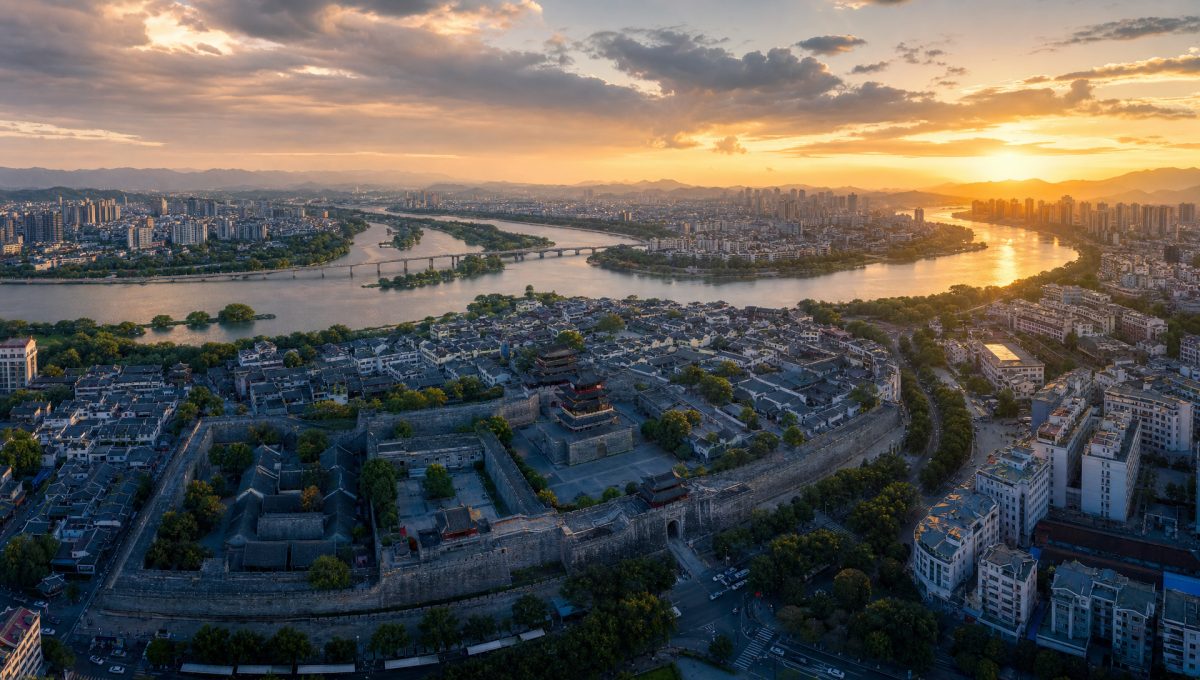
Ganzhou city aerial panorama Zhang River Gong River confluence ancient city walls Jiangxi ProvinceIllustration

PreeChina · City Guide

Ganzhou Travel Guide

Where the world's greatest Hakka heritage, Song Dynasty city walls and pristine mountain wilderness converge, southern China's most extraordinary city few international travellers have yet discovered.

Ganzhou Quick Facts

Province / Region
Southern Jiangxi Province, South China
Population
~9 million (prefecture)
Best Time to Visit
March–May · September–November
Famous For
Hakka culture, Song Dynasty walls, Tulou fortresses, Long March history
Nearest Airport
Ganzhou Huangjin Airport (KOW)
Recommended Stay
3–5 days

Why Visit Ganzhou?

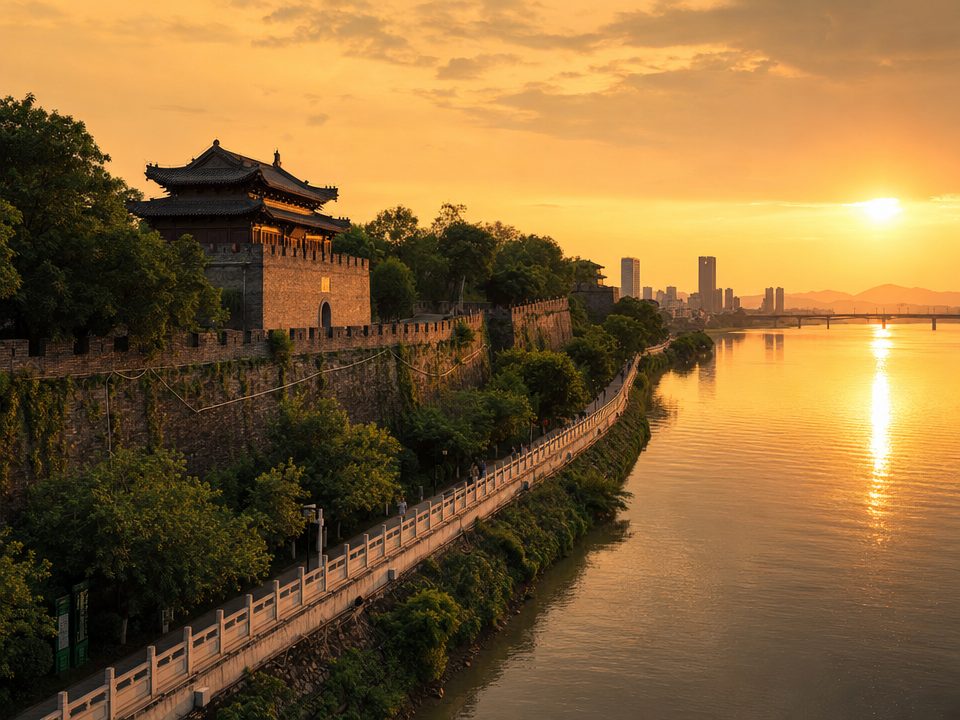
Ganzhou ancient Song Dynasty city wall along Zhang River at golden hour southern JiangxiIllustration

Ganzhou is one of China's most historically significant yet globally overlooked cities, a place where the story of Chinese civilisation unfolds slowly, street by stone-paved street. Sitting at the confluence of the Zhang and Gong rivers in southern Jiangxi Province, this expansive prefecture served as a vital commercial and military hub throughout the Song Dynasty (960–1279 AD), and much of that heritage survives intact in the Zhanggong District's ancient quarter: one of the most complete Song-era city environments remaining anywhere in China.

For international travellers seeking a China experience beyond the well-worn trail of Beijing and Shanghai, Ganzhou offers something remarkable. The city is widely regarded as the world capital of Hakka (客家) culture, the Han Chinese subgroup celebrated for their extraordinary circular earthen fortresses, intricate clan traditions, distinctive cuisine and a centuries-long history of migration that scattered Hakka communities across Southeast Asia, the Americas and beyond. Visiting Ganzhou means encountering a living cultural tradition with deep global connections, not a museum reconstruction.
What the Guides Miss

1

Chiang's Second Hometown

From 1939 to 1945, a young Chiang Ching-kuo governed Ganzhou as commissioner of Jiangxi's fourth administrative district. In 1940 he designed and built his own residence on the site of the old prefectural government offices, a brick European-style house standing between the Bajing Tower and Yugu Terrace. The house still carries a plaque reading "Chiang Ching-kuo's Former Residence" and displays furniture original to 1941. Chiang called Ganzhou his second hometown for the rest of his life.

2

Forty-Seven Years, One Dream

In 1094, Su Shi passed through Ganzhou on his way into exile at Huizhou, freshly stripped of rank by rivals at court. He and his son climbed Yugu Terrace and visited Guangxiao Temple, then sought out Tianzhu Temple, where his father had gone decades earlier looking for an original Bai Juyi poem. Standing on the terrace, Su Shi wrote: "forty-seven years, truly but a dream; drifting to the ends of the earth, tears streak down." The terrace he climbed still stands over Ganzhou's old city wall today.

Best Attractions in Ganzhou

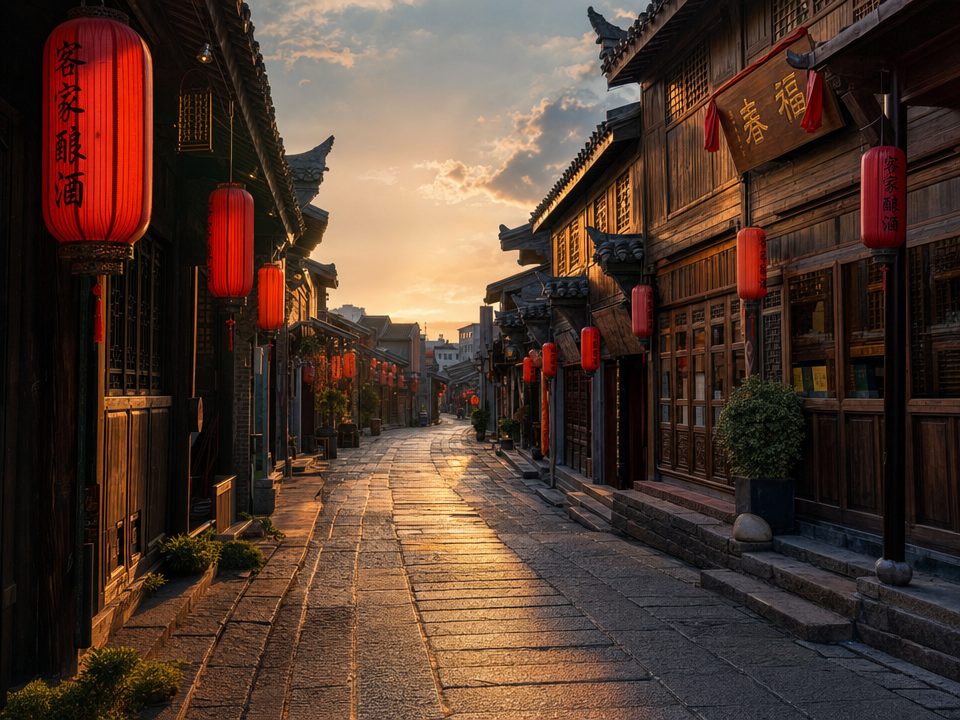
Zhanggong Ancient Town Song Dynasty cobblestone street timber houses lanterns GanzhouIllustration
Song Dynasty Heritage

Zhanggong Ancient Town (章贡古城)

The beating heart of old Ganzhou unfolds along cobblestone lanes flanked by restored Song Dynasty timber merchant houses, clan temples and teahouses that have changed little in 800 years.

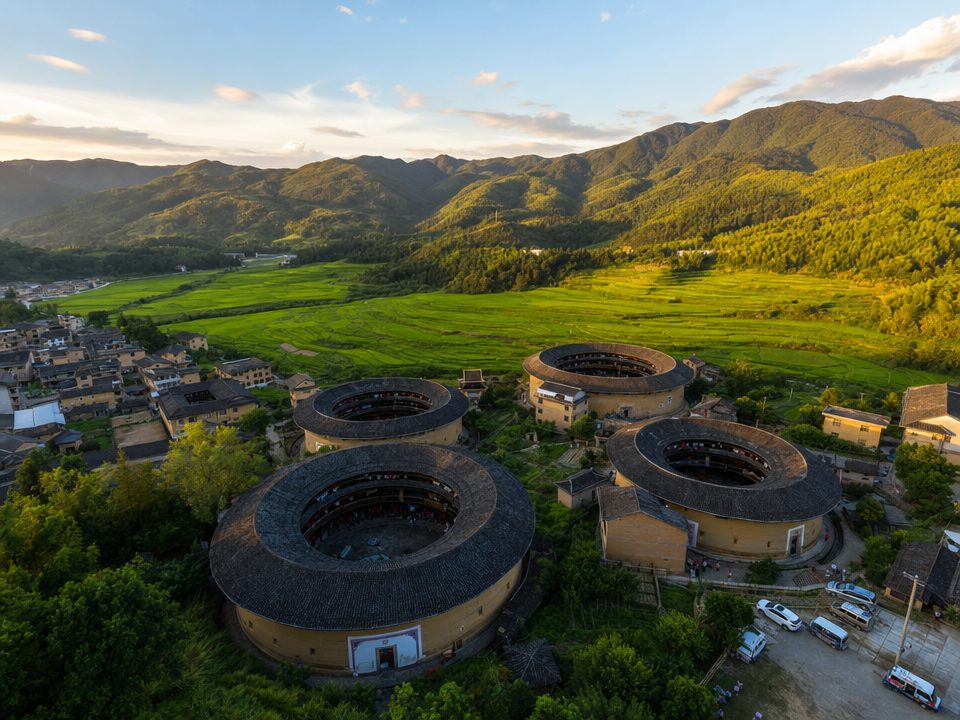
Hakka Tulou circular earthen roundhouse aerial view rice paddies mountains Longnan JiangxiIllustration
Hakka Architecture

Hakka Tulou Earthen Fortresses (客家土楼)

Southern Jiangxi's countryside is scattered with awe-inspiring Tulou, massive circular earthen fortresses built by Hakka clans between the 12th and 20th centuries to defend against bandits and rival clans while housing entire communities under one roof.

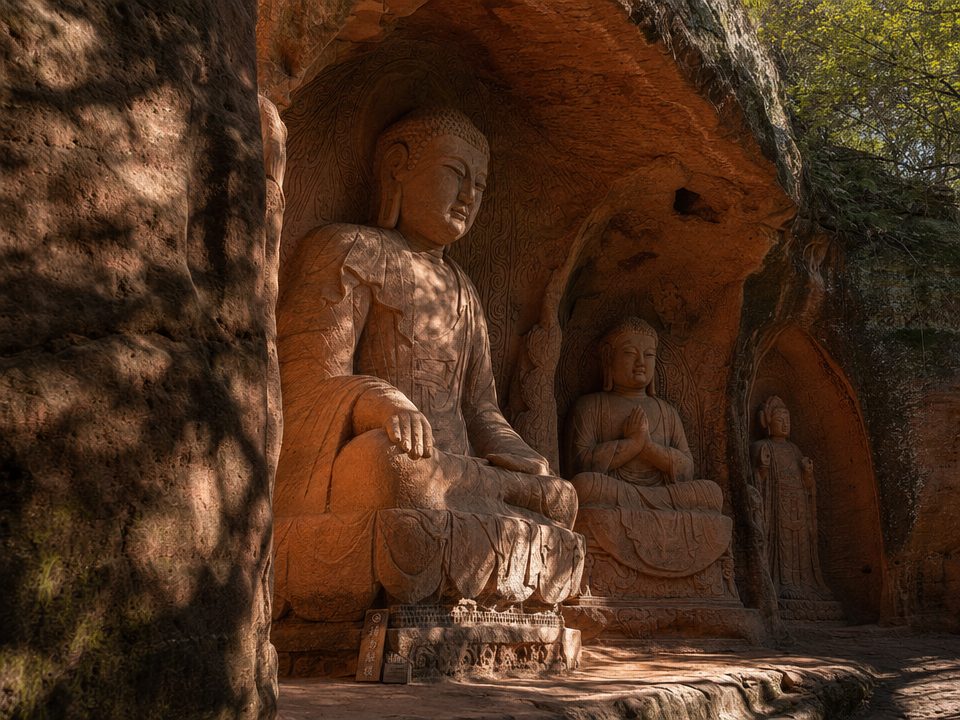
Tongtianyan Grottoes Tang Song Dynasty Buddhist rock carvings red sandstone cliff GanzhouIllustration
Tang & Song Buddhist Art

Tongtianyan Grottoes (通天岩)

Tongtianyan is cut into a red sandstone cliff just north of the centre: more than three hundred and fifty Buddhas, bodhisattvas and luohan carved straight into the rock from the Tang and Song, with inscriptions left by Song literati alongside them, Su Dongpo among them.

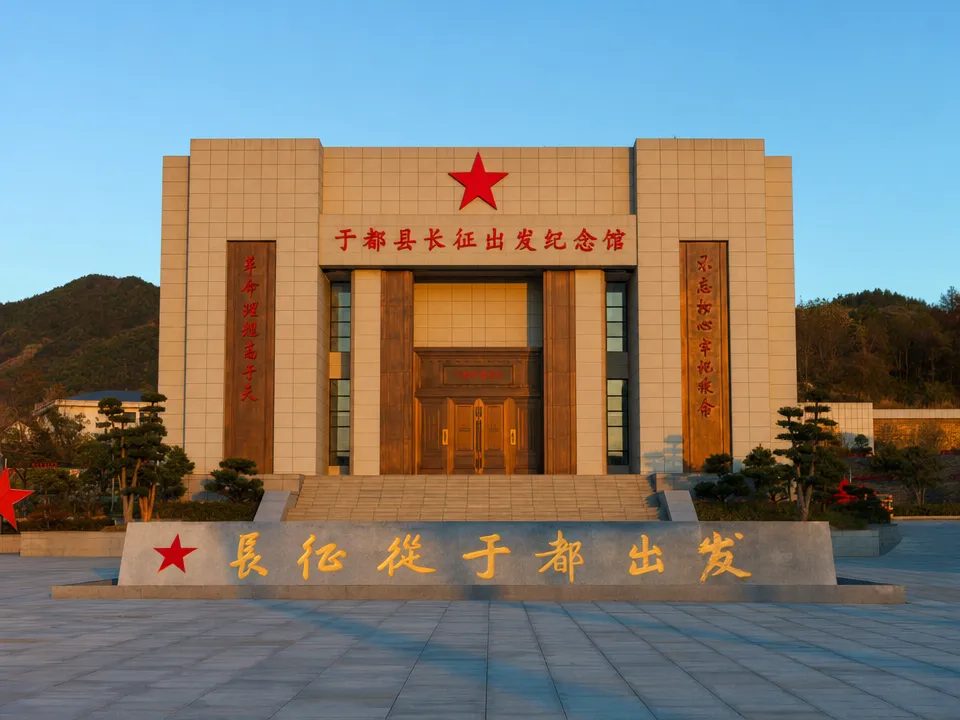
Yudu Long March Memorial Hall red star architecture stone plaza Ganzhou JiangxiIllustration
Modern History

Yudu Long March Memorial (于都长征出发地)

Yudu County holds a pivotal place in modern Chinese history: it was from the banks of the Yudu River that the Communist Red Army launched the Long March in October 1934, the 12,500-kilometre strategic retreat that became the founding legend of the People's Republic.

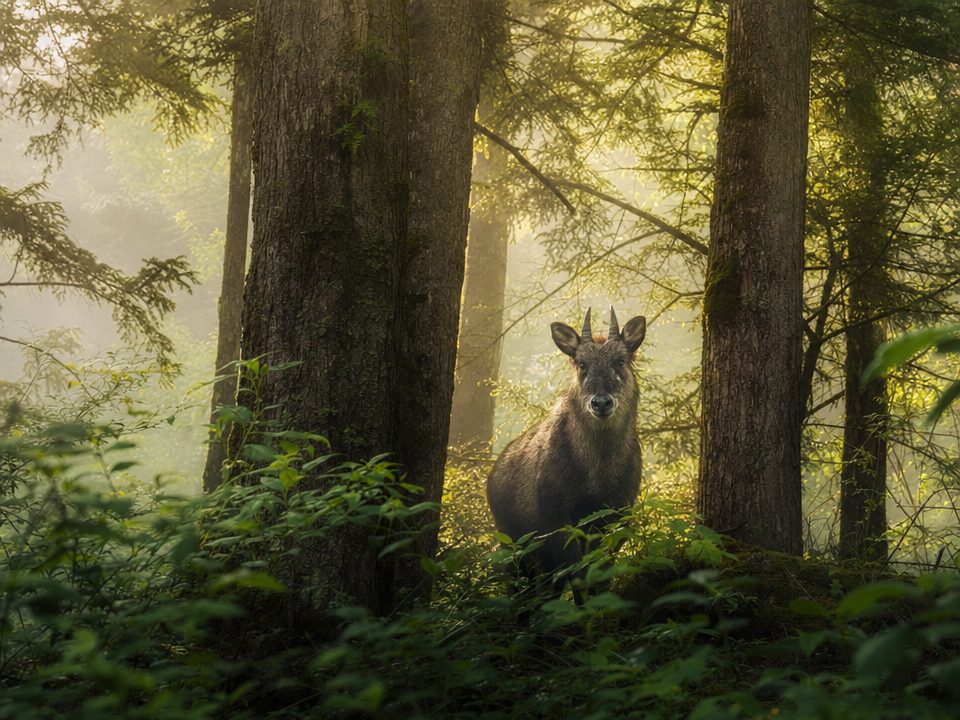
Jiulianshan Nature Reserve ancient hemlock forest misty mountains Jiangxi Guangdong borderIllustration
National Nature Reserve

Jiulianshan Nature Reserve (九连山自然保护区)

Straddling the border between Jiangxi and Guangdong provinces, Jiulianshan National Nature Reserve is among the most biodiverse temperate forests in southern China.

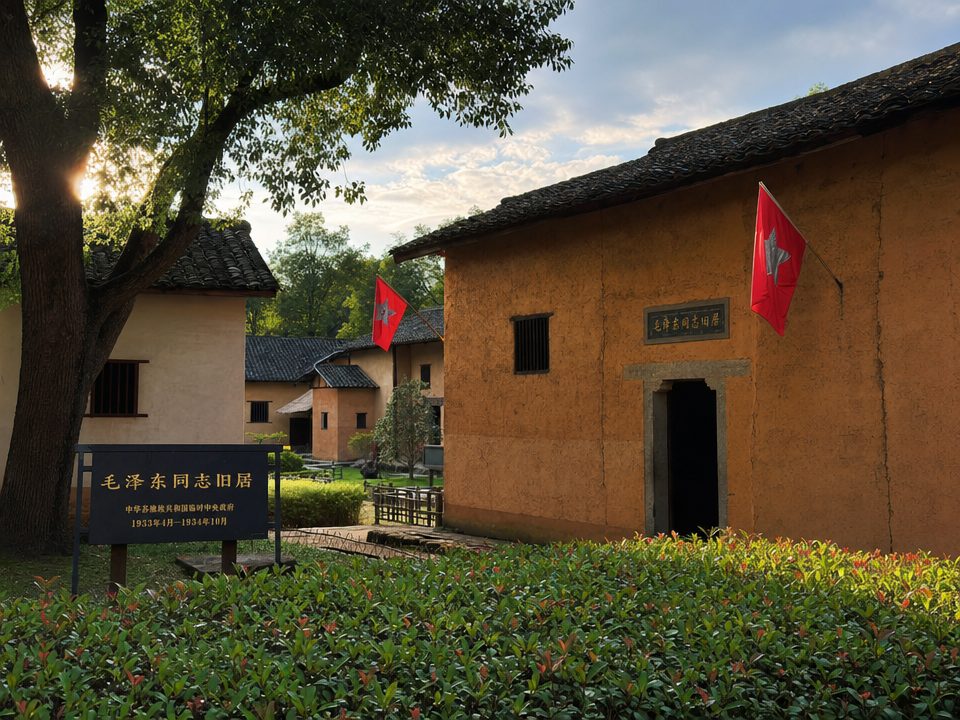
Ruijin Chinese Soviet Republic revolutionary memorial buildings courtyard Jiangxi red tourismIllustration
Revolutionary Heritage

Ruijin, China's Red Capital (瑞金)

An hour's drive from Ganzhou city, Ruijin served as the capital of the Chinese Soviet Republic from 1931 to 1934, and its carefully preserved revolutionary sites form one of the most coherent examples of early Chinese communist heritage anywhere in the country.

Ways to Experience Ganzhou

Group Tours

A group route across Ganzhou's Song-dynasty engineering, Hakka culture, and Long March history.

Song Dynasty Heritage Tours

Zhanggong Ancient Town and its still-functioning 900-year-old Futou Sewer drainage system.

Hakka Culture Tours

Hakka earthen tulou fortresses, showcasing this region's distinctive communal architecture.

Long March History Tours

Yudu, the departure point of the Long March in 1934, and Ruijin, once China's "Red Capital."

Explore Ganzhou on the Map

By Type
By Theme
No theme places in this city yet.
View Full China

Approximate locations of the attractions above, across Ganzhou.

Ganzhou Food You Should Try

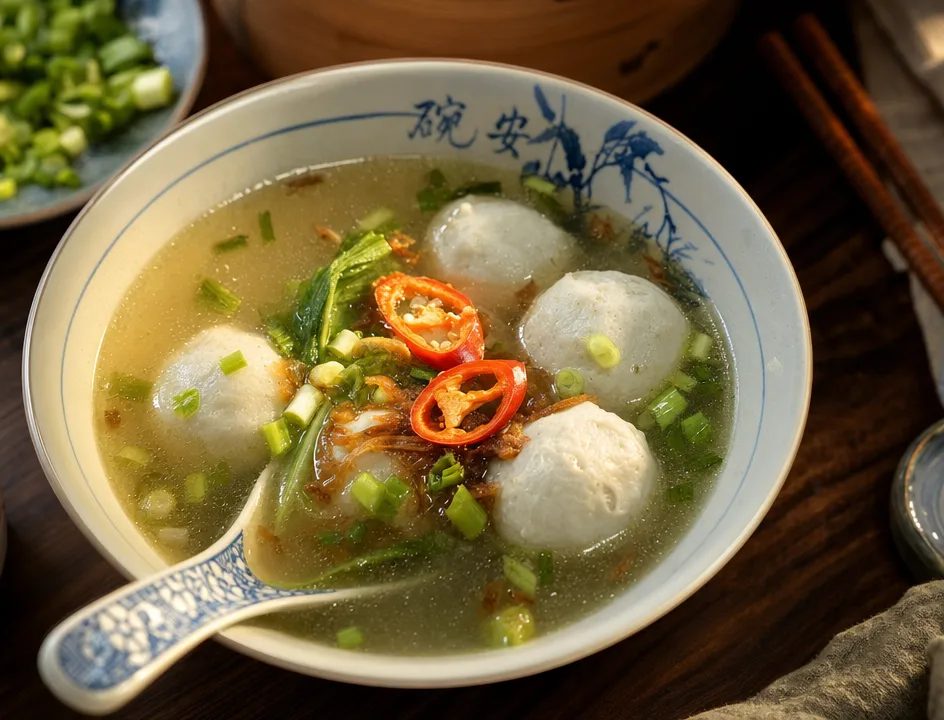
Gannan fish ball soup hand-pounded river fish clear broth Hakka Ganzhou street foodIllustration

Gannan Fish Balls (赣南鱼丸)

Fish balls pounded by hand from river fish and dropped into a clear, faintly sweet broth.

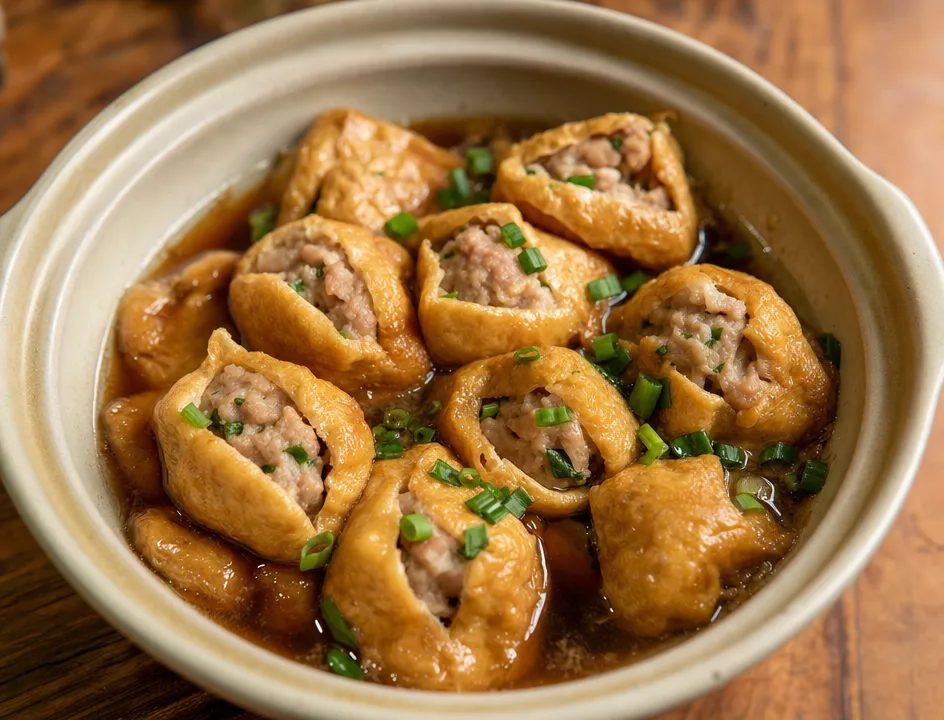
Hakka Niang Tofu stuffed silken tofu pork filling soy braised sauce Ganzhou signature dishIllustration

Hakka Niang Tofu (酿豆腐)

Stuffed tofu is the dish the Hakka kitchen is known by: bean curd hollowed out, filled with seasoned pork and salted fish, and braised in soy until the filling works its way into the curd.

Ganzhou Rice Noodles (赣州米粉)

Ganzhou's morning ritual revolves around a bowl of flat rice noodles in a deeply aromatic pork bone broth, crowned with pickled mustard greens, crispy shallots and chili oil.

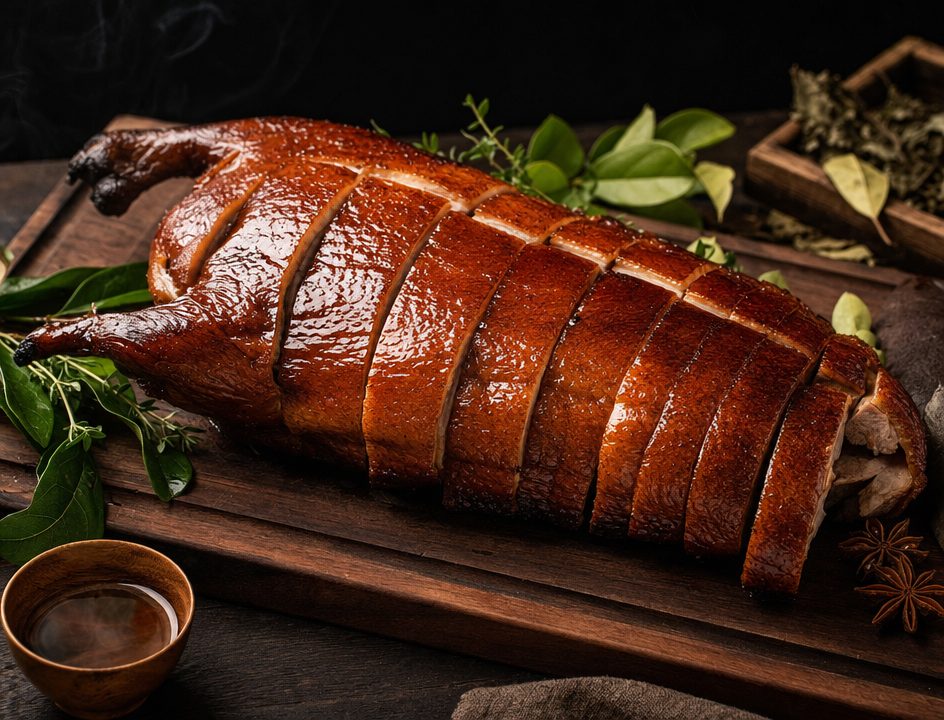
Nankang camphor smoked duck mahogany crispy skin aromatic wood smoking technique GanzhouIllustration

Camphor-Smoked Duck (樟茶鸭)

Nankang District's most celebrated culinary contribution uses the aromatic wood of the camphor tree, once so abundant in Jiangxi that the province supplied camphor to all of Asia, to smoke marinated duck over low heat.

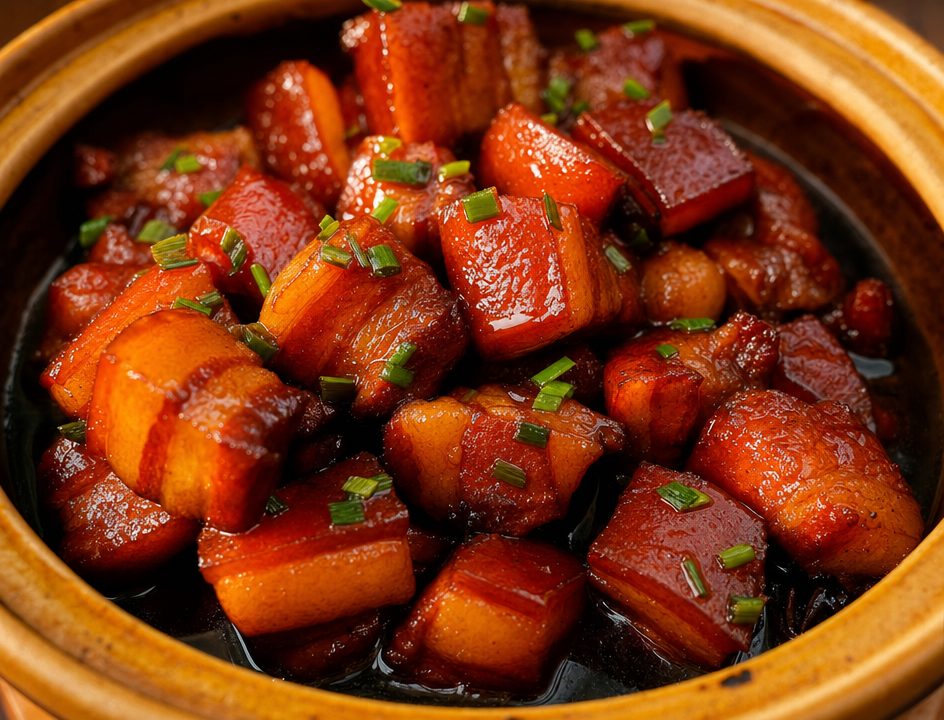
Jiangxi red-braised pork belly caramelised soy sauce rock sugar slow-cooked hongshao rouIllustration

Jiangxi Red-Braised Pork Belly (红烧肉)

Jiangxi cuisine is unapologetically rich, and nowhere is this more apparent than in the region's red-braised pork belly, slow-cooked for hours in soy sauce, Shaoxing wine and rock sugar until the fat turns translucent and the meat yields at the gentlest pressure.

Cultural Experiences in Ganzhou

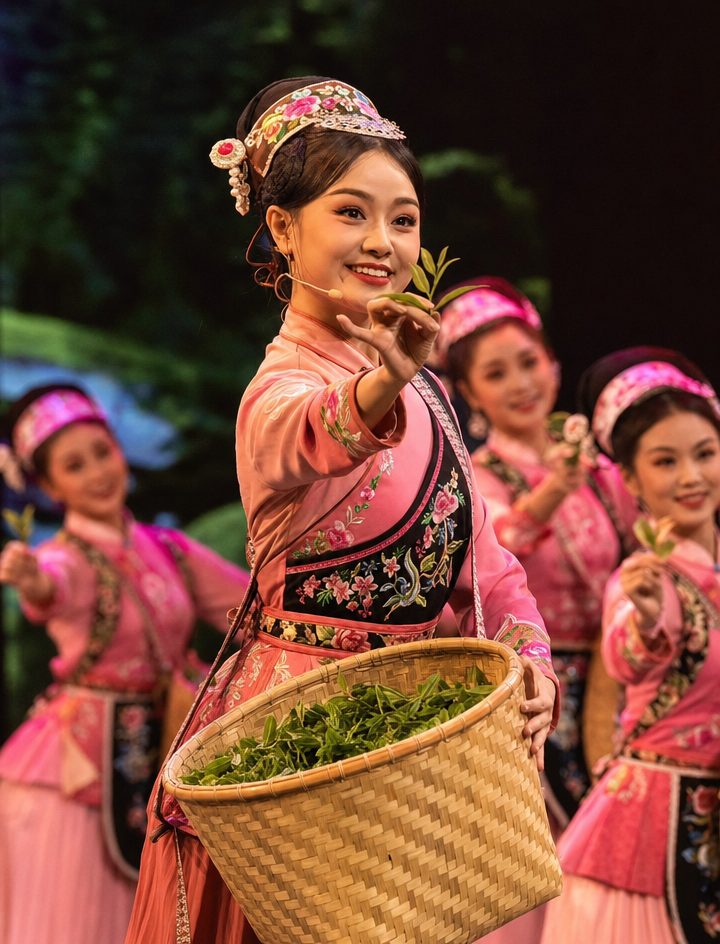
Hakka Gannan Caicha tea-picking opera performance embroidered costumes Ganzhou cultural heritageIllustration

Hakka Folk Music (客家山歌)

UNESCO-listed Gannan Caicha tea-picking opera blends song, dance and storytelling in vivid embroidered costumes, a living tradition performed at Ganzhou cultural centres year-round.

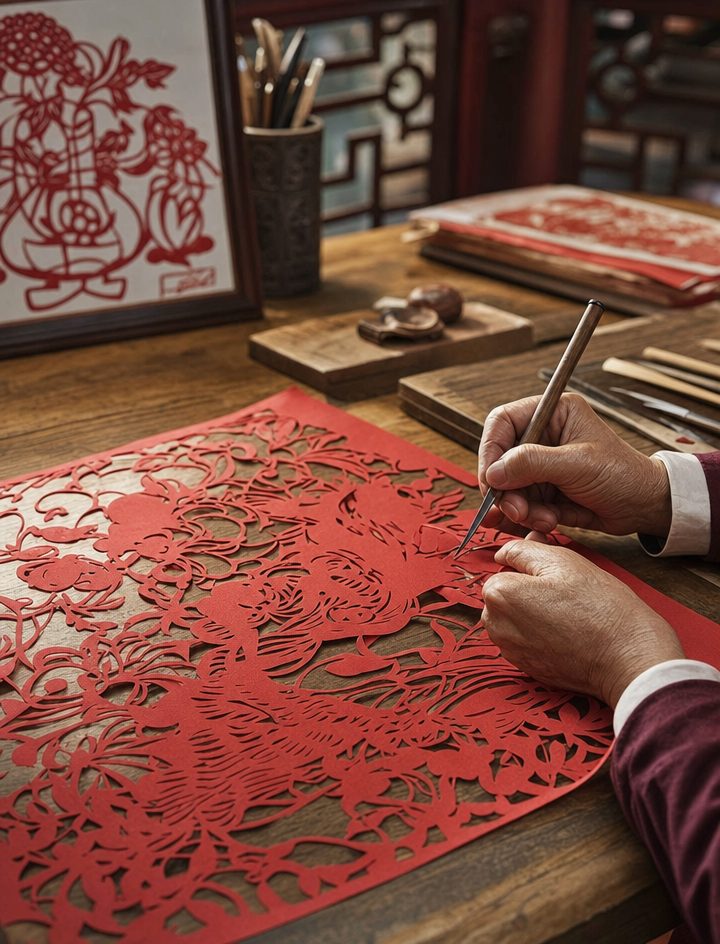
Traditional Hakka paper cutting craft workshop artisan hands intricate floral red paper GanzhouIllustration

Traditional Craft Workshops

Try your hand at Hakka paper-cutting, indigo batik or camphor chest carving in the old town, half-day workshops with local artisans yield a handmade souvenir unlike anything in a gift shop.

Local Market Culture

Arrive before 8 AM at Zhanggong morning market for pomelo pyramids, river crayfish, ceramic wine urns and bamboo weavers, chaotic, colourful and completely authentic southern China.

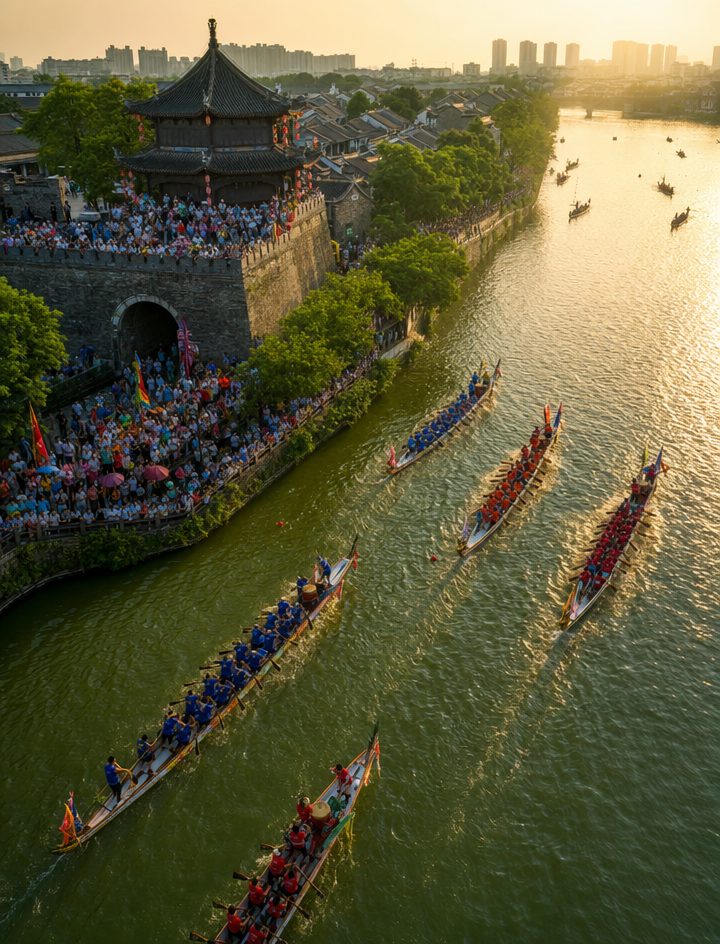
Dragon boat racing Zhang River Ganzhou Dragon Boat Festival drummers colourful boats ancient cityIllustration

River Festivals & Dragon Boats

June's Dragon Boat Festival fills the Zhang River with drumming racing crews, while the Mid-Autumn Lantern Festival transforms the ancient waterfront into a river of golden floating light.

Best Time to Visit Ganzhou

Season Highlights Weather
Spring
(Mar–May)
Rapeseed flower fields in full bloom across the Gan River valley; spring tea harvest in surrounding hills; Qingming Tomb-Sweeping Festival brings the old town to life; ancient walls at their most photogenic against green hillsides 18–26 °C (64–79 °F), mild with occasional showers. The most comfortable outdoor weather of the year. Pack a light layer for evenings. River mist in the mornings adds atmosphere to old town walks.
Summer
(Jun–Aug)
Dragon Boat Festival in June on the Zhang River; lush national parks at peak greenery; pomelo orchards beginning to set fruit; vibrant riverside evening culture as locals escape the heat outdoors 28–36 °C (82–97 °F), hot and humid. Escape to Jiulianshan or Chongyi mountain areas for cooler temperatures. The Dragon Boat Festival (June) is spectacular, worth the heat.
Autumn
(Sep–Nov)
Nankang pomelo harvest, the valley's defining seasonal event; golden camphor forests in Nankang; Mid-Autumn Festival lantern celebrations on the river; clearest skies and finest light for photography 16–26 °C (61–79 °F), clear and comfortable. Peak season for comfortable travel. The combination of golden orchards, crisp air and festival atmosphere makes autumn the best overall season to visit.
Winter
(Dec–Feb)
Quietest and most authentic season; Chinese New Year celebrations in the ancient town with fireworks and temple fairs; uncrowded attractions; local life most visible without tourist crowds 5–14 °C (41–57 °F), cool with occasional frost in January. Light winter clothing sufficient in the city. Chinese New Year (January/February) transforms the old town into a festival of light and sound.

Recommended Routes Near Ganzhou

1 Day

Ancient City Route

Zhanggong Ancient Town's walls and sewer system in the morning, Tongtianyan Grottoes in the afternoon.

1 Day

Long March Heritage Route

The Yudu Long March Memorial combined with a visit to Ruijin.

Why Choose PreeChina

Local Expert Guides

Our Ganzhou specialists know which Hakka clan hall opens for private visits, which Tulou village still hosts authentic family dinners, and how to navigate the countryside routes no map application has yet indexed.

Flexible Itineraries

Ganzhou works as a standalone 3–5 day destination or as part of a southern China circuit combining Ganzhou with Fujian Tulou, Guangzhou or the ancient villages of Anhui province.

24/7 English Support

From first inquiry to final farewell, our English-speaking team is always available, essential in a city where international tourism infrastructure is still limited and local knowledge makes the decisive difference.

Private Transportation

Comfortable vehicles for all city and countryside routes, including Tulou villages, Jiulianshan Nature Reserve, Yudu and Ruijin, all of which require private transport to reach comfortably.

Authentic Experiences

We arrange home-cooked Hakka family meals, private ancestral hall visits, craft workshops, Caicha opera performances and morning market walks with local food guides unavailable to independent travellers.

Ganzhou is in Jiangxi, in East China.

Keep Exploring Ganzhou

Plan Your Group Trip to Ganzhou

Travelling to China with 10 or more people? Talk to PreeChina first. A transparent service fee of USD 100 per person for trips of up to 10 days (USD 150 for 11 to 20 days), and no markup on travel components. See how the fee works.

Tell us your interests, travel dates and preferences, and our local experts will design a group Ganzhou journey, and a wider China adventure, for your group.

Plan a Group Trip to GanzhouSee Group Tour Options

Share This Guide