Home › Blog › China’s Eight Great Culinary Traditions Explained
Blog · Food
China’s Eight Great Culinary Traditions Explained
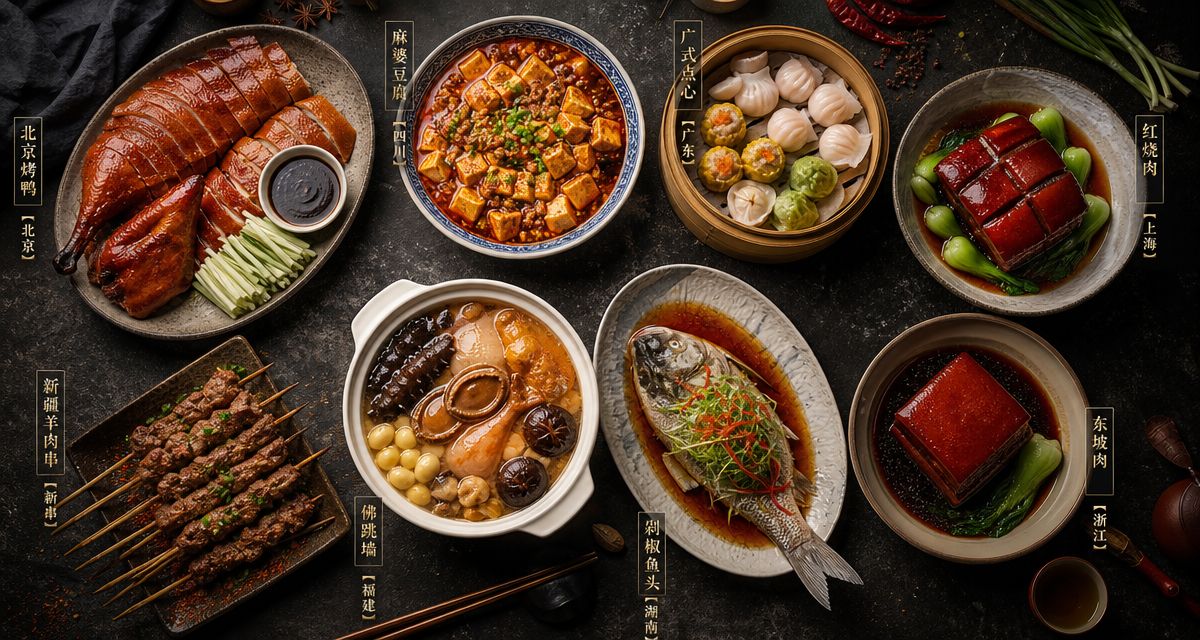
China is not one cuisine, it is eight extraordinary ones. Each tradition grew from a distinct landscape, climate, and history, producing flavors so different they might seem to belong to entirely separate countries. For international travelers exploring China, understanding these Eight Great Culinary Traditions is the key to eating not just well, but meaningfully, tasting a civilization through every dish.
OriginEight Distinct Chinese Provinces
EstablishedFormalized During the Qing Dynasty
Key TraditionsLu, Chuan, Yue, Su, Min, Zhe, Xiang, Hui
China spans a continent. Its geography ranges from tropical coastlines to frozen northern plains, from rice-paddy river deltas to high-altitude mountain plateaus. Its history stretches back over five thousand years, passing through dozens of dynasties, each leaving a distinct culinary inheritance. It should come as no surprise, then, that Chinese food is not a single thing, it is a family of traditions as diverse as the land itself.
The concept of the Eight Great Culinary Traditions, known in Chinese as bā dà cài xì (八大菜系), was codified during the Qing Dynasty and reflects the country’s most distinct regional food cultures. Each tradition has its own ingredients, techniques, flavor philosophy, and history. Together they form one of the world’s major culinary traditions.
For travelers exploring authentic China, moving through these traditions is like reading the country’s biography in food, every dish a chapter, every region a distinct voice.
“To understand China through its food is to understand that this is not one country with one cuisine, but a vast civilization that tastes different in every province, every valley, every city.”
The Eight Great Culinary Traditions at a Glance
Lǔ Cài (鲁菜): Shandong: The Imperial Tradition
Chuān Cài (川菜): Sichuan: The Bold & Numbing
Yuè Cài (粤菜): Cantonese: The Art of Freshness
Sū Cài (苏菜): Jiangsu: Elegant & Refined
Mǐn Cài (闽菜): Fujian: The Ocean’s Depth
Zhè Cài (浙菜): Zhejiang: Fresh & Seasonal
Xiāng Cài (湘菜): Hunan: Fiery & Pungent
Huī Cài (徽菜): Anhui: Mountain & Forest
Shandong Cuisine: The Imperial Tradition (鲁菜)
Tradition 01 of 08
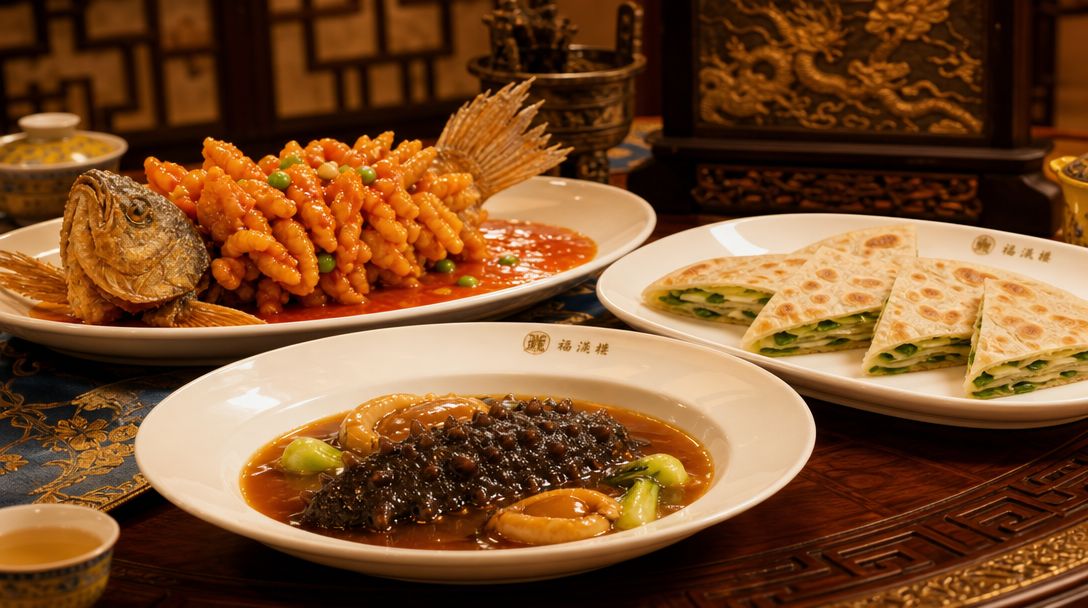
Shandong cuisine, Lǔ Cài, is the oldest and most historically influential of all eight traditions. As the birthplace of Confucius, Shandong held enormous cultural prestige throughout Chinese history, and its cooking style shaped the royal kitchens of both the Ming and Qing imperial courts. If you’ve eaten at a formal Chinese banquet anywhere in the world, you’ve likely eaten dishes descended from Shandong tradition.
The defining characteristics of Shandong cuisine are its mastery of braising, its emphasis on the natural flavors of fresh seafood and high-quality meat, and its use of scallions as a primary aromatic. Signature dishes include sweet and sour Yellow River carp, braised sea cucumber in brown sauce, and the deceptively simple scallion-stuffed pancake that has fed this region for centuries.
For travelers in China, Shandong cuisine is a window into the imperial past, food designed not to impress with heat or novelty, but to demonstrate mastery of technique and respect for ingredients.
Shandong’s imperial cuisine: braised sea cucumber, Yellow River carp, and scallion pancakes, the legacy of China’s royal kitchens. · Illustration
Sichuan Cuisine: The Bold & Numbing (川菜)
Tradition 02 of 08
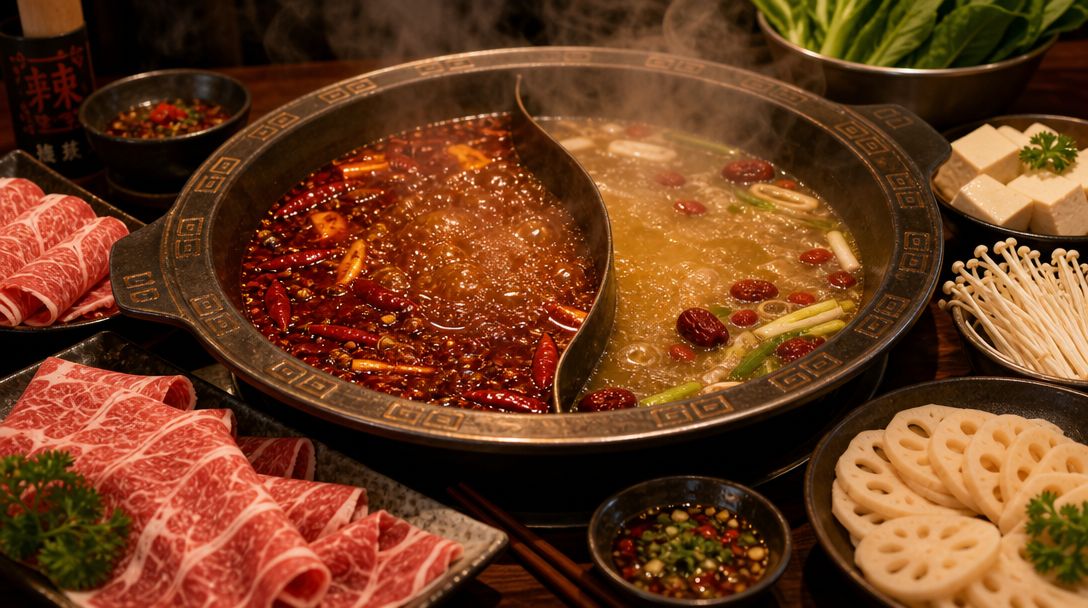
No culinary tradition on earth creates quite the sensation of Sichuan cooking. Built on the twin pillars of má (numbing, from Sichuan peppercorn) and là (spicy, from dried chilies), Sichuan cuisine is simultaneously the most internationally recognized and the most misunderstood of China’s eight great traditions. The world knows it as “spicy Chinese food.” Those who travel to Chengdu understand it as something far more complex.
Sichuan chefs work with 23 distinct flavor profiles, ranging from the intensely aromatic garlic sauce to the tongue-coating numbing-spicy (málà) to the deceptively gentle fish-fragrant sauce (yúxiāng), which contains no fish. The tradition’s signature invention, doubanjiang (fermented broad bean and chili paste), underpins hundreds of dishes and is arguably the most important condiment in Chinese cooking.
UNESCO recognized Chengdu as a City of Gastronomy, a designation that captures what every traveler to Sichuan already knows: this is one of the world’s great food destinations.
Cantonese Cuisine: The Art of Freshness (粤菜)
Tradition 03 of 08
Cantonese cuisine is the most globally exported of all eight traditions. But authentic Cantonese cooking, as practiced in Guangzhou, is something altogether more refined than its international versions suggest. Its philosophy is radical in its simplicity: let the ingredient speak.
Cantonese chefs avoid heavy sauces, strong spices, or long cooking times that would mask the natural flavor of a pristine ingredient. A live fish, steamed for minutes with thin strips of ginger and a splash of soy, finished with hot oil poured over fresh scallions, this is Cantonese philosophy in a single dish.
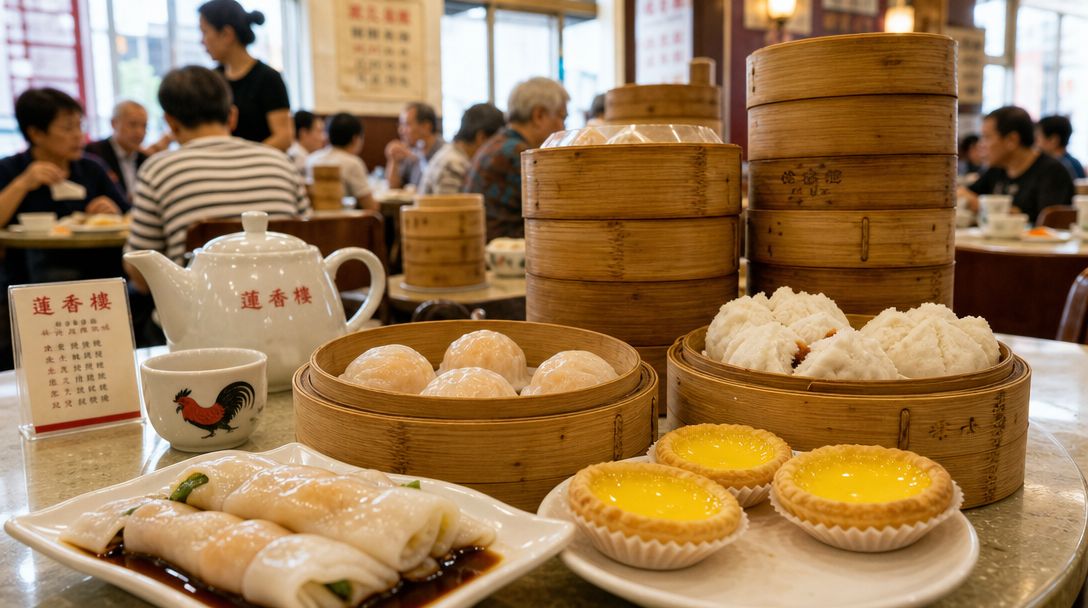
And then there is dim sum, yum cha (饮茶). The morning ritual of tea and small plates that defines Cantonese social life. Bamboo steamers filled with har gow, char siu bao, cheung fun, and egg tarts. For international travelers, a dim sum breakfast in Guangzhou is one of China’s most joyful food experiences.
Cantonese dim sum, the art of freshness, delicacy, and community at the morning tea table. · Illustration
Jiangsu Cuisine: Elegant & Refined (苏菜)
Tradition 04 of 08
Jiangsu cuisine, Sū Cài, emerges from one of China’s wealthiest and most cultured historical regions. The cities of Suzhou, Nanjing, and Yangzhou produced centuries of poets, painters, and scholars, and their food reflects the same aesthetic sensibility: precise, elegant, and visually beautiful. Jiangsu dishes are celebrated for their knife skills, mastery of light sweet-savory braising, and use of river produce. The iconic Yangzhou fried rice originated here, as did the legendary lion’s head meatball, a trembling sphere of minced pork braised in clear stock that remains one of China’s most beloved comfort foods.
Fujian Cuisine: The Ocean’s Depth (闽菜)
Tradition 05 of 08
Fujian province faces the South China Sea, and its cuisine is shaped by the ocean in every dimension. Mǐn Cài is defined by extraordinary umami depth, built from layers of seafood, fermented sauces, and long-simmered stocks. Fujian’s signature creation is Buddha Jumps Over the Wall (佛跳墙), abalone, sea cucumber, fish maw, scallops, and ham simmered for hours in a sealed clay pot. Fujian’s influence extends far beyond China’s borders: the majority of overseas Chinese communities in Southeast Asia trace their ancestry to this province.
Zhejiang Cuisine: Fresh & Seasonal (浙菜)
Tradition 06 of 08
Zhejiang province (home to Hangzhou, one of China’s most historically celebrated cities) produces a cuisine of extraordinary seasonal sensitivity. Zhè Cài celebrates the specific ingredient of a specific moment: Longjing tea-infused shrimp in spring, hairy crab with warm Shaoxing rice wine in autumn. The tradition’s most iconic dish is Dongpo Pork (东坡肉), named after the Song Dynasty poet Su Dongpo, pork belly braised for hours in soy, rice wine, and rock sugar until the fat and meat reach trembling, caramelized perfection.
From imperial refinement to volcanic heat: China’s eight culinary traditions represent the full spectrum of human flavor. · Illustration
Hunan Cuisine: Fiery & Pungent (湘菜)
Tradition 07 of 08
Hunan cuisine is often compared to Sichuan, both traditions are bold and chili-forward. But where Sichuan builds complexity through numbing peppercorn sensation, Hunan cooking delivers direct, bright, clean heat with no numbing effect. Hunan’s most famous dish (Red-Braised Pork (毛氏红烧肉), associated with Chairman Mao Zedong) is thick pork belly braised in soy, Shaoxing wine, and rock sugar until lacquered in a deep mahogany glaze. Mao reportedly ate it for lunch every day, and it remains inseparable from Hunan’s cultural identity.
Anhui Cuisine: Mountain & Forest (徽菜)
Tradition 08 of 08
Anhui cuisine is perhaps the least internationally known of the eight traditions, yet one of the most historically significant. Huī Cài developed in the mountainous interior of Anhui province, where merchant families created a cuisine of long-braised meats, foraged mountain ingredients, and preserved foods. Anhui cooking is defined by patience: dishes are braised for hours until flavors reach concentrated, meditative depth. The most famous dish, hairy tofu (毛豆腐), deliberately fermented until covered in white mold then pan-fried, rewards the adventurous with complex, cheese-like depth unlike anything else in Chinese cooking.
Tips
Travel Tips for Exploring China’s Culinary Traditions
Getting Between Regions
China’s high-speed rail network connects all eight culinary regions efficiently. Beijing to Xi’an takes 4.5 hours; Shanghai to Hangzhou just 45 minutes. A multi-city China itinerary built around food is entirely practical by train.
Ordering Authentically
Ask for the dish the region is most famous for, not the most familiar item on the menu. In Guangzhou, order live seafood. In Chengdu, order off the spice-level menu. Locals know what is good that week.
Must-Eat by Region
Shandong: braised sea cucumber. Sichuan: hot pot. Cantonese: har gow. Jiangsu: lion’s head meatball. Fujian: Buddha Jumps Over the Wall. Zhejiang: Dongpo Pork. Hunan: red-braised pork. Anhui: bamboo shoot braise.
What to Pack
A translation app with camera function for menus is essential. A small notebook to record dish names, regional names differ significantly from standard Mandarin. And an open mind: a good meal is often the one you didn’t plan.
Practical Advice
Lunch is often the better meal in Chinese restaurants: the kitchen is fresh and the portions are generous. Avoid tourist-district restaurants near major attractions. Walk two blocks further and quality doubles, price halves.
Why go
Why Every Traveler Should Eat Their Way Through China
Food in China is not separate from culture, it is culture. These eight traditions are eight ways of understanding a civilization.
History You Can Taste
Every dish carries history. Dongpo Pork was invented by a Song Dynasty poet. Buddha Jumps Over the Wall dates to the Qing imperial court. Eating these dishes is a form of time travel that no museum can replicate.
Eight Worlds in One Country
A traveler who eats Shandong braised carp for lunch and Sichuan hot pot for dinner has experienced more flavor contrast in one day than most people encounter in a year of international dining.
Technique as Art Form
Chinese culinary technique, from the knife skills of Jiangsu to the wok hei of Cantonese stir-fry, represents millennia of accumulated wisdom. Watching a master chef work is a genuine cultural experience.
Seasonal & Sustainable
China’s culinary traditions were built on what the land produced each season. This deep seasonal intelligence, still practiced by chefs across all eight traditions, offers lessons that the modern world is only beginning to relearn.
FAQ
Frequently Asked Questions About China’s Culinary Traditions
What are China’s Eight Great Culinary Traditions?
China’s Eight Great Culinary Traditions are Shandong (鲁菜), Sichuan (川菜), Cantonese (粤菜), Jiangsu (苏菜), Fujian (闽菜), Zhejiang (浙菜), Hunan (湘菜), and Anhui (徽菜) cuisines. Each developed independently in a distinct geographic region with its own flavor philosophy, signature ingredients, and cooking techniques.
Which Chinese culinary tradition is the most famous internationally?
Cantonese cuisine (粤菜) is the most internationally recognized, as the majority of early Chinese emigrants came from Guangdong province. Sichuan cuisine has grown dramatically in global popularity over the past decade due to its bold, distinctive mala flavors. Together these two traditions represent China’s most globally visible food cultures.
Is all Chinese food spicy?
No, only some of the eight traditions use significant spice levels. Sichuan and Hunan cuisines are known for their heat, but Cantonese, Jiangsu, Zhejiang, Shandong, and Fujian traditions are generally mild, focusing on freshness, umami depth, and delicate seasonings. China’s culinary range is vast, there is something for every palate.
Which cities should I visit to experience authentic regional Chinese cuisine?
For Shandong cuisine: Jinan or Qingdao. For Sichuan: Chengdu. For Cantonese: Guangzhou. For Jiangsu: Suzhou, Nanjing, or Yangzhou. For Fujian: Fuzhou or Xiamen. For Zhejiang: Hangzhou. For Hunan: Changsha. For Anhui: Huangshan or Hefei.
How many days do I need to experience China’s culinary traditions?
A meaningful multi-tradition food journey requires at least 14 days, visiting 4 to 5 regions. A 7-day trip focusing on 2 to 3 regions (such as Chengdu + Hangzhou + Guangzhou) allows deep exploration. Even a single city like Guangzhou can sustain a week of extraordinary eating.
Can foreign travelers navigate Chinese restaurants without speaking Mandarin?
Yes, increasingly easily. Most popular restaurants in China’s major cities now offer picture menus or QR code menus with photos. Translation apps with camera functions can read Chinese menus in real time. Working with a local guide or food tour operator removes all barriers and significantly deepens the experience.
Send the dates, the group size and the places or themes that interest you, and PreeChina replies with a draft plan. Nothing is booked until a priced itinerary is agreed.