A granite mountain on the coast east of Qingdao, high enough to look down on the Yellow Sea from among its own crags. It is an old Daoist mountain, a walking mountain, and the source of the water the city's brewery advertises.
Quick Facts
The Short Version
What it is
A granite massif rising directly from the coast, with temples, stream valleys and a ridge of crags along the top
Where
East of Qingdao, Shandong, on the Yellow Sea. About an hour from the city centre
The rock
Granite. It weathers into rounded boulders, piled tors and smooth slabs, which is why the shapes here look nothing like a limestone mountain
Listed
A 5A scenic area, the top tier of the Chinese national rating
Its own claim
A cliff face carries a carved inscription calling it the leading one of the well-known mountains on the sea
The Daoist side
One of the old centres of Daoism, with temples in the valleys, the main one near the coast
The name abroad
Tsingtao Brewery advertises the mountain's spring water, and a mineral water sold across China carries the name
Time needed
A full day for one sector. Two or three to see more than one
Why Go
A Mountain With a Coastline
1. The sea is part of the view, and it is a working sea
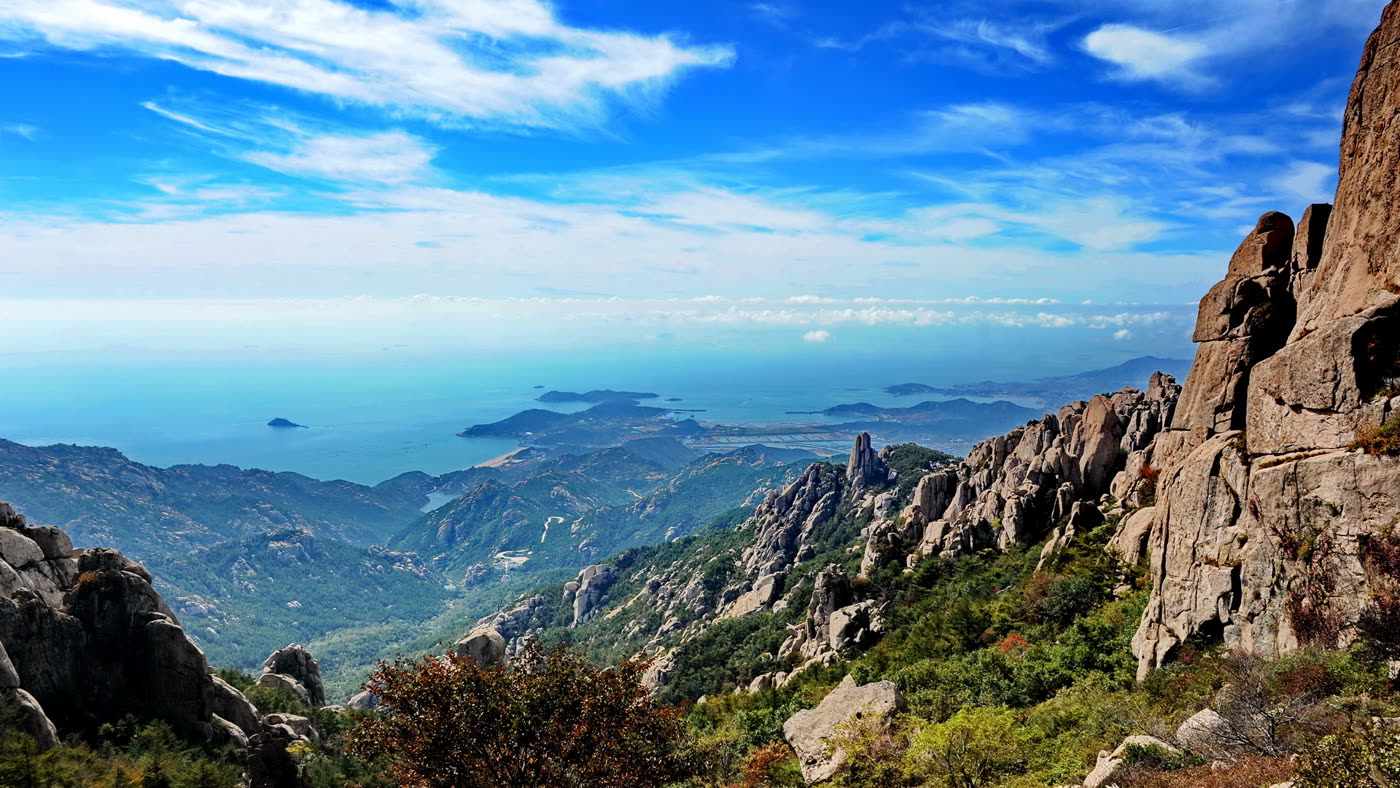
Almost every mountain that matters in Chinese culture is inland. The five sacred peaks are inland, the Buddhist mountains are inland, and the standard mountain photograph is ridges and cloud with no horizon. This one breaks that: from the crags along the top the ground falls through pine and granite to the Yellow Sea, with headlands, islands and a bay in the same frame as the rock.
It is worth being clear about what kind of sea. The shoreline in the picture at the top of this page carries a port and a long built-up strip, because this coast is one of the busier stretches of the Shandong peninsula and Qingdao is a major city an hour away. The view is genuinely fine and it is not a wilderness. That combination, a serious mountain with a working coast underneath it, is the thing this place actually offers.
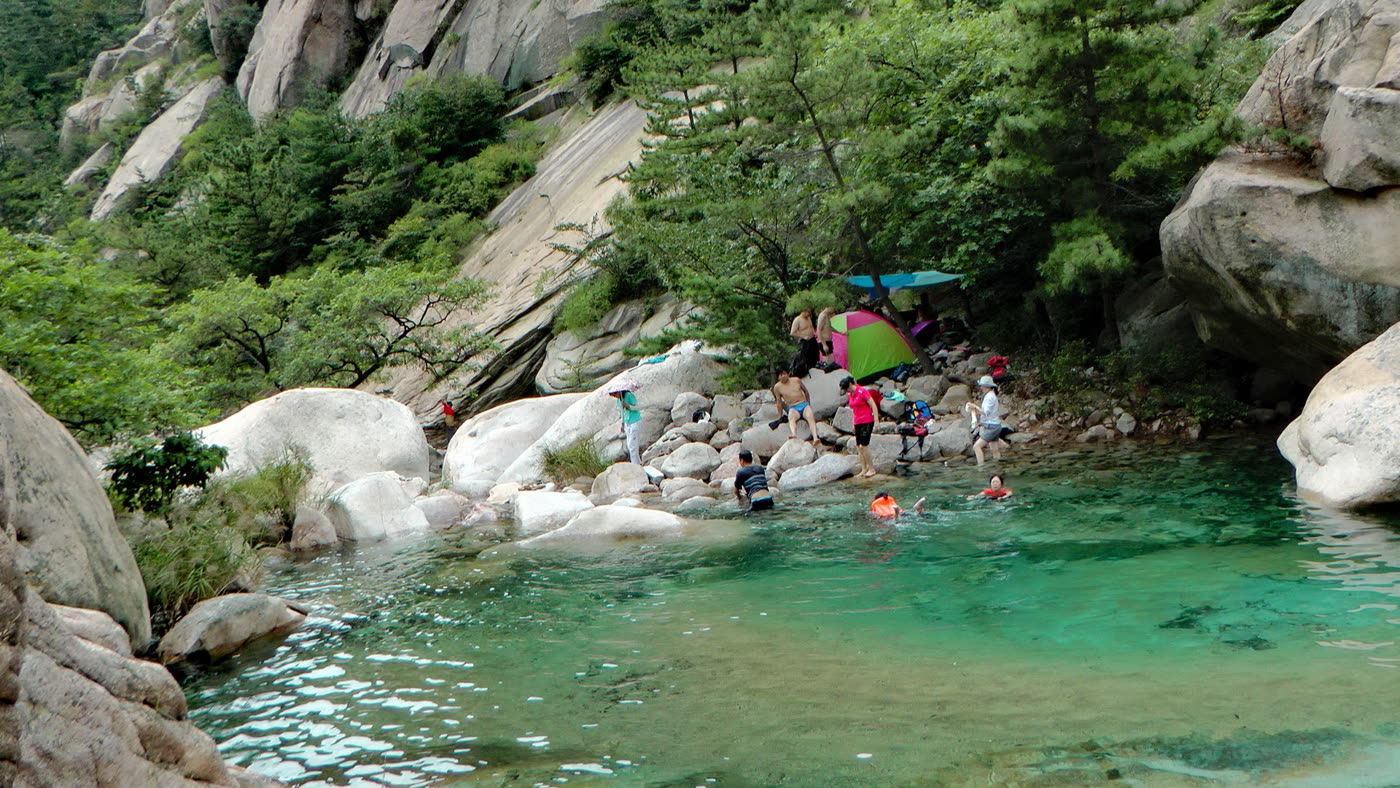
The granite does the rest. It weathers by shedding shells and rounding off corners, so the ridges break into stacked boulders and blunt towers rather than blades, the slabs are smooth enough to sit on, and the stream valleys are full of pale rounded blocks with clear water running between them. One of the pictures below shows what the people of Qingdao do with that in summer, which is swim in it.
2. An old Daoist mountain that everybody has already drunk
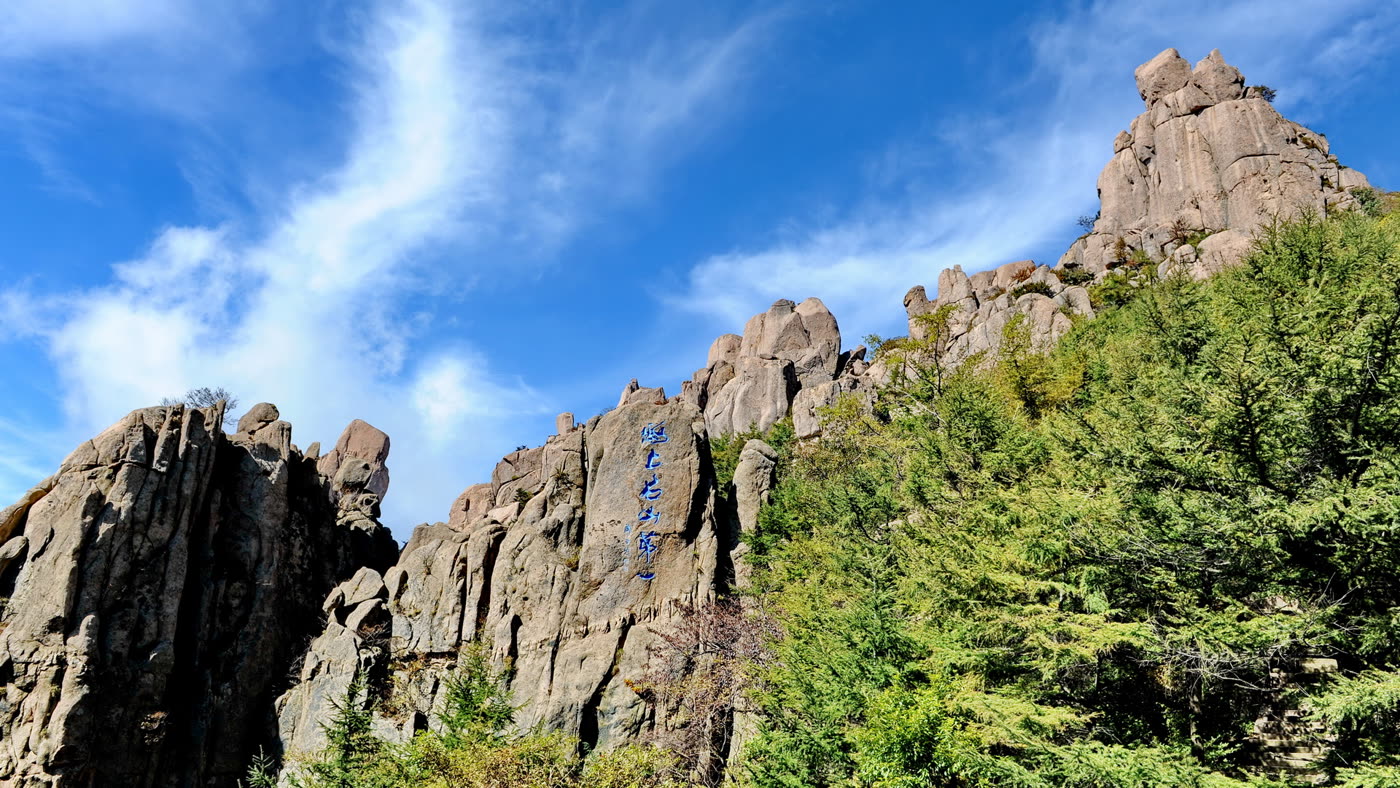
Mount Lao is one of the long-established centres of Daoism, with temples in the valleys and a monastic history going back many centuries, and its rock faces carry inscriptions cut by visitors who thought the place worth commemorating. One of them, in six large characters painted blue, claims the mountain as the leading one of the well-known mountains on the sea. That is the mountain's own estimate of itself, and it has been up there long enough to count as part of the scenery.
The stranger fact is that many foreign visitors have met the name before without knowing it. Tsingtao Brewery, whose beer is sold in a hundred countries, advertises that it uses spring water from this mountain, and a mineral water carrying the mountain's name is on sale across China. Very few Chinese mountains are recognisable outside the country at all. This one is recognisable through a bottle, which is a peculiar route to fame and a useful hook for anyone trying to explain where they have been.
For readers who want the literary version, Pu Songling's collection of strange tales, written in the seventeenth century and widely translated, contains a story set here about a lazy student who goes to the mountain to learn Daoist magic and manages to acquire exactly one trick. It is two pages long, it is funny, and it is a better introduction to what this mountain meant to Chinese readers than any description of the temples.
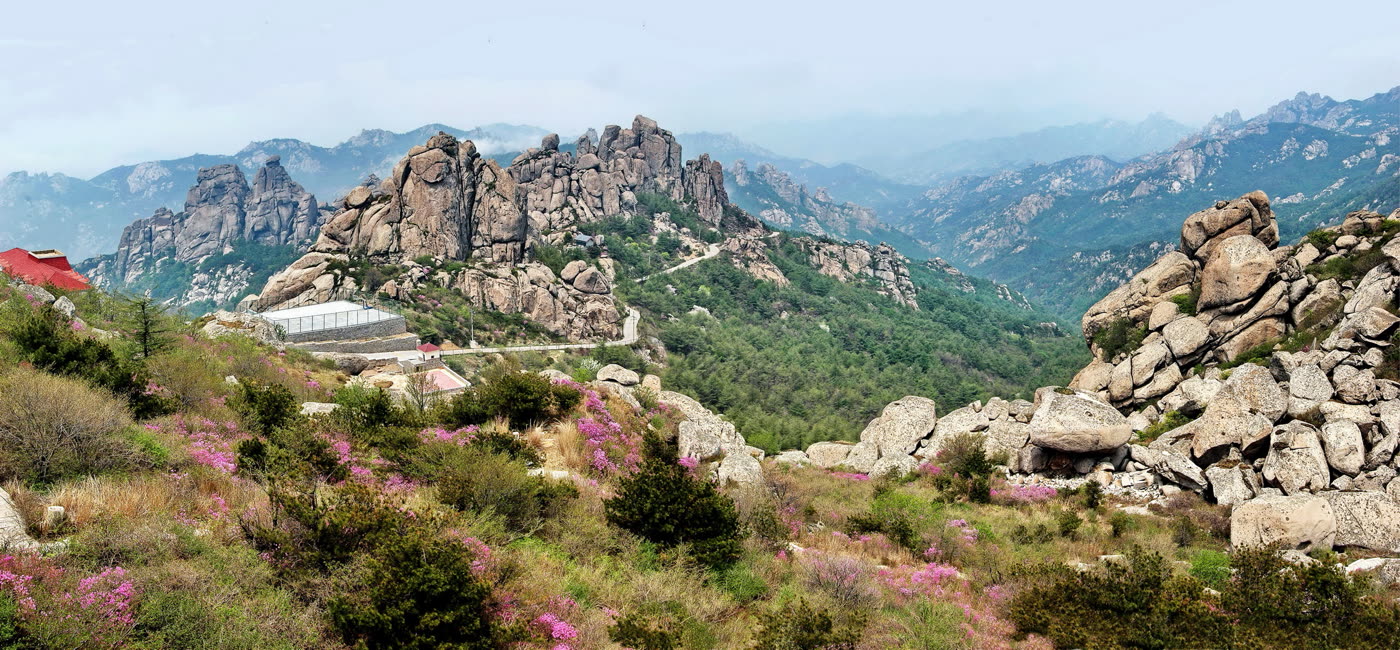
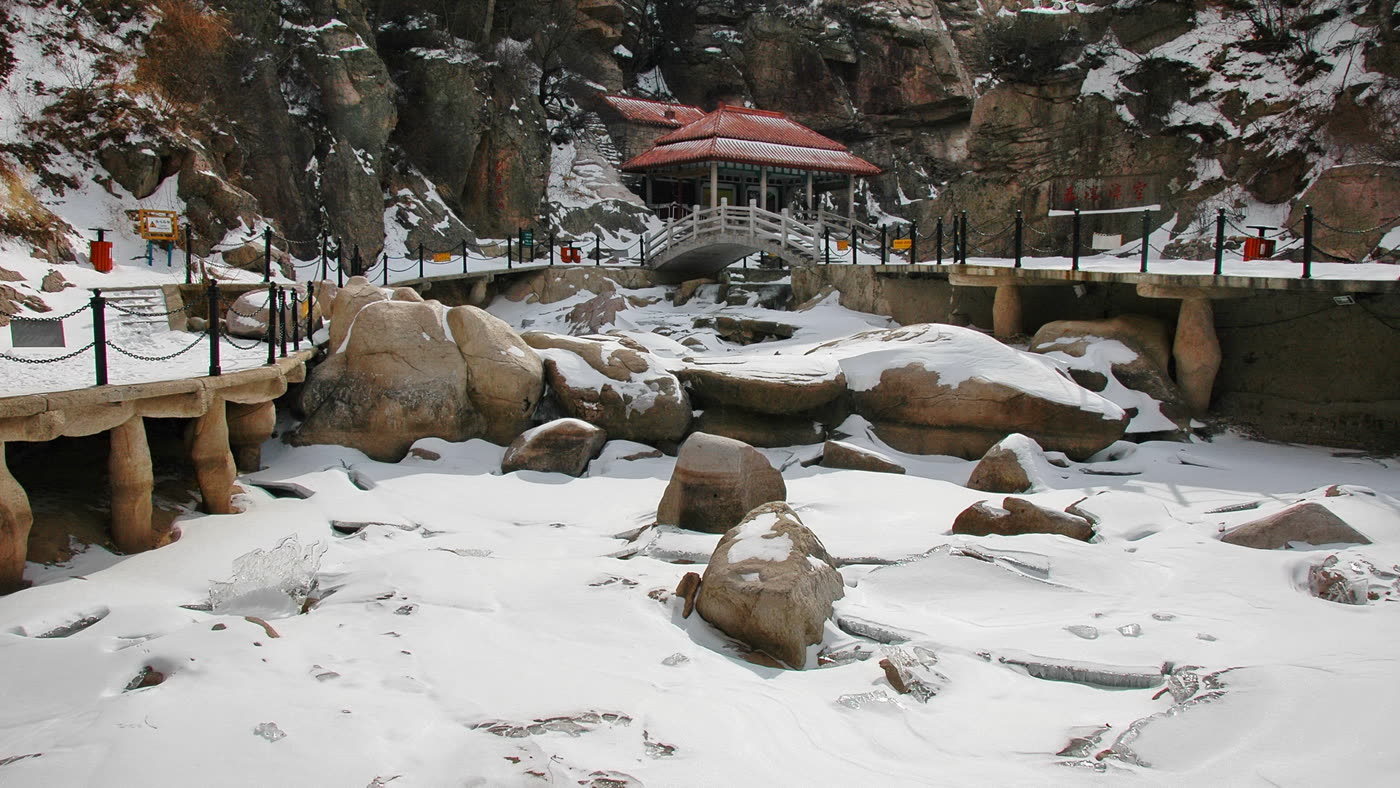
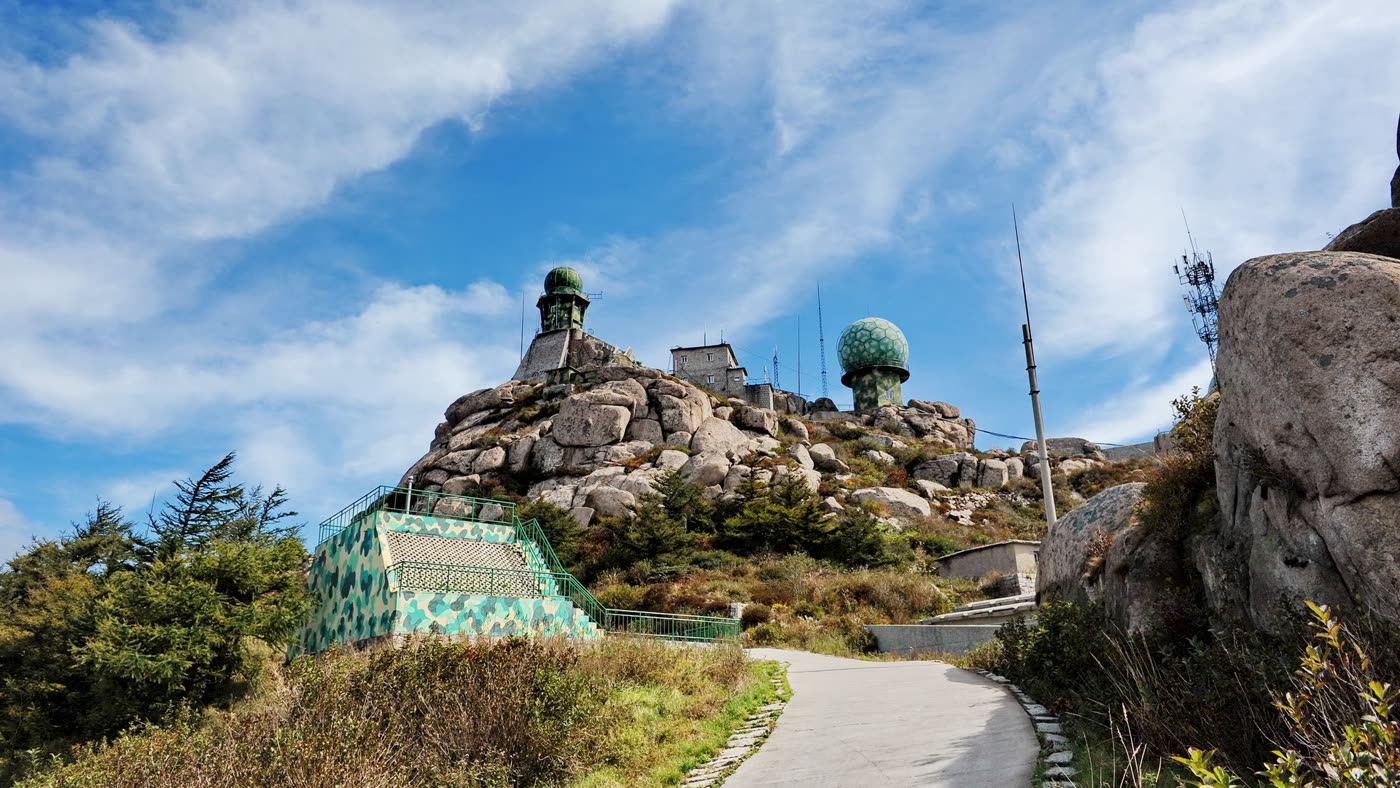
The mountain's own verdict on itself, cut into the rock: the leading one of the well-known mountains on the sea. Inscriptions like this are scattered along the ridges here.What the mountain is for, locally. These stream pools are a summer swimming spot for Qingdao, tents and all, and they bear no resemblance to the empty scenery in the brochures.Spring on the high ground. The azaleas are the local event, and the road and the buildings in the same frame are a fair indication of how managed this mountain is.The same valleys in winter, which is when they are quiet. The walkway, the chain rail and the bins are all part of the picture and are worth knowing about in advance.The top of the mountain is not a summit visitors get to themselves. Radomes, masts and a service road share it, and some of the high ground is closed.
The catch. The scenic area is divided into sectors with separate entrances, and moving between them means going back down to the coast road, so one day realistically means one sector. Buses are compulsory on the approach roads and wait in line badly in season. The summit area carries radomes, masts and service roads, and parts of the high ground are not open. The well-known stream pools are packed on summer weekends, and the whole mountain is an hour from a city of nine million that treats it as a park.
Orientation
Sectors, Not a Summit
The mountain is administered as several sectors with their own gates along the coast road and up the valleys. The southern sector has the main Daoist temple near the sea and the shortest walk from a bus. Another sector runs up the stream valleys inland, with pools and cascades. A third gives access to the high ground and the crags. They are connected by the road around the base rather than by paths across the top.
So the opening decision is which sector, and it is more consequential than it sounds, because moving between two of them costs much of a day. Visitors with one day and an interest in the temples should take the coastal sector. Those who want the granite and the sea view should take the high one. Those with children in summer should take the valleys.
Practical
Things Worth Knowing
Pick one sector and commit
They are joined just by the road around the bottom. Two sectors in a day means a lot of coach time.
Start early on summer weekends
Qingdao treats this as its back garden and the buses wait in line.
Bring layers for the top
It is a coastal mountain. Sea fog can arrive within the hour and the ridge is exposed.
Read the story at the start
Pu Songling's tale set on this mountain takes ten minutes and changes what the temples look like.
Timing
When to Go
Season
The case for
The catch
May and June
Azaleas on the high slopes, clear air and comfortable walking
Sea fog is common on this coast in early summer and can sit on the mountain all day
September and October
A particularly reliable weather of the year, and the ideal chance of the long sea view
The opening week of October is a national holiday and Qingdao is busy
July and August
Warm water in the stream pools, and the mountain at its greenest
The busiest weeks, and humid. The pools in the pictures are full of people
November to March
Empty paths, snow in the valleys and ice on the streams
Cold with a hard wind off the sea. Some upper paths and services close
Context
Why the Rock Looks Like That
The whole massif is granite, which means it was once molten rock that cooled slowly deep underground and has since been lifted and stripped of everything that lay above it. Granite cracks in three directions as it rises and cools, so water gets into the joints and rots the corners at the start, and a buried block gradually becomes a rounded core sitting in its own debris. Strip the debris away and what is left is a hillside of stacked boulders and smooth slabs, which is exactly what is in these photographs.
That process also explains the pools. The joints control where the streams run, the rounded blocks make natural dams, and the water between them is clear because granite gives up very little in solution. It is the opposite of the karst pages on this site, where the rock dissolves and the water turns green with what it carries. Here the rock is stubborn and the water is clear, and both facts come from the same origin.
The coast is part of the same story. This is where the granite of the Shandong peninsula meets the sea, and the drowned valleys between the spurs are what gave Qingdao its harbour. The city was a fishing settlement until Germany took it as a concession in 1897 and built a port, a garrison and a brewery. The brewery outlived the concession by a long way, and the water it advertises comes off this mountain, which is how a granite massif in Shandong ended up with a name people recognise in bars on the other side of the world.
Qingdao is one of the more comfortable Chinese cities for a foreign visitor to spend time in: a coastline, a walkable old quarter of German-era buildings, seafood, and the brewery. The mountain is about an hour east along the coast road and many people do it as a day trip from the city rather than staying out there.
If the trip is longer, the useful shape is two or three days in the city with one of them on the mountain, rather than treating the mountain as the destination and the city as the airport. The two belong together, and the beer explains the connection better than any guidebook.
Experiences
What Visitors Can Actually Do Here
On site · one day
The coastal sector and the main temple
The Daoist temple near the sea, the shore path and the lower granite, which is the shortest and a particularly rewarding single day.
Sector pass and the compulsory bus.
On site · one day
The high ground
Up to the crags and the ridge for the sea view and the inscriptions, with the cable car for part of the climb.
Sector pass, bus and cable car.
Guided · 4 days
Qingdao and the mountain
The old city and the brewery, then two sectors of the mountain, with the granite, the temples and the harbour read as one place rather than three outings.
Come for the combination rather than for either half. A granite mountain with temples in its valleys and the Yellow Sea at the bottom of the view is a rare thing in China, and the rock shapes alone repay a day. Pick one sector and stay in it, go in autumn if the long view matters, and read the two-page story about the lazy student before visitors go up.
Travelling to China with 10 or more people? Talk to PreeChina first. A transparent service fee of USD 100 per person for trips of up to 10 days (USD 150 for 11 to 20 days), and no markup on travel components. See how the fee works.
Many visitors to Qingdao see the old town and the beer and never get onto the mountain the beer is named after. Share the travel dates and our local team will pick the sector that matches what visitors want, keep them ahead of the weekend buses, and join the city and the mountain into one trip instead of two.