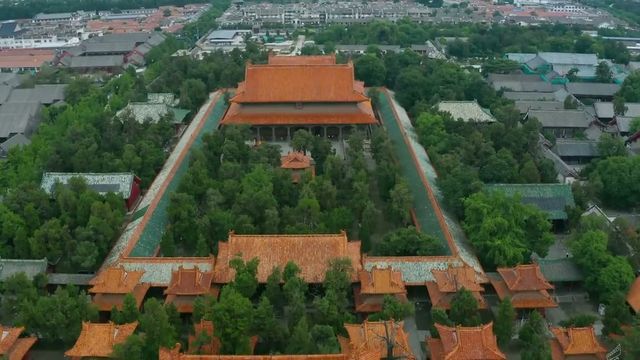
A low group of hills in the middle of the Henan plain, with the tombs of a Han royal house cut horizontally into the rock beneath them. One of them holds painted walls from the second century BC.
Quick Facts
The Short Version
What it is
A cluster of low hills holding the rock-cut tombs of the Western Han kings of Liang, plus a modern statue and park on the summit
Where
Yongcheng, Shangqiu prefecture, in the far east of Henan near the Anhui border
Why it matters
The tomb of King Gong of Liang contains the Four Spirits and Cloud mural, among the long-surviving painted tomb chambers in China
How the tombs were made
Cut horizontally into the rock as full complexes of chambers, passages and drainage, rather than dug down and covered
The statue
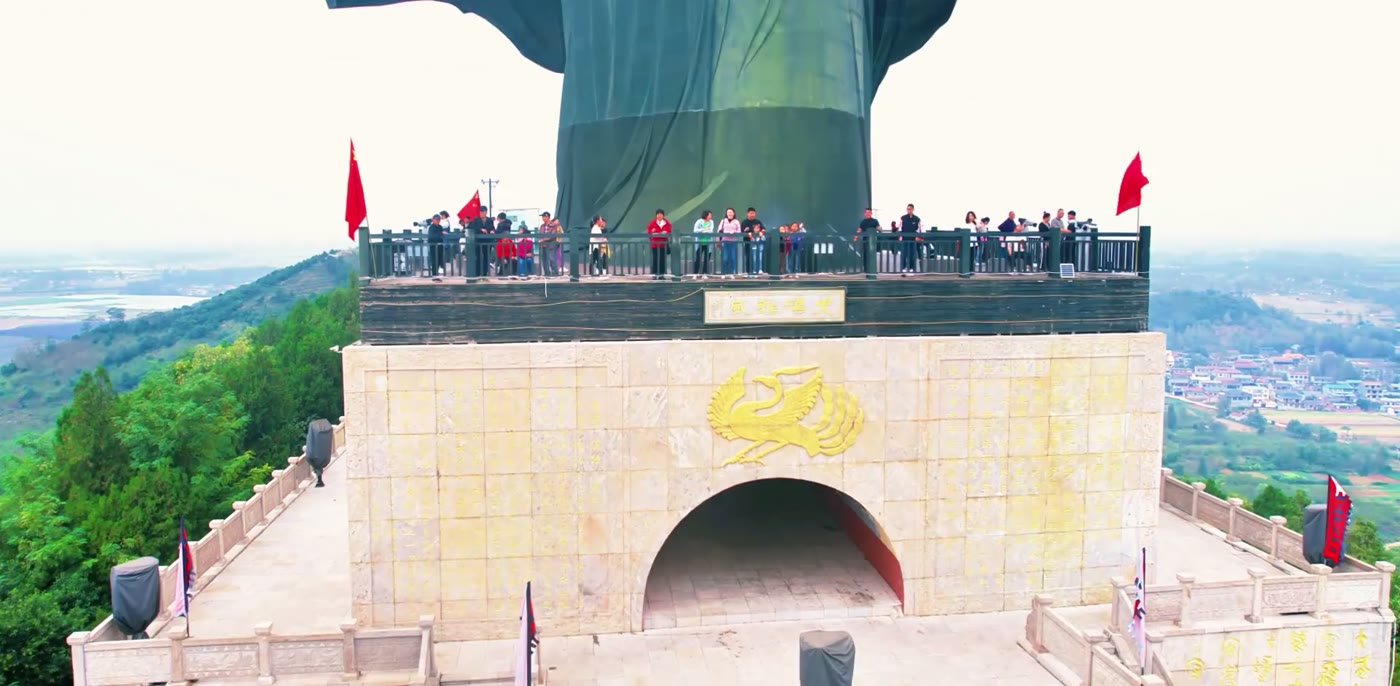
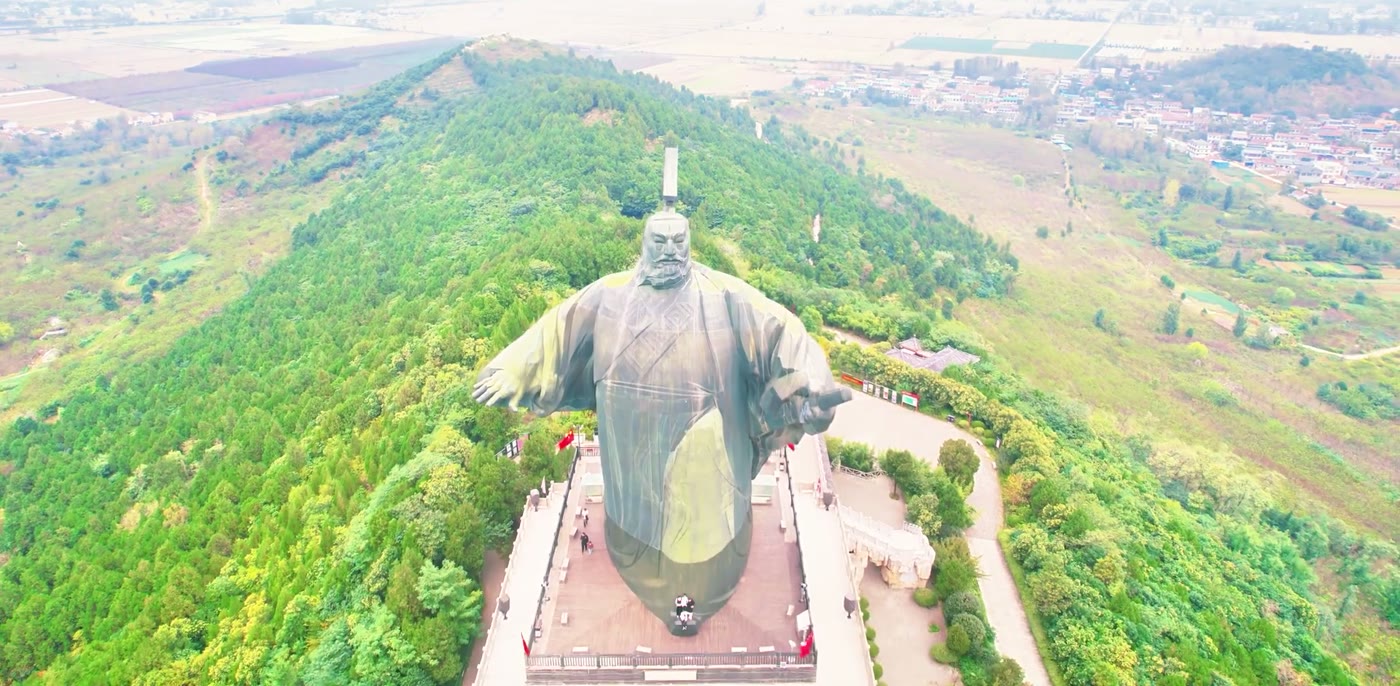
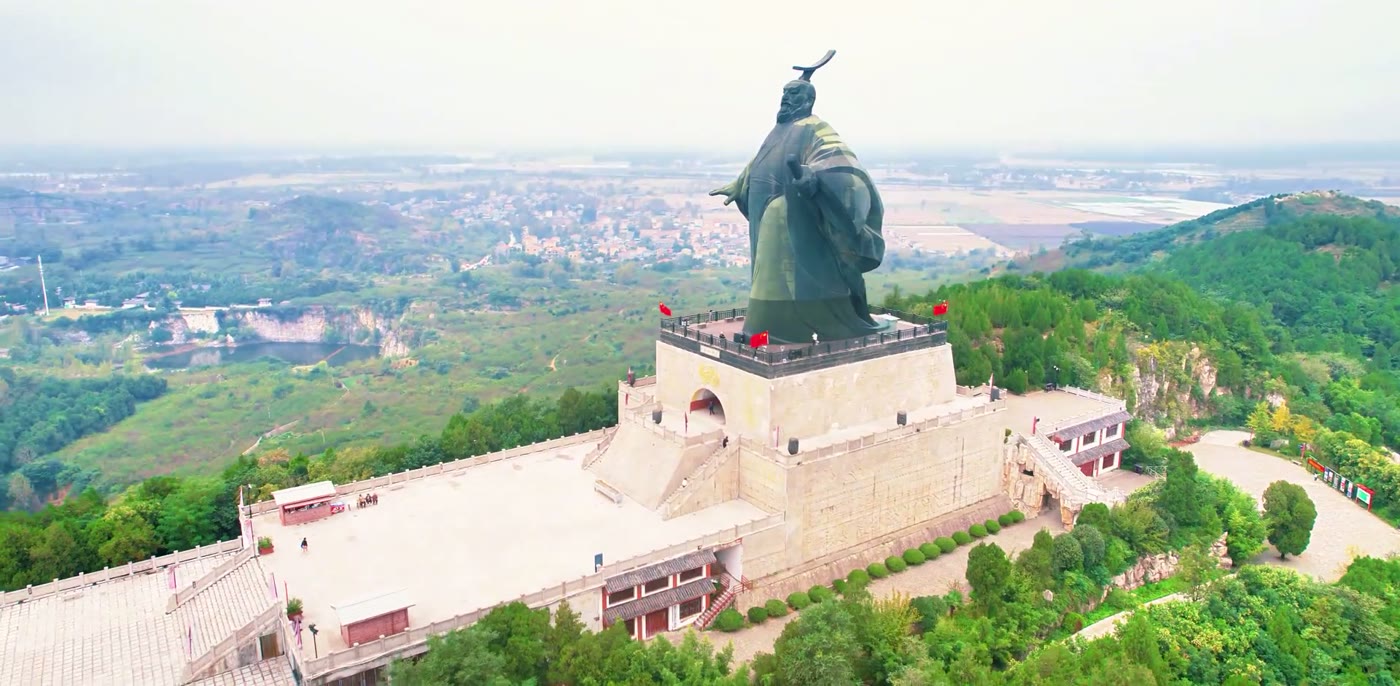
A modern bronze of Liu Bang, founder of the Han, on the summit. Recent, and it dominates the site by a wide margin
Arrangements
Ticketed, covering several separate tombs and the summit. Buy at the gate
Time needed
Half a day. The tombs are spread out and a shuttle links them
Language
Chinese throughout, with some English at the main tomb
Why Go
The Important Part Is Underground
1. Tombs cut sideways into rock
Many Chinese tombs of this period were shafts dug down and then covered. The Liang kings did something else: they drove horizontally into these hills and hollowed out complete underground compounds, with corridors, side chambers, stables, storerooms, wells and cut drainage channels. Walking into one is walking into a building that was subtracted from a hill rather than built on one.
The scale is the surprise. These are not chambers, they are complexes, running for tens of metres and turning corners. The rock faces still carry the marks of the tools that removed them.
2. The painted walls
The tomb of King Gong of Liang, opened in the 1990s, holds a painted ceiling and walls showing a dragon, a bird, clouds and other figures across a wide span. The dating puts it in the second century BC, which makes it one of the long-surviving painted tomb interiors in China, and the execution is confident rather than tentative.
For a foreign visitor the useful comparison is chronological. This painting was made within roughly a century and a half of the wall paintings at Pompeii, at the other end of the continent, and almost nothing of Chinese painting from that period survives on any other surface. That is the reason to come to a low hill in eastern Henan.
The summit platform. The statue is recent and is what the site is marketed on.The hills stand alone. Everything around them is flat farmed plain, which is why a royal house chose them.The summit complex. The tombs are cut into the hills below and out of sight from here.
The catch. What dominates this site is a modern bronze statue, and what matters here is underground, unlit and hard to photograph. Visitors who arrive, climb to the statue, take the view over the plain and leave have seen the least significant part. The tombs need the shuttle and a deliberate decision to go to them.
Orientation
A Shuttle Between Separate Tombs
The pass covers several sites spread across the hills: the main tomb group, the summit with the statue, and a number of smaller monuments. A shuttle connects them and walking between them is possible but slow.
Go to the tombs at the start, while visitors still have attention for an unlit interior with Chinese labels. The summit and the view work at any point in the day and require nothing of visitors.
Practical
Things Worth Knowing
The mural is the reason to come
Ask at the gate which tomb has the painted chamber and go there at the start. It is not the default route.
Light and photography
Tomb interiors are dim and flash is restricted where painting survives. Accept that visitors will not get a photograph and look properly instead.
Cool underground, hot outside
The chambers hold a steady temperature and the hills do not. In summer the contrast is sharp enough to be worth a layer.
It is genuinely out of the way
Yongcheng is in the far east of Henan. Shangqiu is the nearest city with fast rail, about an hour away.
Timing
When to Go
Season
The case for
The catch
April to May
Green on the hills and mild for the climb, with the plain in crop
Spring dust is common across the Henan plain
September to October
The clearest air and the ideal long views over the farmland
The opening week of October is the national holiday
June to August
Full green, and the tomb interiors are a relief from the heat
Hot and humid on the open summit
November to March
Very quiet, and the shape of the hills reads clearly against bare fields
Cold, and the plain is grey for months
Context
Why a Kingdom Put Its Dead in a Hill
The Han empire granted large territories to royal relatives as kingdoms, and Liang, based at Suiyang near modern Shangqiu, was among the wealthiest. Its kings had the resources to do something expensive with their burials and a rare geological opportunity: an isolated group of rock hills in the middle of an otherwise flat alluvial plain.
Cutting into rock rather than digging into soil gave a tomb that could not easily be dug out and would not collapse. It also took years and enormous labour. The result is a set of underground complexes that survived largely because they were hard to enter, although several were robbed in antiquity all the same.
The hills carry other layers. Liu Bang, who founded the Han, is connected to them in the traditional accounts of his rise, and the tomb of Chen Sheng, who led the opening major revolt against the Qin, is here as well. The modern statue on the summit is the site making that association visible, several centuries of association compressed into one recent bronze.
Shangqiu is the prefecture seat and the rail hub, about an hour from the site. It also has its own walled old town, a Ming city that is quieter and less restored than many and is worth an afternoon if visitors are staying the night.
This corner of Henan is off every standard itinerary. Combining Mangdang with Qufu in Shandong to the northeast makes a coherent two or three days for anyone following the early imperial and Confucian material rather than the usual route.
Experiences
What Visitors Can Actually Do Here
On site · 1 hr
Inside a rock-cut tomb
Corridors, side chambers and drainage cut horizontally into the hill, with the tool marks still on the rock.
Cool, dim, and the part worth the journey.
On site · 30 min
The painted chamber
The Four Spirits and Cloud mural, from the second century BC. Dim and restricted, and almost nothing else of Chinese painting from that period survives.
Ask which tomb. Not the default route.
On site · 45 min
The summit
The statue, the platform and the view out over the plain, which explains why these hills mattered.
Easy, and the part everyone does.
Worth half a day for the tombs and the mural, and not worth the journey for anything above ground. Go straight to the painted chamber, then the other tomb complexes, and treat the summit and the statue as the view at the end. Pair it with Qufu if visitors are coming this far east.
Travelling to China with 10 or more people? Talk to PreeChina first. A transparent service fee of USD 100 per person for trips of up to 10 days (USD 150 for 11 to 20 days), and no markup on travel components. See how the fee works.
Share the travel dates and interests, and our local team will build the route: the Han rock-cut tombs and the painted chamber with someone who can explain what visitors are looking at, the old town at Shangqiu, and Qufu across the provincial line.