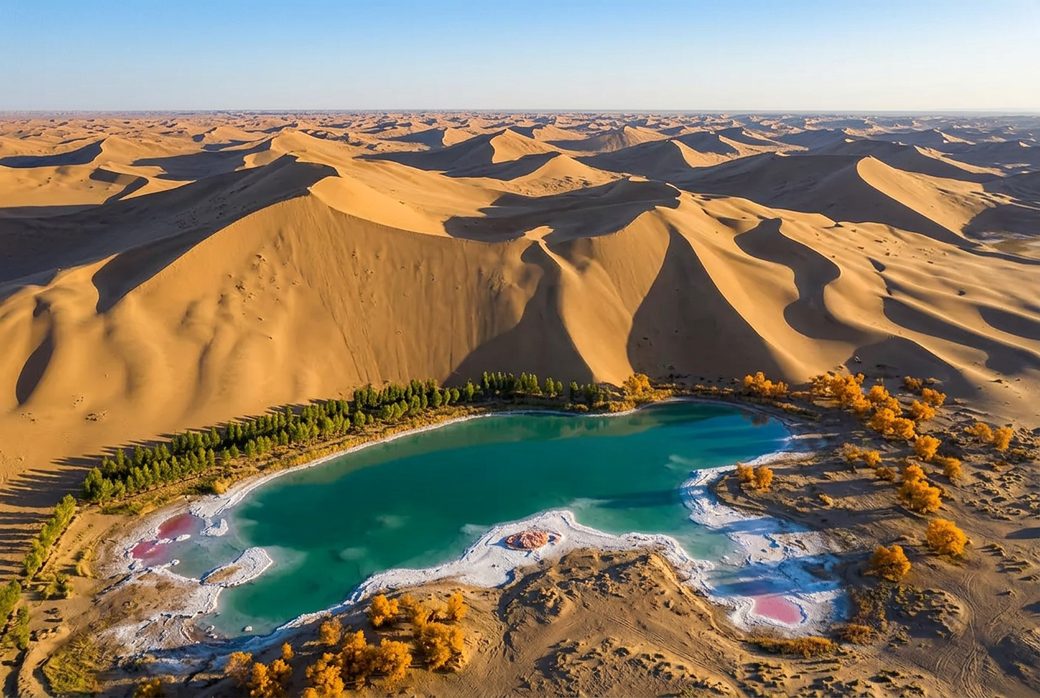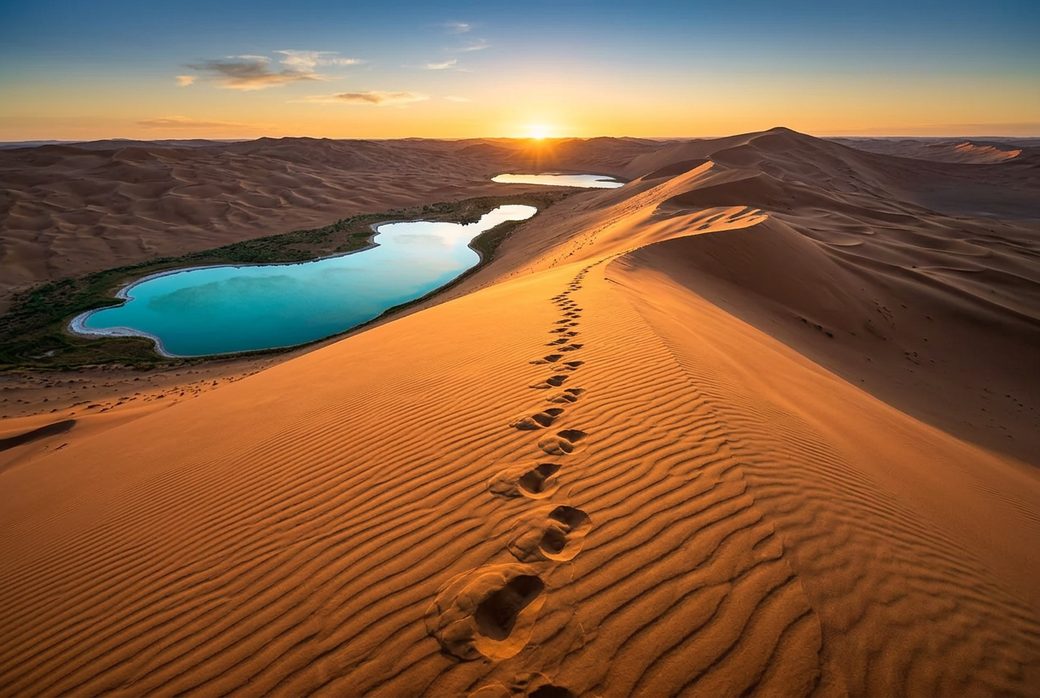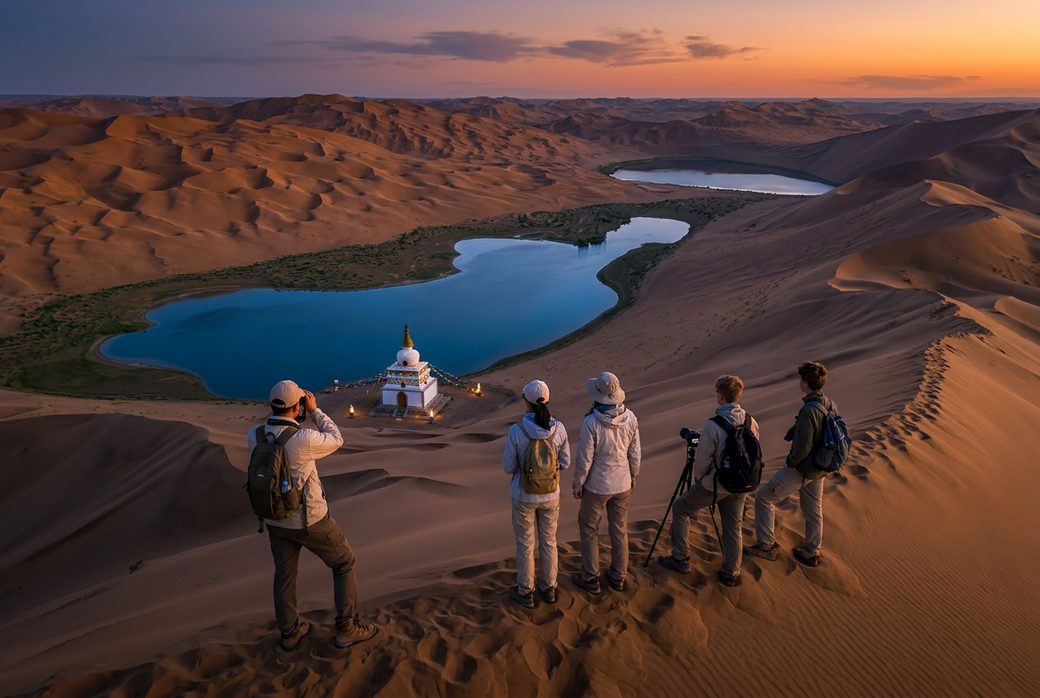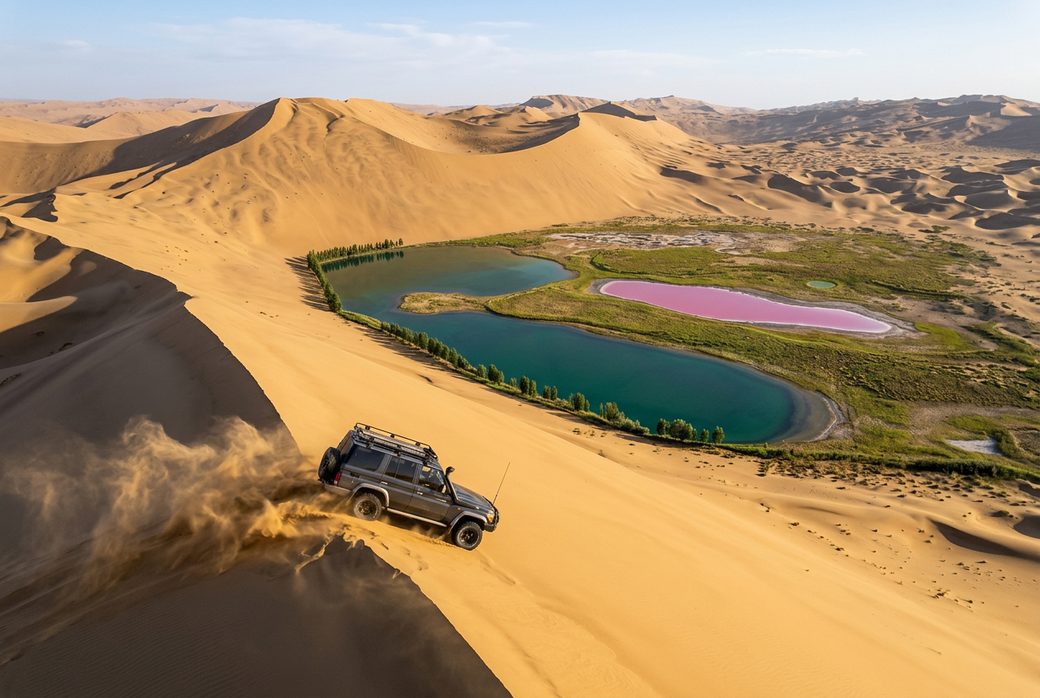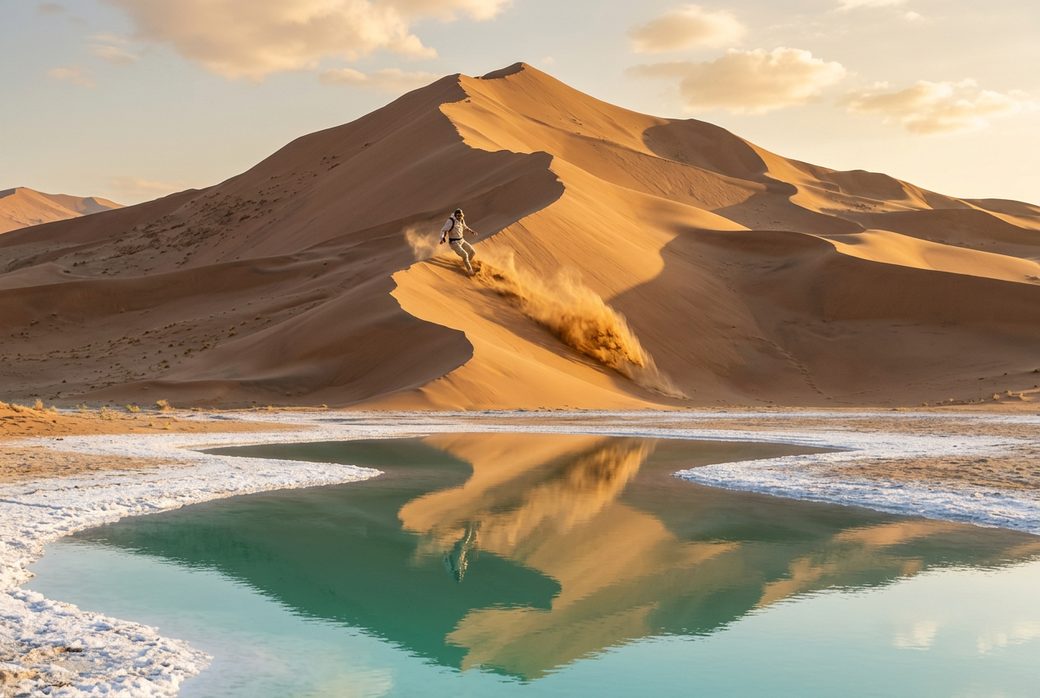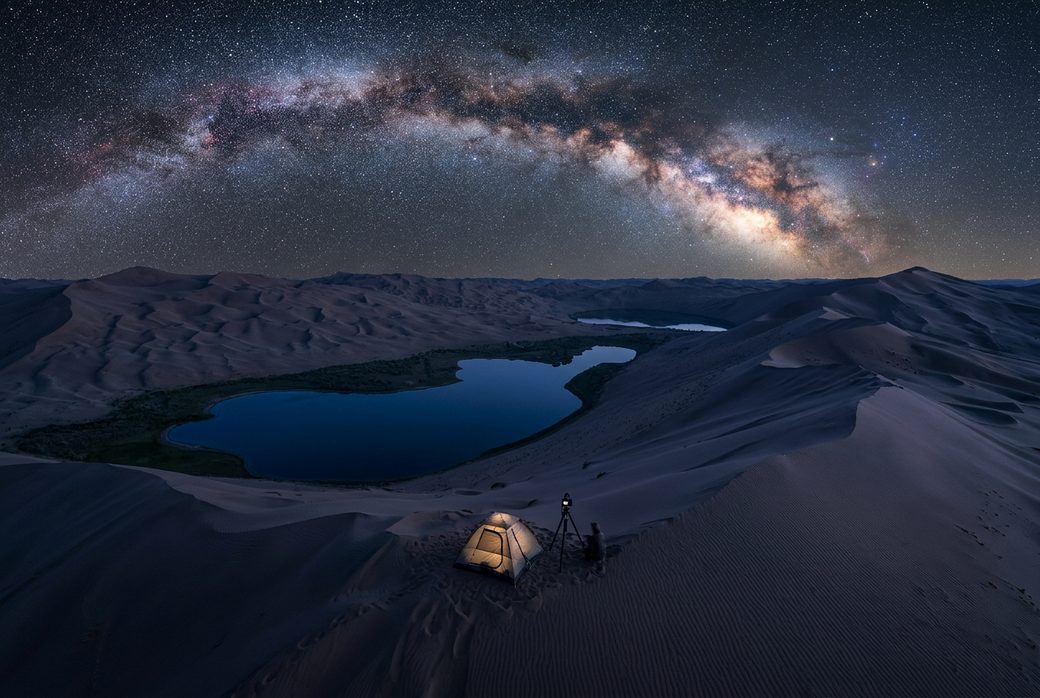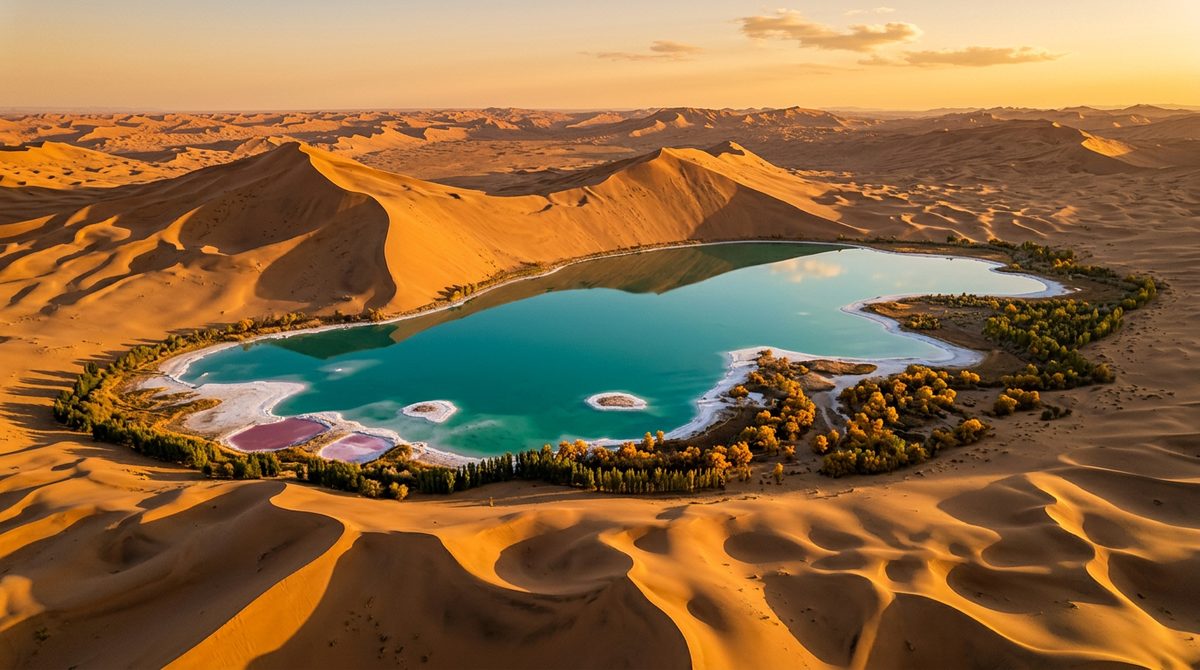
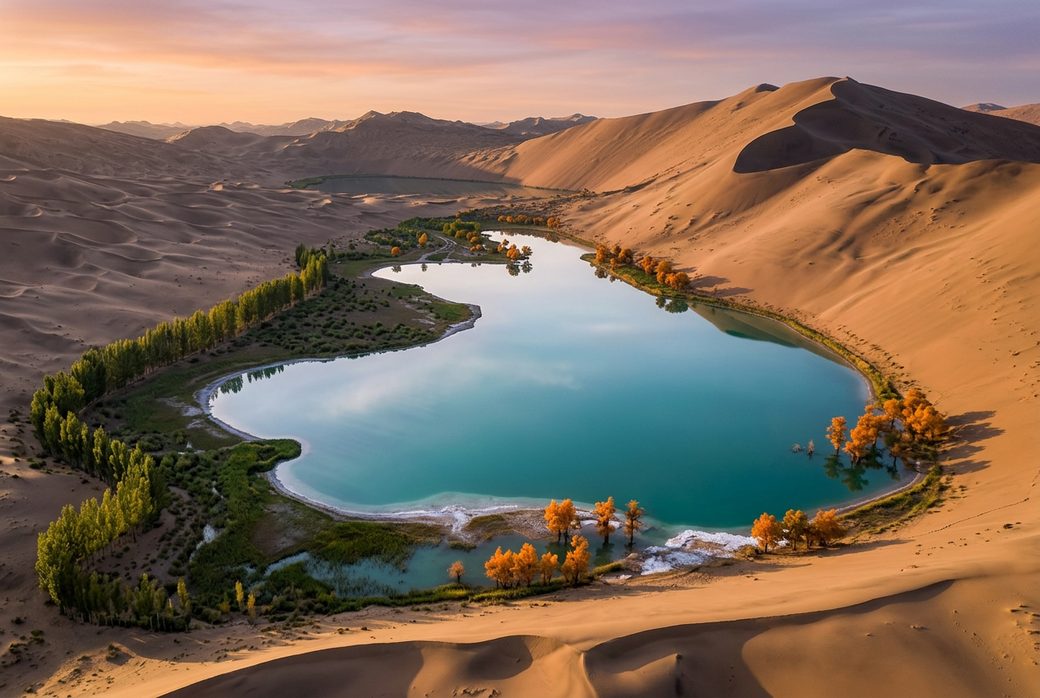
Alxa, pronounced “Alashan”, is China’s least-visited and most extraordinary desert prefecture: a vast territory of 270,000 square kilometers encompassing three major deserts, including the Badain Jaran, one of the most geologically perplexing landscapes on Earth. The Badain Jaran Desert contains 144 lakes, some fresh and some salty, between sand dunes that rise about 460 meters in relative height, the tallest stabilised dunes on Earth according to the World Heritage listing, in a combination so scientifically improbable (lakes in a hyper-arid desert, fed by a groundwater system that no one fully understands) that it was not formally mapped until the 1980s and is still the subject of active scientific debate.
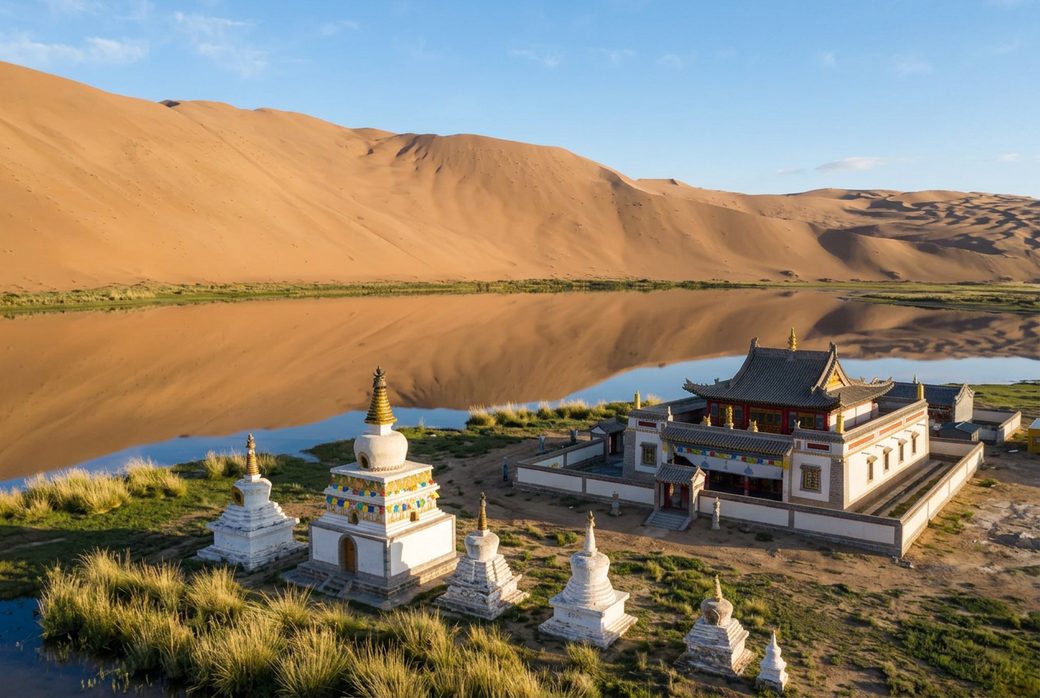
The “singing dunes” phenomenon at Badain Jaran produces sounds of extraordinary variety, deep booming, high-pitched whistling, and rhythmic drumming, as wind moves across the dune crests and sand slides down the lee slopes in sheets. Combined with the improbable blue-green lakes at the base of the dunes, where Tibetan Buddhist temples have stood for centuries fed by spring water that emerges from the desert floor with no apparent source, the landscape is simultaneously beautiful, eerie, and scientifically fascinating.