
Tianshui is in Gansu, in Northwest China.
Home › Destinations › Gansu › Tianshui
Gansu · City Guide
Tianshui, Where Clay Buddhas Cling to a Cliff Face.
Overview
Why Go
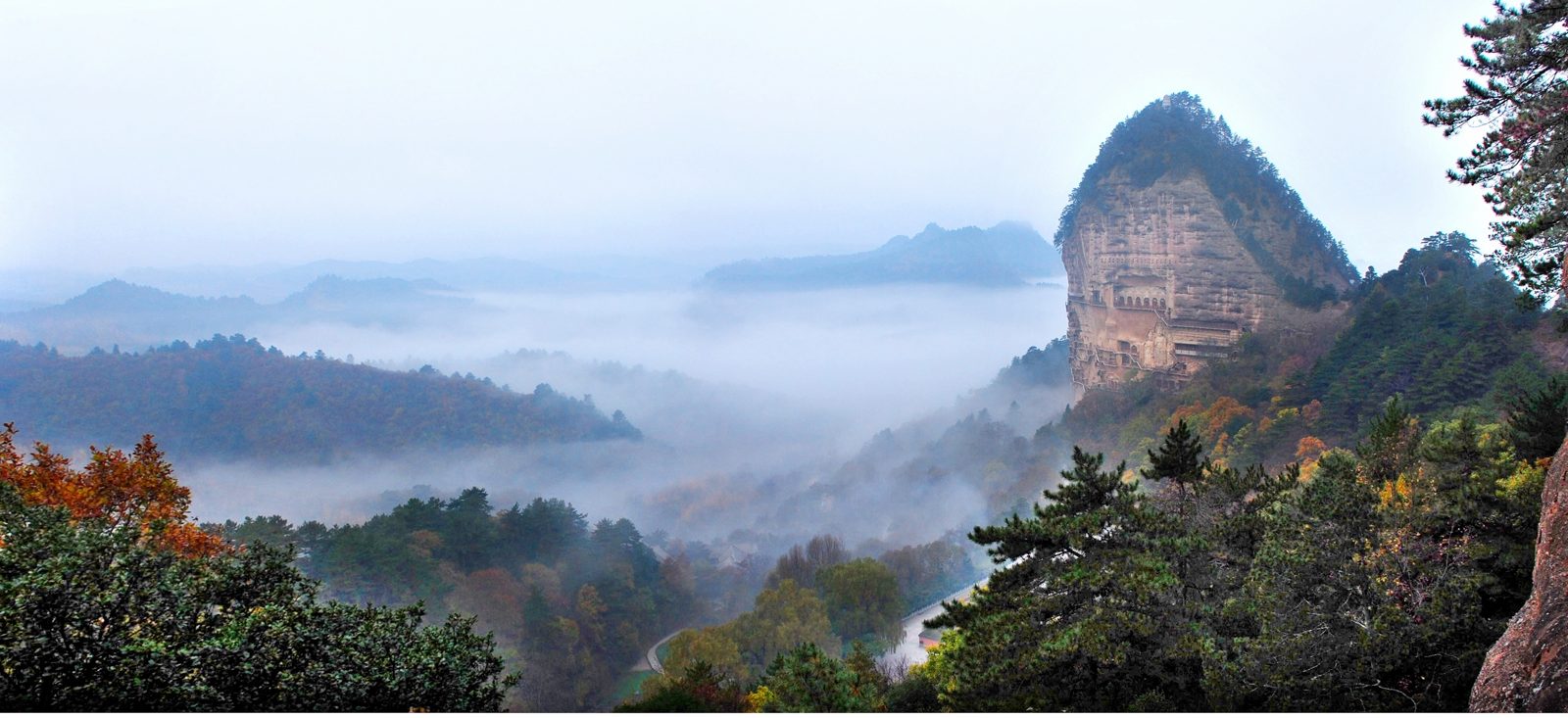
Maijishan's sandstone is too soft to carve well, so the figures were modelled in clay over wooden armatures instead. About 7,800 of them survive across a cliff 80 metres high, reached on walkways bolted to the rock.
Dadiwan in Qin'an has house floors, painted pottery and grain stores running back some eight thousand years. One large floor is surfaced in a lime-and-gravel mix that behaves like a primitive concrete, which is why the site turns up in histories of building.
Fuxi is the mythical figure credited with the trigrams, fishing nets and marriage, and Tianshui claims him. A state-level ceremony is held at the temple every summer solstice, with several hundred performers in Ming-style ritual dress.
Tianshui malatang uses the local Gangu chilli and hand-rolled wide potato noodles. An online surge in spring 2024 turned it into a national trip, with extra trains laid on, and the shops that were there before are still there.
The Qinling range reaches into the prefecture and pulls monsoon rain over it, so Tianshui has forest, hot springs and orchards where the province either side is loess and gravel. Its apples and peaches are sold across the north.
See
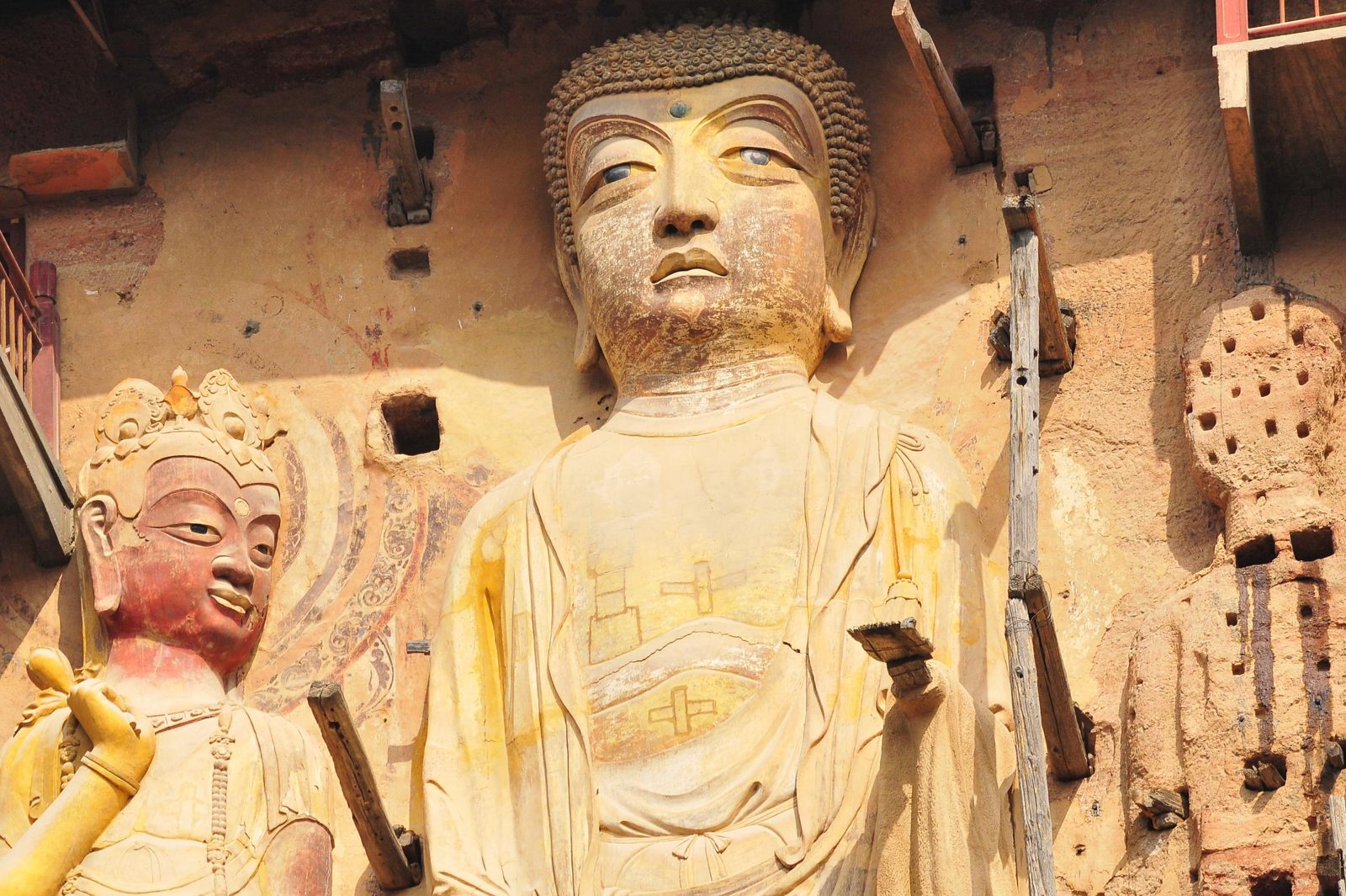
A round sandstone hill shaped like a stack of hay, hollowed with 194 caves on ledges and reached by walkways that zigzag up the face. The clay figures run from the Later Qin to the Qing. Inscribed by UNESCO in 2014 with the Silk Road corridor.
A Ming temple of 1490 in the west of the old city, a major surviving one dedicated to Fuxi. The main hall ceiling carries the sixty-four hexagrams and the courtyards hold cypresses planted at the founding.
A Neolithic settlement in Qin'an with habitation across several thousand years, excavated house floors under shelter and a museum of the painted pottery. It is an hour and a half from the city and sees very few visitors.
The western quarter of the old town, with two Ming official residences of the Hu family among the well-preserved timber courtyard houses in the northwest. The surrounding lanes are being restored and parts are still ordinary housing.
Two more cave sites in the same prefecture: a Tang Buddha in a cliff niche above Gangu, and a cluster of caves and a hanging temple inside a natural amphitheatre at Wushan. Both are local rather than ticketed attractions.
The valley where Ma Su lost the pass in 228 and Zhuge Liang's initial northern campaign collapsed with it. Readers of the Three Kingdoms novel know the episode; there is little to see beyond the ground itself and a marker.
On the Map
Approximate locations of the attractions above, across Tianshui.
Eat
Visitors pick the skewers, they are cooked to order and dressed with an oil made from Gangu chillies, which are hot without being numbing. The wide hand-rolled potato noodle is the part locals insist on. Lines are long between noon and two.
Buckwheat starch set into a firm jelly, torn rather than cut and dressed with chilli oil, garlic and vinegar. It is eaten for breakfast and it is the one Tianshui dish that visitors especially often find strange.
Noodles in a pale sour broth made by fermenting celery or cabbage in cooked wheat water for a few days. Cooling, faintly fizzy and eaten all summer across Gansu. Households keep the culture going the way others keep sourdough.
A deep red conical apple grown in the valleys around Tianshui, soft and highly aromatic rather than crisp. It carries a geographical indication and is picked from late September.
Do
The routes up the face are narrow, exposed and one-way in places, with the ideal caves near the top. Special caves are opened separately for a fee. If heights are a problem, the lower tiers and the giant cliff triad are reachable without the upper loop.
The ceremony falls on 21 or 22 June and fills the courtyards with ritual dancers, drums and delegations. It is ticketed and oversubscribed. On any other day the temple is quiet and visitors can look at the hexagram ceiling properly.
The shops the 2024 surge made well-known are signposted and busy; the ones a street back are the same recipe with no wait. Pick fewer skewers than visitors think, because the potato noodle fills more than it looks.
Tianshui lacquer is built up in many thin layers and then carved back through them, with shell and stone inlay set into the surface. The workshops in the city take visitors and the cutting is slow enough to follow.
When
Blossom in the orchards, green hills and comfortable temperatures. The ideal window for Maijishan, and the solstice ceremony closes it.
Warm and wet, the rainiest part of the year. The walkways at Maijishan stay open but get slippery, and the cliff is often in cloud, which some prefer.
Apples and peaches picked, clear air and the other good window. The valleys colour late here compared with the rest of Gansu.
Cold but not extreme, and empty. Malatang and jiangshui are both winter food here, and the grottoes have no line at all.
Explore More
Tianshui is in Gansu, in Northwest China.
Themes with places in Tianshui
Related
Share the travel dates and interests, and PreeChina's local team will design a route that fits.
Plan My Trip to TianshuiSee Private Tour Prices