
Mohe is in Heilongjiang, in Northeast China.
Home › Destinations › Heilongjiang › Mohe
Heilongjiang · City Guide
Mohe, Where China Ends and the Nights Turn White.
Overview
Why Go
Around the summer solstice the sun sets late and rises early and the sky never goes fully dark, which is what the local name for the phenomenon means. It is not true midnight sun, since Mohe sits below the Arctic Circle, but visitors can read outside at one in the morning.
A temperature of about minus 52.3 degrees was recorded here in February 1969, the lowest officially measured anywhere in China. Winter days below minus 40 are normal, and the tourism the town has built is largely about experiencing that.
Mohe lies south of the auroral oval, so what is occasionally seen is a red arc low on the northern horizon during a strong geomagnetic storm, not the green curtains of Scandinavia. Sightings are rare and cannot be planned around.
The Qing besieged the Russian fort at Albazin on this stretch of river in 1685 and 1686, and the Treaty of Nerchinsk that followed in 1689 was the opening treaty China signed with a European power. The site is on an island in the river.
The fire that began on 6 May 1987 burned through more than a million hectares of boreal forest and much of the town. A memorial hall in Xilinji sets out what happened and how the area was replanted, and the regrowth is visible along every road.
See
The northernmost settlement in China, a timber village on the Heilongjiang with the Russian bank opposite. It has the northernmost post office, the northernmost school and a stone marking the country's especially northerly point of habitation.
The true northernmost point of Chinese territory, a gravel bank on a river bend about twenty minutes' drive beyond Beiji Village. There is a marker stone and nothing else, which is much of its appeal.
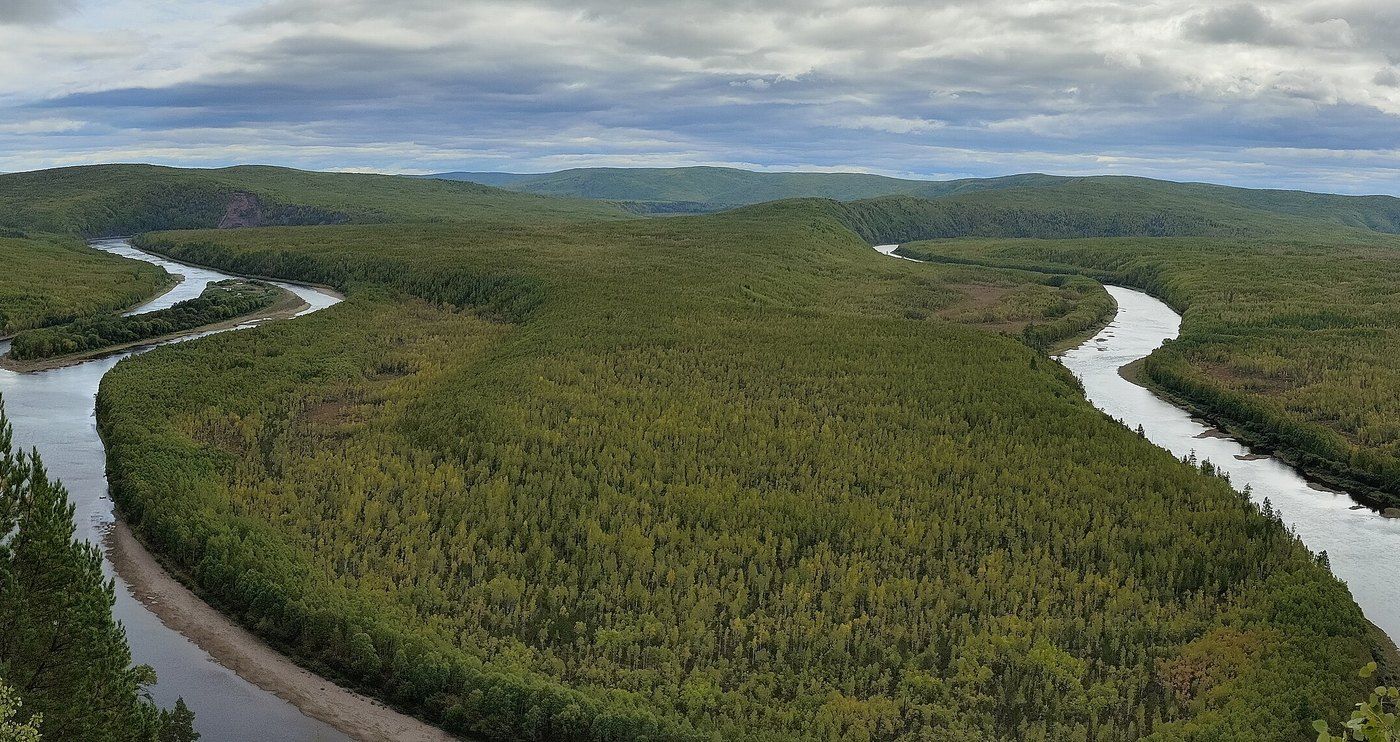
A viewing platform above a loop where the Heilongjiang wraps almost all the way around a forested island. It is several hundred steps up from the car park. The colour is ideal in late September before the leaves go.
The remains of the Russian fort besieged by Qing forces in 1685 and 1686, on an island in the river. What survives is low earthwork and interpretation; the significance is the treaty that followed rather than the ground.
A museum in Xilinji on the 1987 fire, with photographs, salvaged objects and the account of the response and the replanting. It explains the landscape visitors have driven through better than any scenic stop does.
A smaller and further village on the same river, reached by an hour of rougher road from Beiji. There is almost no commerce. People stay here for the dark sky and because there is nothing arranged for them.
On the Map
Approximate locations of the attractions above, across Mohe.
Eat
Fish from the Heilongjiang, which is ice-covered for half the year and slow-growing accordingly, usually stewed whole in an iron pot rather than steamed. Village restaurants cook whatever came out of the river that week.
Bilberries picked from the forest floor in July and August, sold fresh in the season and as juice, jam and dried fruit the rest of the year. They are smaller and sharper than the cultivated kind and they are the region's main non-timber crop.
A large iron pot of fish, pork or goose set over a fire with maize cakes stuck round the rim to cook in the steam. It is cooked at the table and it is made for a group and a long evening, which is how winter is spent here.
Honey mushrooms, boletus and others picked in the autumn and dried for the winter. The standard northeastern dish is chicken stewed with them and vermicelli. They are sold dried by weight in every market in the region.
Do
Around 21 June the town holds a festival and people stay out through the pale hours. The sky does not go fully dark from roughly mid-June to early July. Bring a repellent; the mosquitoes in the forest at that season are serious.
The shoal is reached by road from Beiji Village and the marker sits on the gravel. There is no facility and no shade. Going on to Beihong afterwards makes it a half-day loop rather than an out-and-back.
Winter is the other season the town sells: thrown boiling water freezing in the air, frost on everything, and the forest silent. Serious cold-weather clothing is not optional and phone batteries stop working outdoors within minutes.
If visitors want to try, go to Beihong rather than Beiji for darker sky, watch the geomagnetic forecast, and look low to the north. Treat any sighting as luck. The Milky Way over the forest is the reliable part.
When
The white nights and the solstice festival, with the forest green and the mosquitoes at their worst. The main season.
Warm, long-dayed and the blueberry picking season. A particularly comfortable weather of the year and still light until very late.
Larch and birch turning gold, clear air, and the ideal light at the river bend. It gets cold quickly and the season ends abruptly.
Deep cold, with January regularly below minus 40 and short daylight. This is the other reason people come, and it needs real equipment rather than a warm coat.
Explore More
Mohe is in Heilongjiang, in Northeast China.
Related
Share the travel dates and interests, and PreeChina's local team will design a route that fits.
Plan My Trip to MoheSee Private Tour Prices