
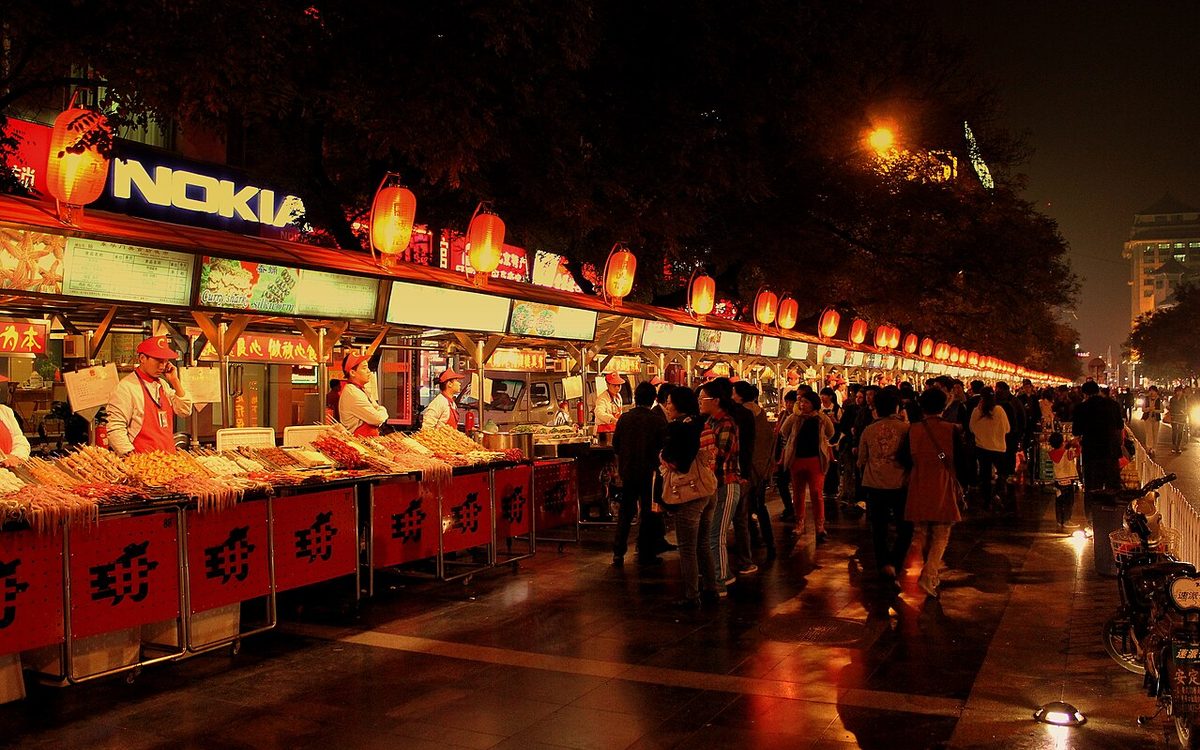
01Six Occasions, Not Six Foods
How is Chinese food organised on this site, and why by occasion?
The six pages on this shelf are not six kinds of food. They are six occasions in a day. What separates them is not the ingredient. It is who is sitting at the table and how much time there is. A bowl of noodles and a fourteen-dish banquet can use the same wheat and the same pork, and they are different events with different rules.
We sorted it this way because the other way is already written three times over. The geography of Chinese food, why the north eats wheat and the south eats rice, why one province salts and the next one pickles, is the organising idea of the noodles page, the cuisine page, and the country-scale page on how China feeds itself. A fourth telling of it here would add nothing. What none of those pages answers is the question a visitor actually has at 7am on a Tuesday, which is: this meal, right now, which of these am I in?
One number belongs at the top. We read a body of traveller accounts twice over, once for what people said they wanted before going to China and once for what they talked about after. Food moved more than almost anything else, from 36 percent of accounts before to 68 percent after. Breakfast alone moved from 6 percent to 36 percent, a larger jump than any other meal in the study. Almost nobody plans it. Almost everybody comes home talking about it.
That is what this shelf is for. The pages under it explain what each thing is. This page exists to say which ones a visitor is likely to walk past.
Four things are not on this shelf, and it helps to say where they went. Night markets, morning markets and street stalls are on the markets page, because a market is a place and this shelf is about occasions. Food delivery is on the Now page and on the pay and apps page, because it is a question of how the country runs, and not of what is on the table. What China grows and how much of it is on the country-scale page about the vegetable basket. And the rules for drinking, who toasts whom and whether a toast can be declined, are on the etiquette page. The baijiu page says what the liquor is; the etiquette page says what to do when a glass is raised.
02Which Occasion Is It
Which kind of Chinese meal fits how many people and how much time?
The table below is the whole shelf in one screen. The column that decides much of it is the second one, how many people. Chinese eating changes shape with headcount more than with region: the same city serves a solo bowl at a counter and a shared table of twelve, and almost nothing transfers between them.
The last column is the reason this page exists. Each of these has a way of being missed, and they are different ways.
| Occasion | How many people | How long | What it needs | How it gets missed |
|---|---|---|---|---|
| Breakfast | One or more | 20-40 min | Being awake; much of it is over by nine | The visitor sleeps through it |
| A bowl of noodles | One | 10-20 min | Nothing | Mistaken for fast food instead of a dish |
| A table of dishes | Four or more works well | 1.5-2 hr | People, time, somebody to order | Ordered as if it were a plate each |
| Liquor at that table | Same table | Runs with the meal | A host, and an occasion | Treated as a drink instead of a procedure |
| An afternoon, Chinese | One to four | 1-3 hr | Nothing | Assumed to require knowing about tea |
| An afternoon, Western | One or two | 1-2 hr | Nothing | Assumed not to exist in China |
03The Six, One Line Each
What is the difference between breakfast, noodles, a banquet, baijiu, tea and coffee in China?
Breakfast. The meal of the day with a closing time. Much of it is gone by nine, some of it by seven-thirty, and what replaces it at ten o'clock is a different and lesser thing. The breakfast page is the one to read the night before, not the morning of.
Noodles. A bowl is one person's meal. No ordering committee, no waiting for the table to fill, no shared dishes to negotiate. It is the entry on this shelf that works well alone and in a hurry, which describes many travel days.
Chinese cuisine. The unit here is the table. Dishes arrive for everybody and the meal is assembled between the diners, which means it needs people, time, and somebody willing to order. The cuisine page is worth reading before a group meal and not during it.
Baijiu. A procedure that runs alongside a meal, and a drink incidentally. Who raises the glass, how high the rim is held, whether a round can be sat out: the liquor is the easy half. For a visitor handed a small glass in China, the baijiu page says what is in it and the etiquette page says what to do with it.
Tea. A place to sit for two hours without anybody coming to move the guests along. In a Chengdu (成都) teahouse the price of the cup buys the afternoon. The tea page is about that, and barely about the leaf.
Coffee. The same afternoon, the other way. China now has a very large number of coffee shops, wifi and a socket are assumed, and ordering works the way it does at home. The coffee page is worth reading before the category is dismissed, because the assumption that China is a tea country, and therefore not a coffee country, stopped being true some time ago.
Tea and coffee are the same occasion, and the choice between them is worth making deliberately. Both are about how an afternoon gets spent. One of them puts the visitor in a room where nobody is counting minutes and the conversation is entirely local. The other puts the visitor somewhere already familiar. Neither is the better answer, and many visitors default to one without noticing there was a decision.
04Not on the Map
Why are there no restaurants on the PreeChina map?
There is no map layer for Eat, and there is not going to be one. Every other shelf on this site puts cards on the map. This one does not, and the reason is a rule applied everywhere: a place earns a card when the thing cannot be seen without going there. A saltern, a kiln, a tea mountain, a distillery, all of those qualify. A restaurant does not. Restaurants open and close, change hands, and are better served by a live review platform than by an encyclopedia that updates once a year.
The food that does have a geography is held by other layers. Tea mountains sit in the land and parks layers. Distilleries sit in the industry layer, which is built for business visitors and not for diners. Night markets and morning markets sit in the markets layer, all 518 of them. For a place to stand, those are the layers that have one.
Three of the site's filter tags are food tags: tea culture, baijiu culture and hot pot. Those attach to cities, not to points. They answer "does this city have a strong version of this" and they will recolour a city on the map. They will not drop a pin on a restaurant, because there are no restaurant pins to drop.
So this shelf is text, deliberately. It is not a tool for finding a table tonight. It is the part of the site that says what a visitor would otherwise walk past, which is a job a map pin has never done.
05What This Shelf Is Not
Are the eight culinary schools the map of Chinese food?
- It is not a claim that the eight culinary schools are the map of Chinese food. The list of eight is a decent guide to restaurants and a poor guide to eating. A place flying the Sichuan (四川) banner will serve Sichuan food, and that much the list gets right. What it leaves out is the northwest, the northeast, the cuisines of the southwest's many peoples, and nearly everything any household actually cooks on a weekday. The cuisine page carries the full version of this, including what the eight are good for.
- It is not the claim that China eats everything. That sentence has followed Chinese food around for a century and it survives mostly because the counterexamples are not memorable. The list of what is eaten where, what is regional and what is rare, and which of it a visitor is ever likely to be offered, is on the list page rather than here.
- It is not a shelf where breakfast is a minor entry. By the one measure available, breakfast is a meal that travellers tend to discover after the trip, and it is missed for a reason that has nothing to do with food: it happens early, and a person on holiday sleeps. That is a very actionable point on this shelf, and it is why breakfast sits at the top of the table rather than at the bottom.