
Information as of October 2026. Procedures change; check the official source linked in each entry.
01Real-Name, and What It Changes
How does real-name booking work in China?
Almost everything with a fixed capacity in China is sold against an identity document. Trains, the major museums, the big scenic areas (景区), an increasing number of ancient towns. A passport is that document, and it is accepted at many major sites.
The consequence is that the scarce thing is a time slot and not a price. There is no premium tier that buys entry to the Palace Museum (故宫博物院) on a sold-out Saturday, and no resale market that legitimately holds inventory. Everything releases at a published moment, and popular things are gone in minutes.
So the planning question changes shape. It is not how much a ticket costs, it is when the window opens and whether someone is awake for it. A visitor who knows that trains release fifteen days out and the Palace Museum releases at 20:00 seven days out has much of what this page teaches.
One account has to exist before any of it works, and it takes days rather than minutes to become usable. That is block 02, and it is the one thing on this page worth doing before leaving home.
Everything below was checked on 13 September 2026, with the official channel named each time. Booking windows are among the numbers that change often on this site, and a site's own mini-program (小程序) is more current than any page describing it.
02The Account That Comes Early
How does a foreigner register on 12306?
Foreign passport holders register on the 12306 English platform with an email address. The English platform does not accept Chinese mobile numbers for registration, which removes the usual early obstacle.
Registration is not the same as being able to buy. After registering, the account and each passenger on it must pass identity verification before tickets can be bought or changed online. An account sitting in pending verification or not passed can do neither. Refunds work for any registered user, which is a small mercy in the wrong direction.
Verification may call for a station window visit with the passport, depending on passport type, or it may complete through the app's own flow. The official notice on identity verification sits at kyfw.12306.cn and the English FAQ at 12306.cn/en.
What this means for a trip: start this two weeks before the flight, not two days. If verification needs a station window, it can be completed no sooner than the day of arrival, and that is the same day the fifteen-day window for onward trains has already been open for a week.
The platform sleeps. Ticketing and change services run daily from 05:00 to 01:00 the following day, with Tuesdays ending at 24:00. Information queries and refunds run around the clock. The transport page explains why real-name ticketing exists at all.
03Trains
How far in advance are Chinese train tickets released?
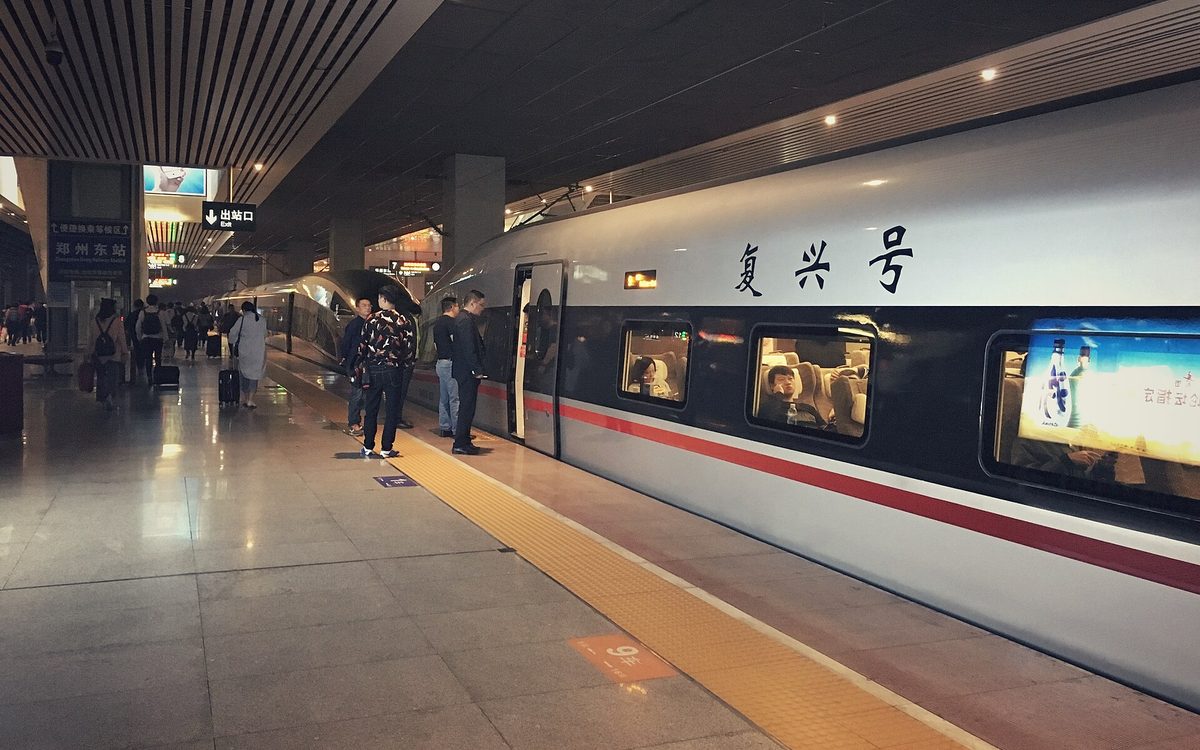
Tickets are generally released fifteen days ahead. For a popular route in a holiday period, the minute of release is the whole game; for an ordinary Tuesday between second-tier cities, seats are available the day before.
What this means for a trip: build the itinerary backwards from the trains that cannot be missed. A long-distance sleeper on a national holiday, or any train in or out of a provincial capital during the week of 1 October, belongs in the calendar at the fifteen-day mark. Many other legs can be left loose, and that flexibility is worth keeping.
Buying opens at 05:00. The release moment for a given date follows the platform's own schedule and not a single national hour, so the reliable move is to have the account verified, the passenger added and the payment method bound before the morning in question, so that nothing is left but the search.
A sold-out train is sometimes not sold out. Returned tickets re-enter the pool, especially in the hours after a release and again close to departure. It is worth a second look, though it is no basis for a plan.
04Official or Agent
Should Chinese trains be booked on 12306 or through an agent?
There is one railway ticketing system, and everything else resells from it. 12306 is the official platform. Third-party sites, Trip.com among them, sell the same inventory with a service fee and an interface many visitors find easier.
What the third party buys is the interface and the support, and what it costs is the fee and a layer of distance. A change or a refund routed through an agent goes at the agent's speed. For a simple point-to-point journey booked well ahead, either works. For anything expected to change, the official platform sits closer to the system that actually holds the seat.
Both are constrained by the same release window, so an agent cannot produce a ticket that does not exist yet.
05Museums
When do tickets for the Palace Museum and other major museums go on sale?
The major museums release timed, real-name tickets at a published hour, and the popular ones are gone quickly. The table below carries the three whose windows are published and stable.
Free does not mean easy. The National Museum of China (中国国家博物馆) charges nothing and is among the harder tickets in Beijing, with each account limited to one booking a week for up to five people. Price and difficulty are unrelated here.
Mogao (莫高窟) is the one that needs thirty days. Category A tickets, covering eight caves and the digital centre, release at 08:00 thirty days ahead. Category B, covering four caves, releases at 08:00 seven days ahead. A Dunhuang (敦煌) trip planned three weeks out has already lost the A ticket, which is a very common way for visitors to end up with the shorter visit.
Mondays close many of them. The Palace Museum (故宫博物院) and the National Museum both close Mondays except on public holidays, which is a useful fact when a Monday is the one free day in a city.
Passports are accepted at all three. Booking goes through each museum's own site or WeChat (微信) mini-program (小程序), listed in the table. The dynasties page and the calendar page explain why timed entry (分时段预约) became the norm.
| Museum | Release | Ahead | Notes |
|---|---|---|---|
| Palace Museum, Beijing | 20:00 | 7 days | Passport accepted; closed Mondays except public holidays |
| National Museum of China, Beijing | 17:00 | 7 days | Free; one booking per account per week, up to five people; closed Mondays |
| Mogao Caves, Dunhuang (Category A) | 08:00 | 30 days | Eight caves plus the digital centre |
| Mogao Caves, Dunhuang (Category B) | 08:00 | 7 days | Four caves |
06Scenic Areas and Towns
How far ahead do Chinese scenic areas and ancient towns need booking?
Many A-level scenic areas (景区) require real-name booking, and passports are accepted at many major sites. Some smaller places still sell at the gate, and that cannot be assumed during a holiday, which is exactly when a traveler would be relying on it.
The big natural parks release seven to fifteen days ahead, with capacity adjusted in peak season (旺季). Jiuzhaigou (九寨沟), Huanglong (黄龙), Zhangjiajie (张家界) and Huangshan (黄山) all work this way. Each publishes its current window on its own WeChat (微信) mini-program (小程序) or site, and the windows move seasonally, so the mini-program is the source and no summary can be.
Ancient towns sit closer in. Pingyao (平遥) and comparable heritage towns typically want three to seven days, varying by season. A shorter window is easier to plan around and harder to recover from if missed, because there is less time for returns to circulate.
What this means for a trip: the natural parks are the ones to book from home. Fifteen days out usually falls before landing. The towns can wait until the traveler is in the country with a better idea of the pace.
Capacity caps in ecologically sensitive areas exist for reasons the land and climate page sets out, and the society page covers why real-name systems spread across the whole sector.
07The Name on the Ticket
Why must the name on a Chinese train ticket match the passport exactly?
Railway travel is real-name, and the name on the booking has to match the travel document exactly. Exactly means hyphens, middle names, the order of given and family names, and the spelling as it appears in the machine-readable zone of the passport.
This is the failure that happens at the gate rather than at booking. A booking form accepts what is typed. The gate compares what was typed with the document in hand, and a missing hyphen is a mismatch.
What this means for a trip: copy the name off the passport instead of typing it from memory, and use the same document for every booking on the trip. Booking one leg on a passport and another on a national ID creates two identities in the system, and one of them stands at the gate.
The document used for booking is the document used for travel. If the booking was made with a passport, that passport has to be on the traveler, not in a hotel safe. This applies to the intercity trains out of airports as much as to a cross-country sleeper.
08What This Page Is Not
What does this booking page not cover?
- It is not a live availability check. Every window here was checked on 13 September 2026 and each site adjusts its own. The mini-program (小程序) is right and this page is a description of how the mini-program behaves.
- It does not cover flights. Domestic aviation in China is real-name in the same way, and it is booked through the ordinary international channels that need no explanation here.
- It is not a workaround guide. There is no legitimate way to hold a real-name ticket for somebody else, and resale outside the official channels is both unreliable and against the platform's terms.
- It does not price anything. Museum and scenic-area prices sit with each site, they move, and they are rarely the thing that decides whether entry is possible.