
Yongzhou is in Hunan, in Central China.
Home › Destinations › Hunan › Yongzhou
Hunan · City Guide
Yongzhou, Where Women Wrote in Their Own Script.
Overview
Why Go
Nüshu is a syllabic script created and passed between women in Jiangyong County, written on fans, cloth and books given to brides. It is the sole such script known anywhere. Yang Huanyi, the last woman raised in it, passed away in 2004.
Liu Zongyuan was banished here in 805 and spent ten years writing. His eight essays on the landscape around Yongzhou are standard reading in Chinese schools, and the shrine to him stands where he lived.
In 771 the calligrapher Yan Zhenqing cut a text of Yuan Jie's onto the rock face at Wuxi in Qiyang. Five hundred later steles crowd the same cliff. It is one of the few places his hand survives at full size outdoors.
Tradition places the passing and burial of Emperor Shun, one of the legendary sage rulers, in the Jiuyi range in Ningyuan County. The mausoleum there has been rebuilt many times and is still used for the annual ceremony.
Jianghua and Jiangyong are Yao counties on the Guangxi line, with long-drum dancing, bitter tea and the Panwang festival in the tenth lunar month. The villages are lived in rather than staged for visitors.
See
A river island in Jiangyong with a museum of Nüshu fans, cloth books and letters, and transmitters who write the script for visitors. Nobody here now learned it from their mother. Two hours including the crossing.
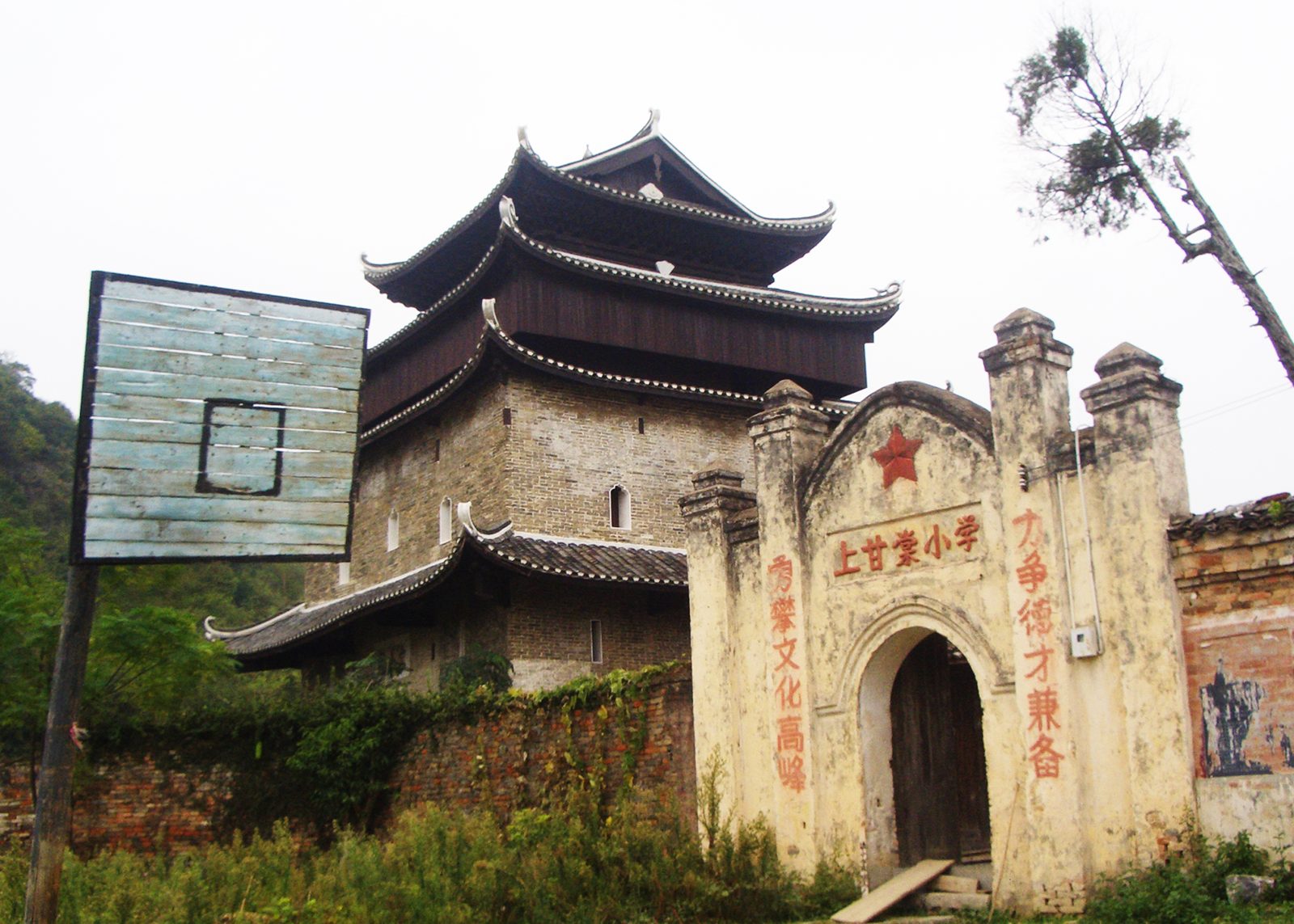
A village founded in 827 and held by one clan ever since, with a Song stone bridge, Ming and Qing houses and cliff inscriptions cut above the river path. Still lived in. Half a day with Nüshu nearby.
A riverside cliff in Qiyang carrying Yan Zhenqing's 771 carving and five centuries of later inscriptions around it, in a wooded park by the Xiang. Rubbing-takers still work here. Ninety minutes.
The mausoleum sits below the nine peaks that give the range its name. Ningyuan's Confucian temple, 30 minutes away, has stone dragon columns worth the stop. Allow much of a day for both.
A walled shrine in the old town of Lingling with a stage courtyard and tablets carrying his texts, including the essay about a snake catcher that made the local viper well-known. Forty minutes.
A plains-Yao village in Jianghua where long drums are still made, embroidery is worked and bitter tea is grown. Quiet outside festival dates. Stay the night if visitors want to see anything beyond the street.
On the Map
Approximate locations of the attractions above, across Yongzhou.
Eat
Chicken poached, cut up and then fried fast with ginger, dried chilli and a lot of rice vinegar, so it comes out sour before it comes out hot. It is one of the fixed dishes of Hunan cooking and it is named for a county here.
Duck fried hard with chilli and then finished with its own blood, which sets into a dark coating rather than a sauce. Know what visitors are ordering: the texture is the point and it is nothing like a gravy.
One of five crops Jiangyong sells under its own name, alongside taro, ginger, rice and mushrooms. The pomelos come in from October, are sweeter than the Fujian kind and keep for weeks in a cool room.
Tea leaves fried in oil, pounded and boiled into a salty broth, then poured over puffed rice and peanuts. Yao households drink it through the day. The opening bowl tastes wrong to many outsiders and the third does not.
Do
The characters slant hard to the right and are built from far fewer strokes than Chinese ones. Transmitters at the museum will write the name and explain which sound each mark stands for.
The rock above the path at Shanggantang carries inscriptions cut over eight centuries, from Song officials to Qing villagers. The pavilion beside them is where the village still holds meetings.
The ridge at 1,860 metres is a two- to three-day walk with no shelter, no supplies and patchy signal, and people get lost on it every year. Hire a local guide and carry everything, including water.
The Yao new year ceremony falls in the tenth lunar month, usually November, and brings out long-drum dancing and full embroidered dress. Dates move each year; ask the county culture office.
When
Warm, green and the azaleas out on Yangming Mountain in April. The rivers run clear and the villages are at their peak. The strongest window.
Hot, wet and the worst time for the hill counties, with landslides closing mountain roads. The stele park and the museums still work.
Dry and cool, pomelos from October, the Panwang festival in November and the ideal conditions for walking Jiucailing.
Cold, damp and sometimes icy on the ridges. Village new year brings out the Yao dances, and the towns are empty otherwise.
Explore More
Yongzhou is in Hunan, in Central China.
Related
Share the travel dates and interests, and PreeChina's local team will design a route that fits.
Plan My Trip to YongzhouSee Private Tour Prices