
Xiangxi is in Hunan, in Central China.
Home › Destinations › Hunan › Xiangxi
Hunan · City Guide
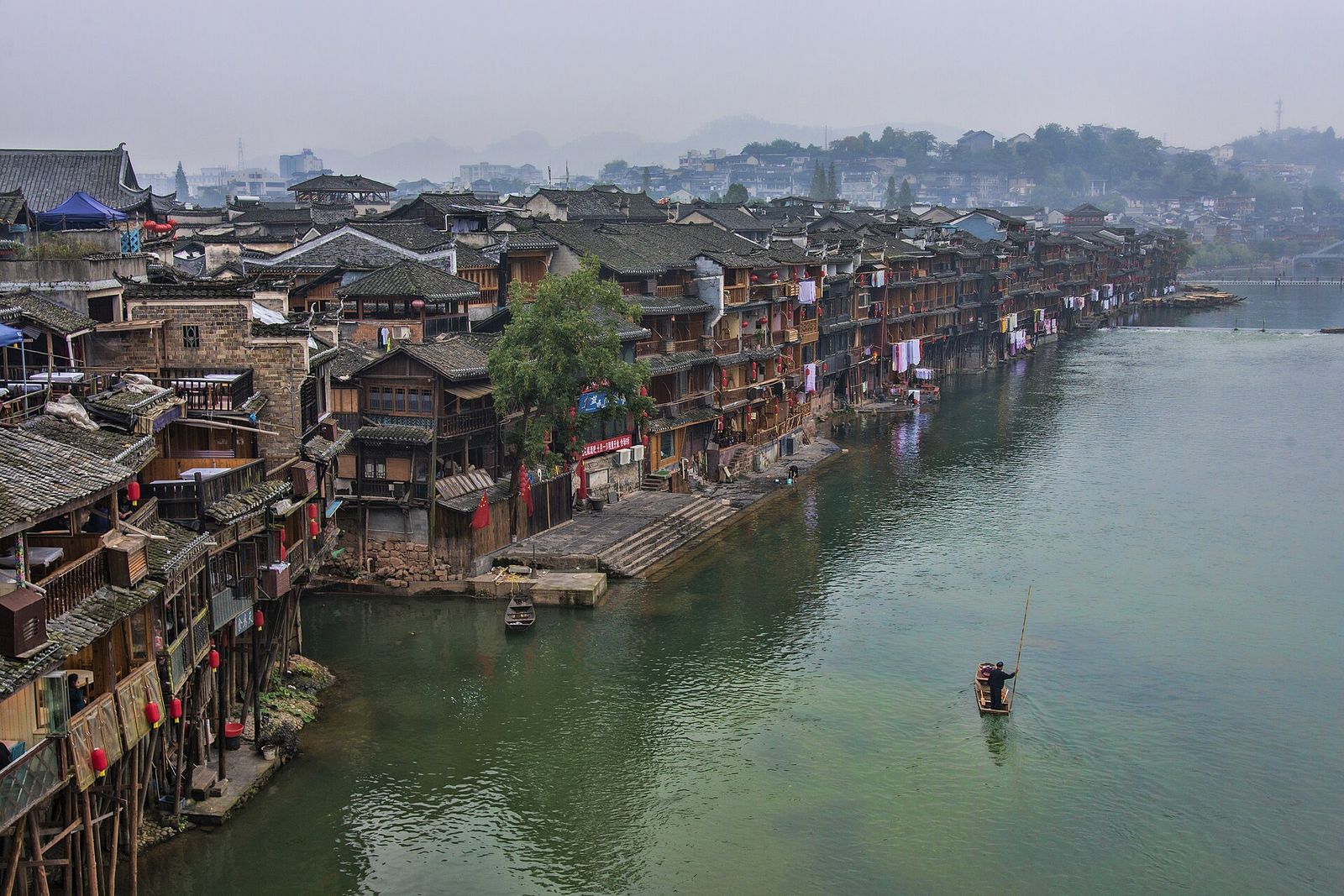
Xiangxi, Where Stilt Houses Lean Over the Tuo River.
Overview
Why Go
Laosicheng was the seat of a Tujia chieftain line that held the same territory for some eight hundred years under its own law. UNESCO inscribed it in 2015 with the other Tusi Sites. The streets, palace foundations and chiefly graves are still in the forest.
Shanjiang holds its market on the 3rd and 8th of each lunar month, Laershan on the road through town. Women come in high head-cloths with back baskets, and silver, embroidery and cloth change hands between locals rather than to visitors.
The Aizhai bridge carries the expressway across the Dehang gorge in a single span, several hundred metres above the valley floor. The Miao village and the canyon path below it are the older reason to stop, and visitors can see both from one place.
A well at Liye gave up tens of thousands of bamboo slips from the Qin dynasty, the administrative paperwork of a county at the empire's edge. Liye is still an ordinary working town with the excavation beside it.
See
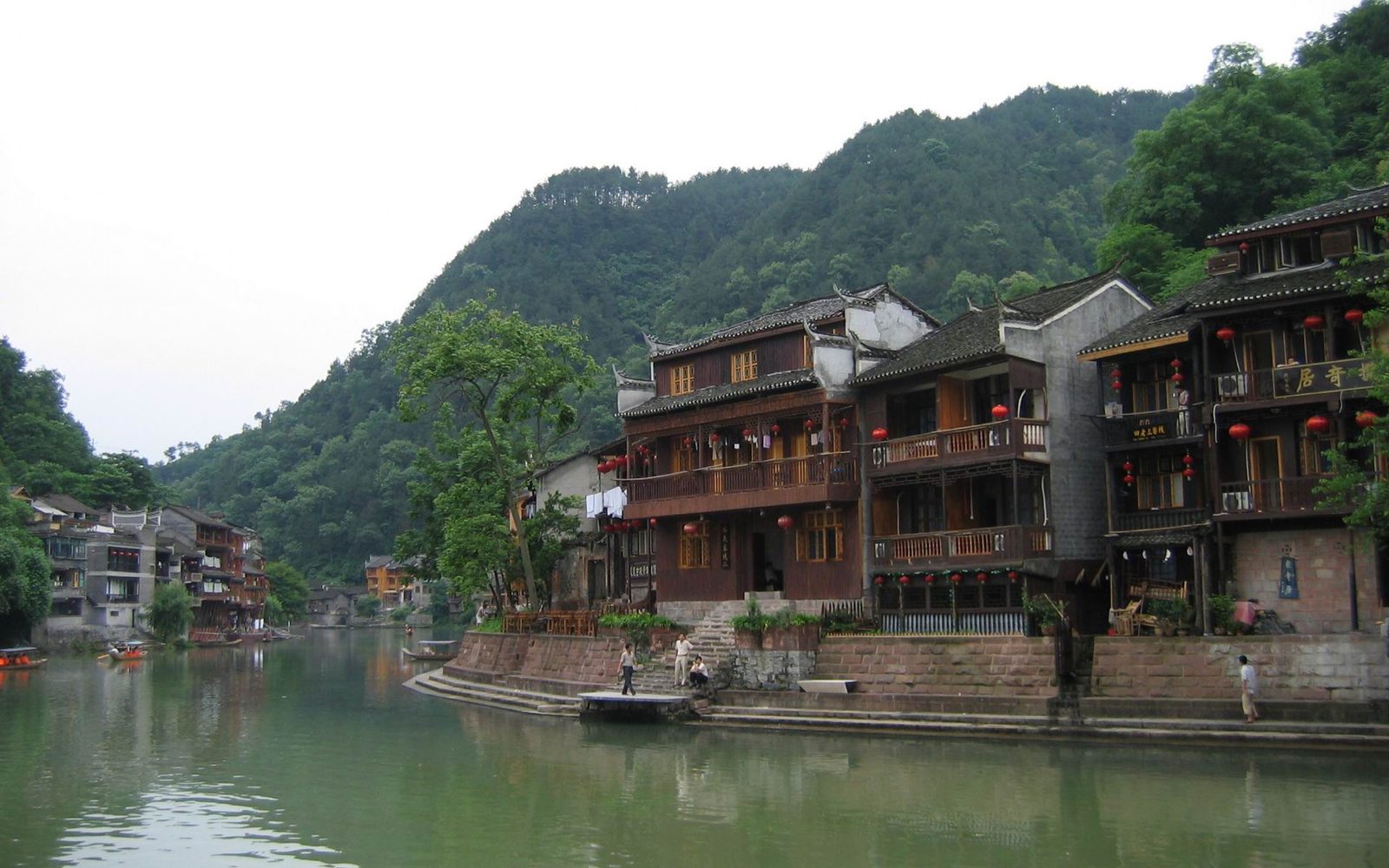
Founded in 1704 on both banks of the Tuo, with a line of stilt houses standing in the water. The main lanes are given over to shops now; the south side still has Miao women selling embroidery and produce. Dawn mist on the river is the reason to stay the night.
The capital of the Peng chieftains, ruling a Tujia territory for roughly eight hundred years before the Qing absorbed it. Paved streets, palace platforms and the chiefly cemetery survive in the hills above the Visitors River. Inscribed by UNESCO in 2015.
A Miao village at the bottom of a gorge under the Aizhai bridge. Some of what happens at the gate is put on for visitors; the silver and the embroidery are made here. Canyon paths run to waterfalls above the village.
A Tujia town built around a waterfall that drops straight through the middle of it. A 1986 film made the rice-tofu stall well-known and it is still trading. The falls are lit after dark, which is when many people come.
In 2002 a well at Liye produced tens of thousands of Qin-dynasty bamboo slips, county records of taxes, grain and postal runs from the third century BC. The museum holds them; the town around the site goes about its business.
A suspension bridge across the Dehang gorge, hung several hundred metres above the floor with no tower standing in the valley. The old mountain road it replaced switchbacks up the cliff below and can still be walked.
On the Map
Approximate locations of the attractions above, across Xiangxi.
Eat
Duck braised with cakes of glutinous rice set with duck blood, cut into slices and fried in the pot. Dark, dense and strongly spiced. It is the dish a Xiangxi household cooks when there is a reason to cook.
Rice ground, cooked and set into a soft block, then cut and served cold in chilli, vinegar and pickled vegetable. Every town has a stall; the one at Furong Town has been trading on a film credit since 1986.
Pork hung over a wood fire in the kitchen for months until it is hard and smoke-black, then sliced thin and fried with garlic shoots or dried chilli. Households still cure their own, which is why it turns up at every meal.
Fish and pork packed with rice and chilli in a sealed jar and left to sour, sometimes for years. This is preservation in a place with wet summers and no refrigeration, and it is now the flavour people travel here for.
Do
Shanjiang trades on the 3rd and 8th of the lunar month. Laershan spreads along the road through a high Miao town, with silver and bamboo shops off the main street. Ask at the guesthouse which villages are on which day.
Fenghuang between six and eight is a different town: mist on the water, people washing at the stone steps, the shops shut. The tour groups arrive later in the morning, and the difference is the whole reason to sleep in the old town.
Workshops along the Tuo in Fenghuang run tie-dye and batik sessions in indigo. Visitors bind the cloth, dip it and open it out, which takes a couple of hours. The Miao patterns are the local ones rather than generic.
At Chadong a ferry is still hauled across the river on a cable, the crossing Shen Congwen wrote about. Three provinces meet at the water. The town keeps a working market and very little else for visitors, which is the point.
When
Green, warm and before the worst of the heat. Miao festivals cluster in the fourth lunar month, and the canyons at Dehang run full after rain.
Hot and humid, and the domestic peak. Fenghuang gets crowded; the mountain towns at Laershan and Liye stay manageable.
The other good window. Cooler, drier, with the autumn market season and the Miao Ganqiu harvest festivals in the villages.
Cold, grey and damp, with few visitors. Cured pork is being smoked in every kitchen, and Tujia New Year falls a day before the Han one.
Explore More
Xiangxi is in Hunan, in Central China.
Related
Share the travel dates and interests, and PreeChina's local team will design a route that fits.
Plan My Trip to XiangxiSee Private Tour Prices