
Xingtai is in Hebei, in North China.
Home › Destinations › Hebei › Xingtai
Hebei · City Guide
Xingtai, White Porcelain and a Calendar Ahead of Its Time.
Overview
Why Go
The Xing kilns made the northern white ware that Tang writers paired against southern celadon, among the earlier true white porcelain anywhere. It was exported west, and sherds of it have been dug up in Iraq.
The Yuan astronomer and hydraulic engineer, born in Xingtai in 1231, calculated the year at 365.2425 days for the calendar he built. That is the same figure the Gregorian reform adopted three centuries later.
A Yellow River flood buried the county town of Julu in 1108 and left it under silt. It was dug into in 1918, and the furniture and ceramics that came out are now scattered through museums in several countries.
The physician remembered as the named doctor in Chinese tradition has his large temple complex at Neiqiu, a walled group of halls and stele on a wooded hillside, still visited by people seeking cures.
Xingtai was a seat of the Shang court before Anyang and the capital of the small state of Xing after it, which makes it one of the longer-inhabited city sites on the north China plain.
See
Excavated kiln foundations at Neiqiu under cover, with a museum of the white ware, wasters and saggars beside them. It explains why plain white was the achievement. Ninety minutes.
A memorial hall on Dalu Lake with replica instruments, the calendar work explained and his canal engineering alongside it. Small and better than it needs to be. An hour.
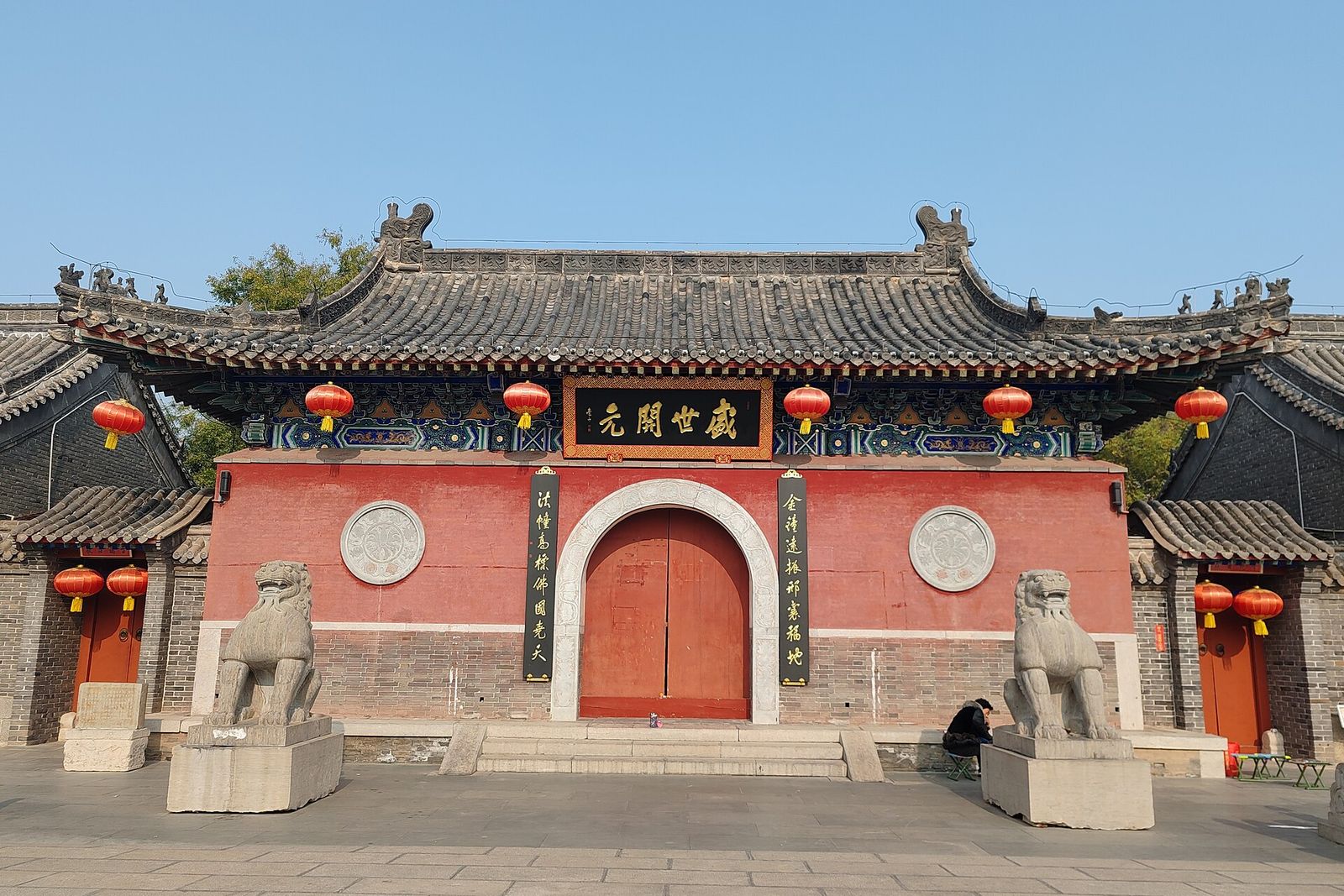
A large walled complex at Neiqiu with halls up a slope, Yuan and Ming stele and very old cypresses. Busy on the physician's festival days and quiet otherwise. Two hours.
The site is flat farmland with markers and a county museum holding what has been recovered. Much of the well-known material left long ago. Go for the story rather than the display. An hour.
A limestone system at Lincheng with several chambers of flowstone and a walkway through. Cool year round. Two hours, and it pairs with the chestnut and walnut country above it.
Red rock gorges cut into the Taihang west of the city, with streams, waterfalls and plank paths, and the terraced hill villages above them. A full day.
On the Map
Approximate locations of the attractions above, across Xingtai.
Eat
Thin-shelled walnuts grown on the Taihang foothills with a protected-origin mark, sold in the shell from September. The shell should give under thumb pressure, which is what growers demonstrate.
Goji grown on the plain here rather than in Ningxia, picked through the summer and dried in the sun. The county is one of the larger producers outside the northwest, which surprises people.
Pork and offal cooked and then smoked over sugar and sawdust until dark, sold cold by weight from old shops. It was food made to keep, and it still tastes like it was.
A layered wheat flatbread baked until it separates into many thin sheets, eaten plain with soup or filled with meat. The number of layers is the thing bakers compete on.
Do
Xing ware has no decoration, so everything rests on the whiteness of the body and the evenness of the glaze. Look at one bowl against the light and the difficulty of making nothing go wrong becomes obvious.
The memorial hall spells out the year length the Shoushi calendar used. Reading that figure and then remembering when the Gregorian reform happened is the whole point of the visit.
The temple courtyards hold stele from the Yuan onward recording repairs, donations and cures. They are a long thin record of what people came here to ask for.
The gorges west of the city are narrow, wet and red-walled, with villages terraced above them. Pick one valley and walk it up rather than driving between three viewpoints.
When
Mild and dry with the Taihang green and the gorges running. The strongest window of the year.
Hot and humid on the plain, with summer rain filling the waterfalls and occasionally closing mountain roads. The cave and the museums stay cool.
Walnut and chestnut harvest, clear air and the ideal light on the mountains. The other good window.
Cold, dry and grey with dust in spring. The kiln site, the memorial and the temple are open and almost empty.
Explore More
Xingtai is in Hebei, in North China.
Related
Share the travel dates and interests, and PreeChina's local team will design a route that fits.
Plan My Trip to XingtaiSee Private Tour Prices