
Tengchong is in Yunnan, in Southwest China.
Home › Destinations › Yunnan › Tengchong
Yunnan · City Guide
Tengchong, Where Volcanoes Meet the Old Burma Road.
Overview
Why Go
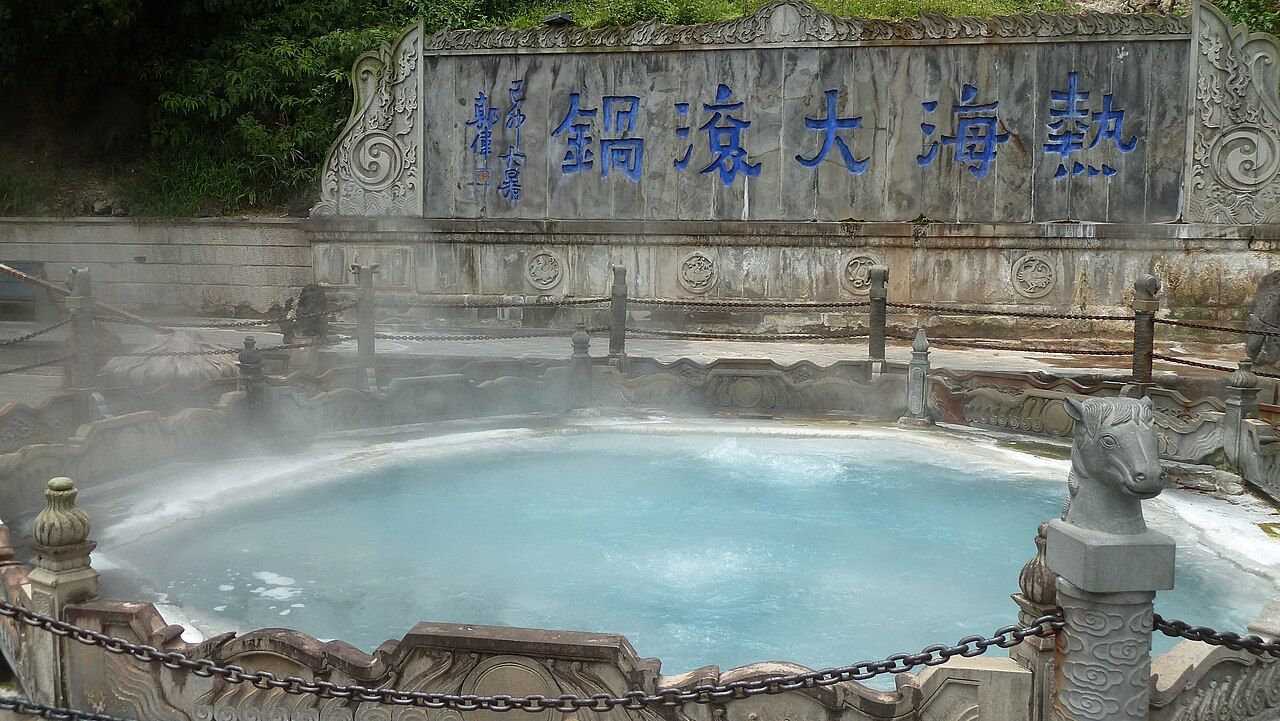
Around ninety-seven cones stand in and around the city, the youngest of China's volcanic areas. At Rehai the ground vents springs up to about 96 degrees, including a boiling pool locals cook eggs in, and the whole basin steams on a cold morning.
Heshun's families went to Burma and further for generations and sent earnings back, which paid for the houses, the ancestral halls and the library. The result is a Chinese village with a Southeast Asian bank balance, and it looks like it.
Heshun's overseas community pooled money to build a public library in 1928 and it has run since, with a reading room and a collection including runs of old newspapers. It is unusual for a village of this size anywhere.
Tengchong was retaken from Japanese forces in September 1944 after a long assault. The National Martyrs Cemetery holds the Chinese Expeditionary Force dead in rows up a hill, with a separate memorial to American servicemen who passed away in the same campaign.
Jadeite from northern Myanmar entered China through here for centuries, and Tengchong's families cut and graded it. The trade continues in the markets, with all the opacity that the jade business carries everywhere.
See
A village of grey-tiled courtyards along a pond, with ancestral halls, washing pavilions and the 1928 library. The lanes climb the slope behind. Evening, when the day visitors leave, is when it works well.
Two separate sites: a park of cones visitors can climb the rim of, and the Rehai geothermal basin with boiling pools, steam vents and bathing complexes. The big boiling pot is fenced and eggs are lowered into it in baskets.
Rows of small stone markers climbing a hill, one for each of the Chinese servicemen who passed away retaking the city in 1944, with a museum below and a separate memorial to American dead. It is quiet and it is not a scenic site.
A village with several thousand ginkgo trees growing among the houses, some centuries old. For about three weeks from late November the leaves turn and fall into the lanes. Outside that window it is an ordinary farming village.
A lake covered by a floating mat of grass and reed thick enough to walk on in places, with punts cut through it. Wildflowers come up through the mat in spring. It is small and takes a couple of hours.
Rough stone, cut cabochons and finished pieces, traded in halls and on the street. Rough jade is bought on a torch and a guess, which is why the trade has the reputation it has. Watch rather than buy unless visitors know the material.
On the Map
Approximate locations of the attractions above, across Tengchong.
Eat
Rice cake sliced thin and fried with egg, tomato, ham and vegetables until the edges crisp. The name comes from a story about a fleeing Ming prince being fed it. It is the dish Tengchong is known for in Yunnan.
Pea flour cooked into a thin savoury porridge, dressed with chilli oil, garlic water and coriander, and eaten with a fried dough stick dipped into it. Breakfast, sold from six, and the pea version rather than the soybean one.
A clay chimney pot packed in layers with pork balls, egg-wrapped rolls, taro and vegetables over a broth, simmered rather than dipped. It is the New Year dish here and it arrives as one object rather than as ingredients.
Rice pounded into a cake and then cut into strips, served in clear broth with braised meat and pickled greens. It is chewier than the extruded rice noodles found elsewhere in Yunnan, because it is cut rather than pressed.
Do
At Rehai eggs are sold at the pool edge and lowered in baskets on strings into water near boiling. They take a few minutes. Stay behind the rail: the pool is at about 96 degrees and the ground around it is hot too.
The library is open and the reading room is used by villagers. There are bound runs of old newspapers and the founding documents on display. It costs nothing and it is the thing at Heshun that is not a photograph.
Late November into early December, moving a week either way with the weather. The village charges entry in the season and the lanes get busy by mid-morning, so come early or stay the night nearby.
The markers are small, numbered and close together, and the scale just registers from partway up the hill. The museum below sets out the campaign. Allow an hour and treat it as a cemetery rather than a viewpoint.
When
Warm, dry and green before the rains, with flowers on the Beihai mat. The ideal general window.
The rains, warm and often grey, with landslides possible on the mountain roads. The geothermal basin steams more visibly in wet weather.
Dry, clear and mild, with the ginkgo turn from late November. The other good window and the one especially worth planning around.
Cool and dry, with cold mornings that make the hot springs the point. Lunar New Year fills Heshun; outside it the town is quiet.
Explore More
Tengchong is in Yunnan, in Southwest China.
Related
Share the travel dates and interests, and PreeChina's local team will design a route that fits.
Plan My Trip to TengchongSee Private Tour Prices