
Fushun is in Liaoning, in Northeast China.
Home › Destinations › Liaoning › Fushun
Liaoning · City Guide
Fushun, Where the Qing Dynasty Started Out.
Overview
Why Go
Nurhaci declared the Later Jin at Hetu Ala in 1616, and his four ancestors are buried 20 kilometres away at Yongling. Everything that ends up in the Forbidden City starts in these two valleys.
Fushun's coal seams carry amber about 50 million years old, full of trapped insects and plant fragments. Palaeontologists work on it internationally. The mining has ended, so what is on sale is stock, not new material.
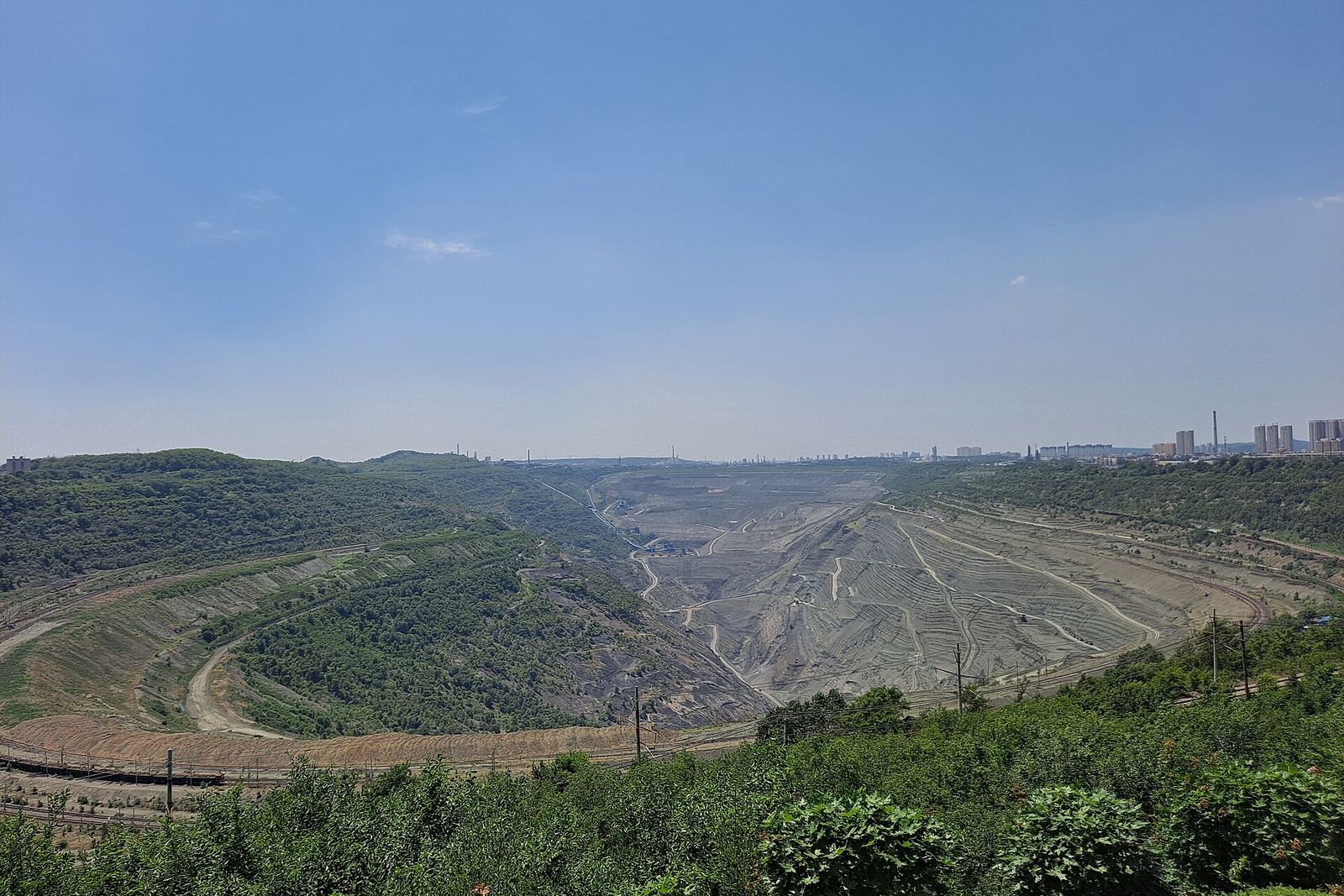
The West Open-pit mine was worked from 1901 to 2019 and ended up roughly 6.6 kilometres long, two wide and over 400 metres deep. It is one of the larger holes people have dug in Asia and visitors can just see it from the rim.
The cold bowl of blanched vegetables, noodles and offal dressed with sesame paste, vinegar and chilli is a Fushun dish that spread across the northeast in the 1990s. It is served at room temperature, which surprises people.
Xinbin and Qingyuan are Manchu autonomous counties, so the culture here is a living local majority rather than a museum display: paper cutting, the eight-bowl banquet and the Qing ancestral calendar.
See
The walled town where the Later Jin was proclaimed in 1616, largely reconstructed, with the original Khan's well still in place and Manchu houses laid out inside. Half a day with the tomb.
The smallest and many senior of the Qing imperial tombs, inscribed as World Heritage: a wooden fence gate, four stele pavilions and low mounds under a wooded hill. Plainer than anything in Beijing. An hour.
A platform on the rim above the closed pit, with the benched walls dropping away in terraces and water collecting at the bottom. Visitors cannot go down. Twenty minutes, and the scale is the whole point.
A prison compound used from 1950 to 1975 to hold Japanese and Manchukuo prisoners, including Puyi, the last Qing emperor, who was released in 1959 and wrote his memoir after. Now a museum. Signage in Chinese.
Forest and granite ridges south of the city with a stepped path to the three boulders that name it. Ideal in late September and October when the oak and maple turn. A full day from the city.
A large reservoir that supplies Shenyang, ringed by forest and closed to swimming. It is the local drive-out for fish restaurants and autumn colour rather than a destination in itself.
On the Map
Approximate locations of the attractions above, across Fushun.
Eat
Visitors pick ingredients from a counter, they are blanched and then tossed with sesame paste, vinegar, sugar and chilli and served cool. Every Fushun street has one and they all claim to be the original.
A banquet format of eight cold dishes followed by eight bowls of braised and steamed meat, served in Xinbin restaurants. Pork dominates, sweetness is low and blood sausage appears in many versions.
Silver carp and bighead from the reservoir, stewed whole in an iron pot with cornmeal cakes stuck round the rim to cook in the steam. The restaurants sit along the shore road and price by the fish.
Fiddlehead fern, aralia shoots and wild garlic picked in the hills in late April and May and sold by the basket. Blanched and dressed with soy and sesame, they are the one thing here that is strictly seasonal.
Do
Yongling has a wooden fence where Beijing has marble, and earth mounds where Beijing has stone. Seeing it after the Ming tombs is what makes the Qing story legible rather than just old.
Stand on the rim platform and find the haul road, then follow it down with the eyes to work out the depth. Go on a clear day; haze fills the pit and flattens everything.
The run in Qingyuan is a summer thing, shallow and wet rather than technical, with a stretch of rapids in the middle. It operates from June to August just and visitors will get soaked.
Fushun amber is dark and often carries coal seam inclusions. A lot of what is sold under the name is Baltic amber or pressed resin. Ask for a loupe, and buy from the museum shop if visitors want certainty.
When
Mild, green and dry, with wild greens in the markets in May. The ideal conditions for the tomb, the town and the forest parks.
Warm and humid with rain, which is when the rafting runs. The city itself is unremarkable in summer heat.
Cool and clear with strong autumn colour through the Liaodong hills. The strongest window and the ideal light over the pit.
Cold, dry and often below minus fifteen. The ice and snow festival runs in January and the historical sites are open and empty.
Explore More
Fushun is in Liaoning, in Northeast China.
Themes with places in Fushun
Related
Share the travel dates and interests, and PreeChina's local team will design a route that fits.
Plan My Trip to FushunSee Private Tour Prices