
Zhangjiakou is in Hebei, in North China.
Home › Destinations › Hebei › Zhangjiakou
Hebei · City Guide
Zhangjiakou, Where Molten Iron Is Thrown at a Wall.
Overview
Why Go
Blacksmiths at Nuanquan could not afford fireworks, so they melted scrap to 1,600 degrees and threw it at the cold town wall, where it bursts into sparks. The practice is about five hundred years old and the throwers work in wet sheepskin and straw hats.
Jimingyi was built in 1420 on the Beijing to Kalgan post road and is a large walled courier station surviving in the country. The Empress Dowager Cixi sheltered here in 1900. People still live inside the walls.
The Nihewan basin holds one of the densest concentrations of early Paleolithic sites in Asia. The tools at Majuangou are dated to around 1.66 million years, which puts them among the earlier evidence of humans outside Africa.
Chongli hosted the snow events of the 2022 Winter Olympics, and the resorts, halfpipe and the cluster at Taizicheng are all in public use now. Seven resorts sit within about twenty kilometres of one another.
The Zhangbei grassland road runs about 130 kilometres along a plateau escarpment at around 1,500 metres, with the North China plain dropping away on one side. It is a driving route rather than a destination and it is closed by snow in winter.
See
A town in Yu county with three Ming and Qing forts, about two hundred families still living inside the west fort's double-walled gate. The molten iron display runs on a fixed schedule in the season, in a walled arena inside the town.
A square walled station of 1420 with its gate towers, temples and courier courtyards still standing, and residents in the houses. The wall can be walked in about half an hour and the mountains behind it are the old road line.
The six-hundred-year-old core of the modern city, a military fort that became the trading head of the Kalgan tea road to Russia. More than twenty lanes of Ming and Qing courtyards survive, with banks and merchant houses among them. Entry is free.
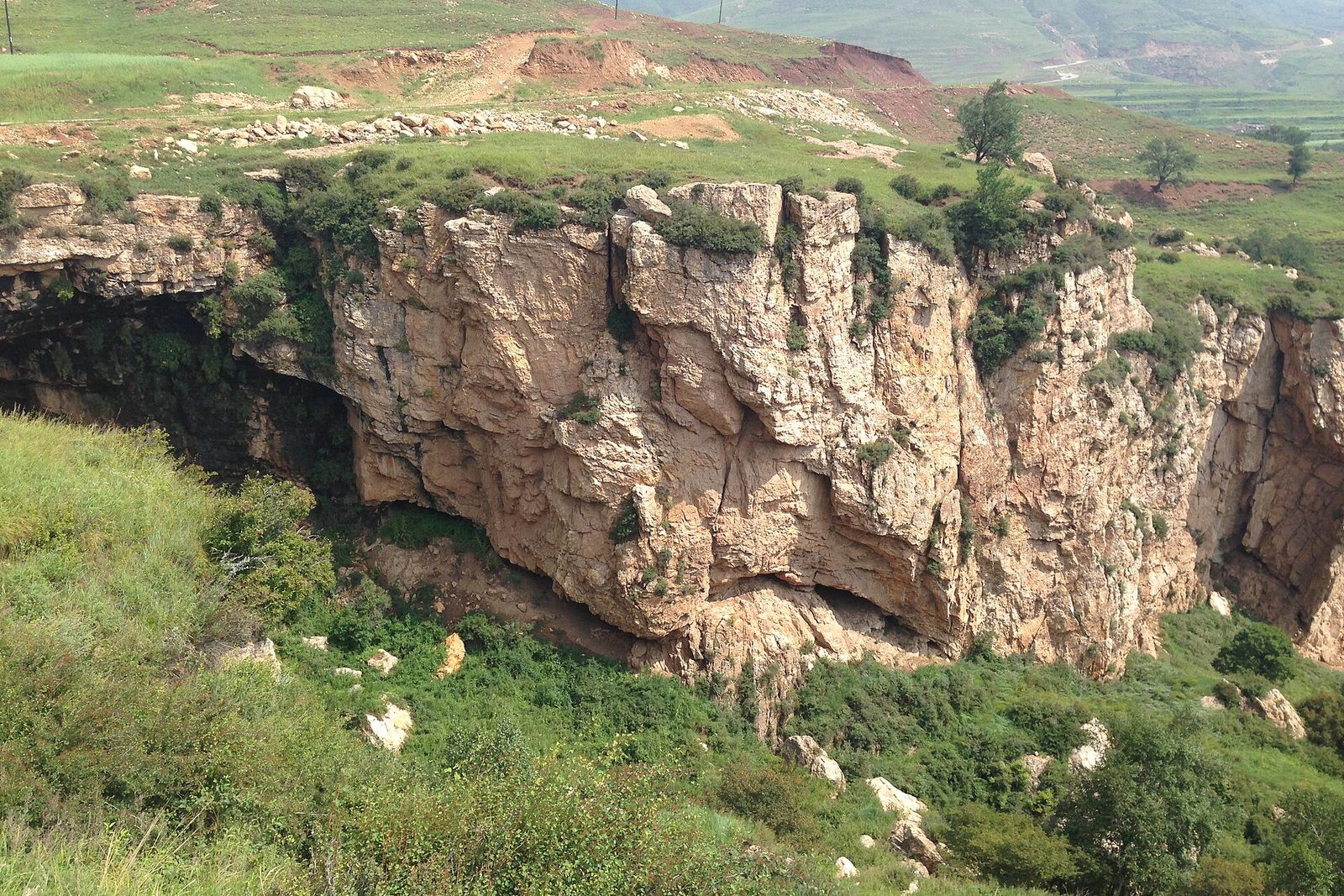
A basin of exposed ancient lake beds in Yangyuan county with more than a hundred Paleolithic sites cut into them. There is a museum and marked excavation areas; the landscape of banded pale strata is striking in its own right.
Seven resorts on the ridges around the Chongli valley, with the Olympic venues among them. The terrain is open and treeless above the base villages and the season runs from late November to early April.
A road running the escarpment edge with wind turbines along the ridge, terraced fields below and sheep on the open ground. Ideal on a weekday in summer; the weekend traffic from Beijing turns it into a line.
On the Map
Approximate locations of the attractions above, across Zhangjiakou.
Eat
Eight bowls brought together as one meal: braised pork in several cuts, tofu, yellow flower and cabbage, mostly steamed rather than fried. It is banquet food in Yu county and it comes out at weddings and New Year.
Glutinous millet steamed and then worked into a dense yellow cake, torn and dipped in a vegetable stew or fried with a filling. It is the staple of the plateau and it is heavy enough to carry visitors through a cold day.
A long pale green table grape grown in courtyard trellises in Xuanhua, some of the vines centuries old. The funnel-shaped courtyard vine system is recognised as a globally important agricultural heritage system.
Wild grassland mushrooms that came down from the steppe through this city, which is why Chinese cooking still calls them by the old name for Zhangjiakou. Dried and used for stock; the good ones are pale and thick.
Do
Performances run nightly through the winter season and around the lunar New Year, in a walled arena with tiered seating. Sit back from the front rows. The throwers wear soaked sheepskin turned inside out and a straw hat, which is the whole of the protection.
The full run takes half a day with stops. There are ticketed entry points and the surface is good. Go on a weekday between June and September; outside that window the grass is brown or the road is shut.
Several courtyards in the station take guests, which means the place empties around visitors at dusk and they get the walls at the outset light. Facilities are basic and heating is a brick kang in the cold months.
Weekends bring Beijing up the line and the lift lines show it; Monday to Thursday the same pistes are close to empty. Rental is available at every base and the high-speed train puts visitors at Taizicheng in under an hour from the capital.
When
The grassland season: green plateau, cool nights and the road open. The ideal window for everything except snow, and August weekends are heavy with Beijing traffic.
Colour in Yu county, harvest of the Xuanhua grapes, then a cold empty gap. The old towns and Nihewan are at their quietest.
Ski season and the dashuhua season, both running to the lunar New Year and beyond. Very cold and windy on the plateau, with the grassland road closed.
Windy and dusty with late snow possible on the ridges. Sites are open and cheap but the landscape has not greened up yet.
Explore More
Zhangjiakou is in Hebei, in North China.
Themes with places in Zhangjiakou
Related
Share the travel dates and interests, and PreeChina's local team will design a route that fits.
Plan My Trip to ZhangjiakouSee Private Tour Prices