
Wuyuan is in Jiangxi, in East China.
Home › Destinations › Jiangxi › Wuyuan
Jiangxi · City Guide
Wuyuan, Where Rapeseed Yellow Floods the Huizhou Villages.
Overview
Why Go
Rapeseed is a cash crop here and it flowers across terraced hillsides for about three weeks in spring. Jiangling is the terrace that gets photographed, with villages sitting inside the yellow rather than looking at it.
Huangling has no flat ground, so households dry chillies, corn and beans in round trays propped from the upper windows. It is called shaiqiu, and it happens because the village is built on a slope, not because anyone designed a view.
Huizhou building uses carved wood on beams and screens, carved brick over gateways and carved stone on plinths. Wuyuan's version of all three is on the national intangible heritage list, and the ancestral hall at Wangkou is the standard example.
Wuyuan belonged to Huizhou in Anhui until 1934 and was moved to Jiangxi after 1949. The architecture, the dialect, the opera and the food all stayed Huizhou, which is why it looks nothing like the rest of the province.
Wuyuan green tea has been traded since the Tang and was one of the leaves that went out through the Huizhou merchant network. The county is largely organic-certified now and the picking runs through the same weeks as the blossom.
See
Terraces stacked up a valley with several villages inside them, and a ridge road with viewpoints along it. In blossom season it opens early and fills by nine. Outside those weeks it is green terraced farmland and almost empty.
A slope village reached by cable car, rebuilt as a managed attraction after it had nearly emptied. The drying trays are real and seasonal; the shops and the glass walkway are not. Autumn is when the racks are fullest.
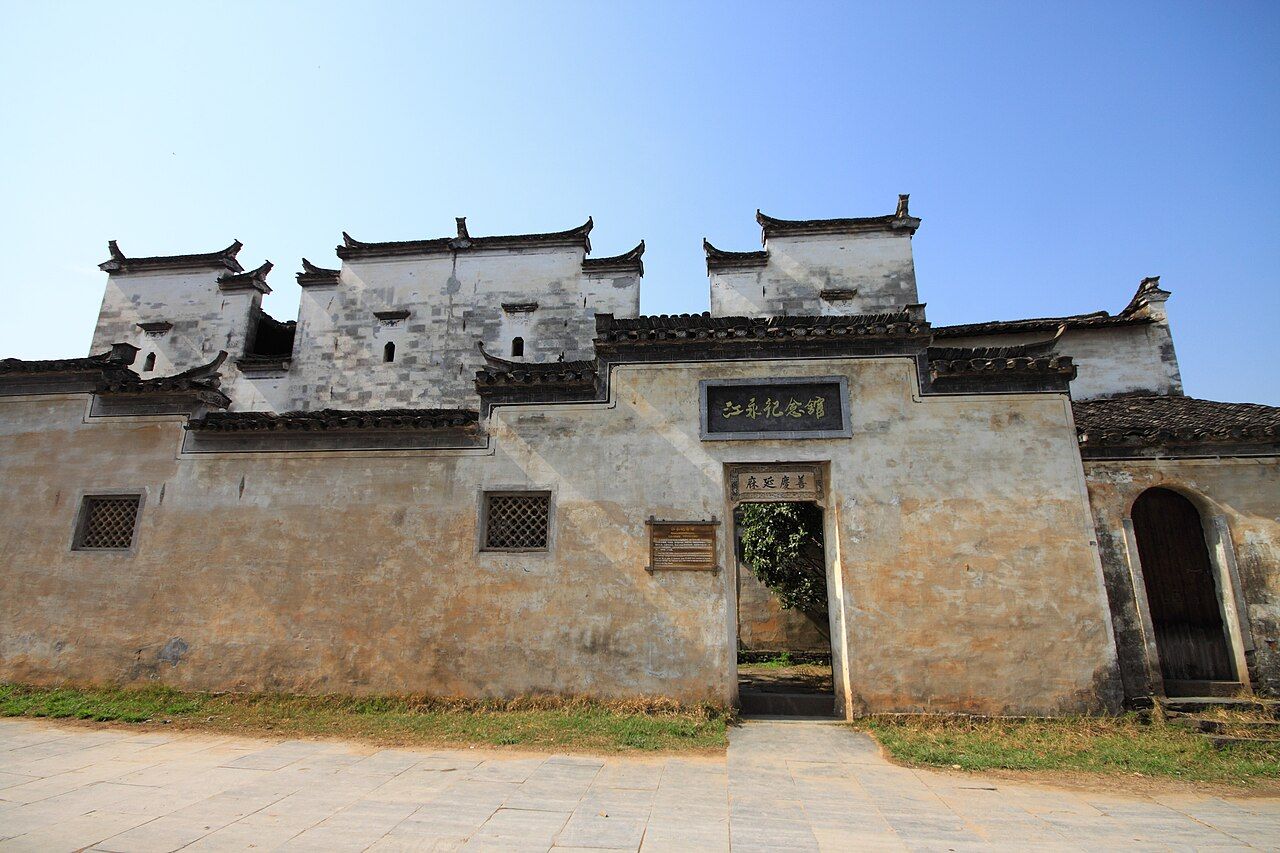
Two adjacent villages with more than 150 Ming and Qing houses, built by merchants and decorated accordingly. People still wash at the stream in the morning and drink tea under the courtyard skylights. A 1987 film was shot here.
A Yu clan village on the river whose ancestral hall carries the ideal wood carving in the county, worked over beams, brackets and screens. Crops are dried on racks outside the houses in autumn because that is how they are dried.
A village of Ming and Qing official residences up a side valley, further out than the others and with almost no shops. It is not the busier village near the county town that shares its English spelling; see the name check at the top of this page.
A Song covered bridge of four spans on stone piers, roofed in tile, with pavilions over the piers. It was built for shelter as much as crossing and is still used as one by the village on either side.
On the Map
Approximate locations of the attractions above, across Wuyuan.
Eat
A deep red pouch-shaped carp bred in the county's ponds for centuries, usually steamed whole with ginger and spring onion. It carries a geographical indication and it is the dish a Wuyuan household puts out for guests.
Pork, beef, fish or vegetables coated in toasted ground rice and steamed in stacked bamboo baskets. The rice absorbs the fat and the flavour stays inside. Several baskets come to the table at once and visitors work down the stack.
Green tea from the same hills as the rapeseed, picked from late March. Much of the county's gardens are organic-certified and much of the crop is exported. The plain method here is a glass, hot water and no lid.
Glutinous rice dough coloured green with mugwort, filled with pickled vegetable and bamboo shoot, steamed on a leaf. Made around the Qingming festival in early April, which overlaps with the end of the blossom.
Do
Mist settles in the valley overnight and burns off by mid-morning, which is the shot everyone comes for. Gates open before dawn in the season. Bloom dates move by two weeks or more each year, so check before arranging anything.
Huangling is reached by cable car and the racks are busiest from late September through November. Go on a clear day: the trays come in when it rains, and the whole point is the colour against the white walls.
At Wangkou the carving is on the structure rather than added to it, and the density increases towards the altar end. Ask what the scenes are; many are opera episodes or examination stories rather than decoration.
Sections of the old Hui-Rao stone road still connect the villages through bamboo and tea terraces, and several stretches take an hour or two. Guesthouses will point visitors at the ones that are still walkable end to end.
When
Blossom, and the reason many people come. Accommodation books out months ahead and prices multiply. Dates shift by two weeks with the year.
Green, warm and wet, with very few visitors. Tea picking runs into May and the villages return to being villages.
The drying racks are at their fullest and the hills colour. The other good window, and much easier to book than spring.
Cold, damp and quiet, with occasional snow on the tiles that photographers chase. Many village guesthouses stay open.
Explore More
Wuyuan is in Jiangxi, in East China.
Related
Share the travel dates and interests, and PreeChina's local team will design a route that fits.
Plan My Trip to WuyuanSee Private Tour Prices