
Haixi is in Qinghai, in Northwest China.
Home › Destinations › Qinghai › Haixi
Qinghai · City Guide
Haixi, Where Salt Lakes Mirror an Empty Sky.
Overview
Why Go
A site survey published in Nature in 2021 measured Lenghu on Saishiteng mountain against the established observatory sites, finding cloud-free nights, dry air and seeing comparable to Mauna Kea and the Chilean sites. Telescopes are being built there now.
Chaka is a shallow salt lake where a film of brine over hard salt reflects the sky when the water is still. It works in the early morning and in the off season; through the summer holidays it is crowded enough that a clean reflection is not realistic.
At Wusute, wind-carved yardang ridges rise out of a lake instead of a gravel plain, which is unusual anywhere. Boats run between them. The rest of the basin's yardang fields are dry and stretch for hundreds of kilometres.
Qarhan covers about 5,800 square kilometres and is a large salt lake in China, worked for potash. A road runs across it on a crust tens of metres thick, which is why it is called a salt bridge rather than a causeway.
The Reshui tombs at Dulan are Tubo-period burials that have produced very large quantities of silk, including Central Asian and Sasanian weaves, along with gold and silver work. They document a trade route running through this basin.
See
A shallow salt lake with a narrow-gauge train, walkways and a reflective brine film. It is managed as a major attraction with a daily cap in season. Early morning before wind and crowds is the sole way to get what the photographs promise.
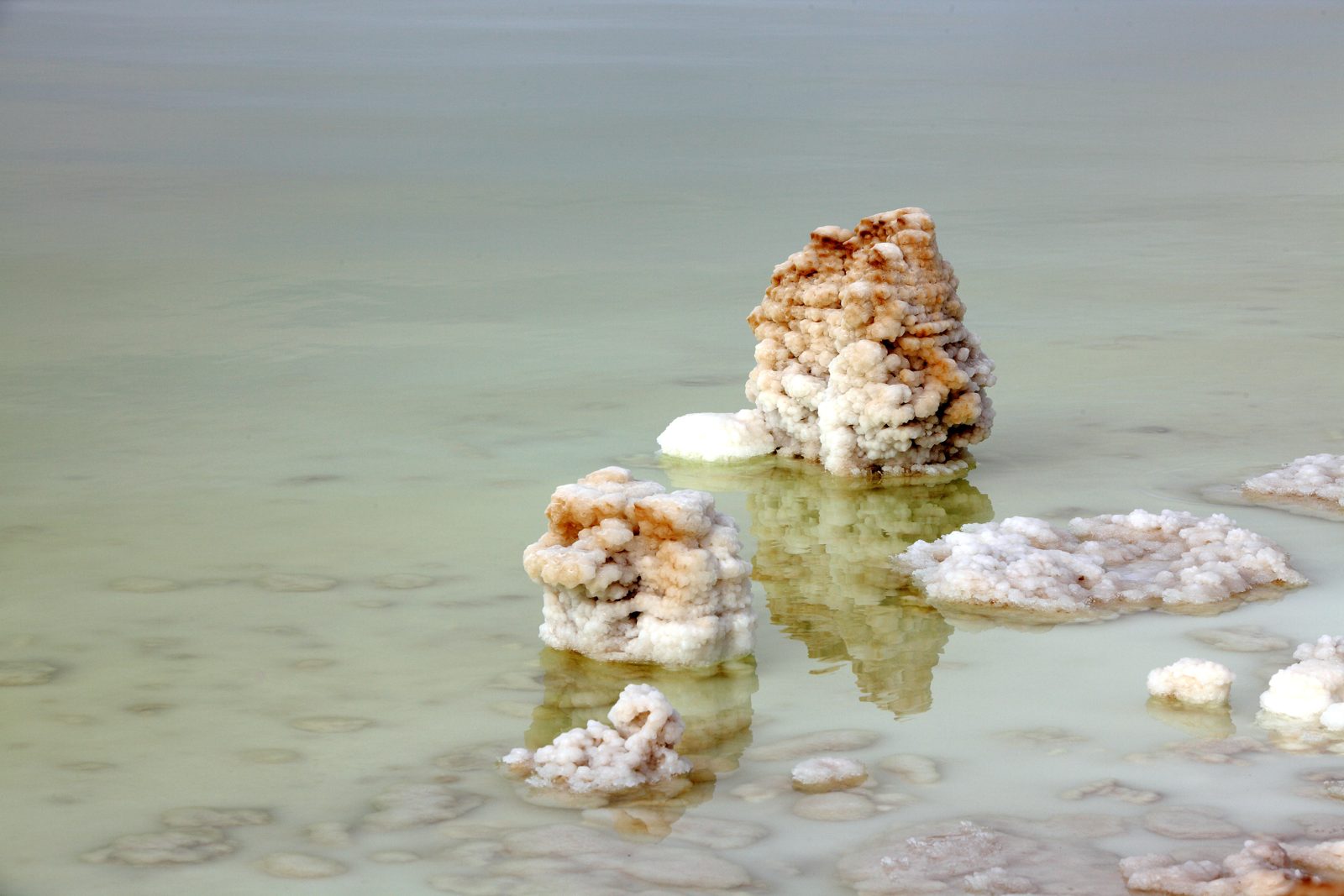
China's large salt lake, mostly an industrial potash operation, with a road running straight across the crust. The scale is the experience: white to the horizon in every direction, with nothing built on it.
Yardang ridges standing in a lake north of Da Qaidam, reachable by road with boats on the water. Water levels change year to year and the boats do not always run. Sunset is when the ridges and their reflections line up.
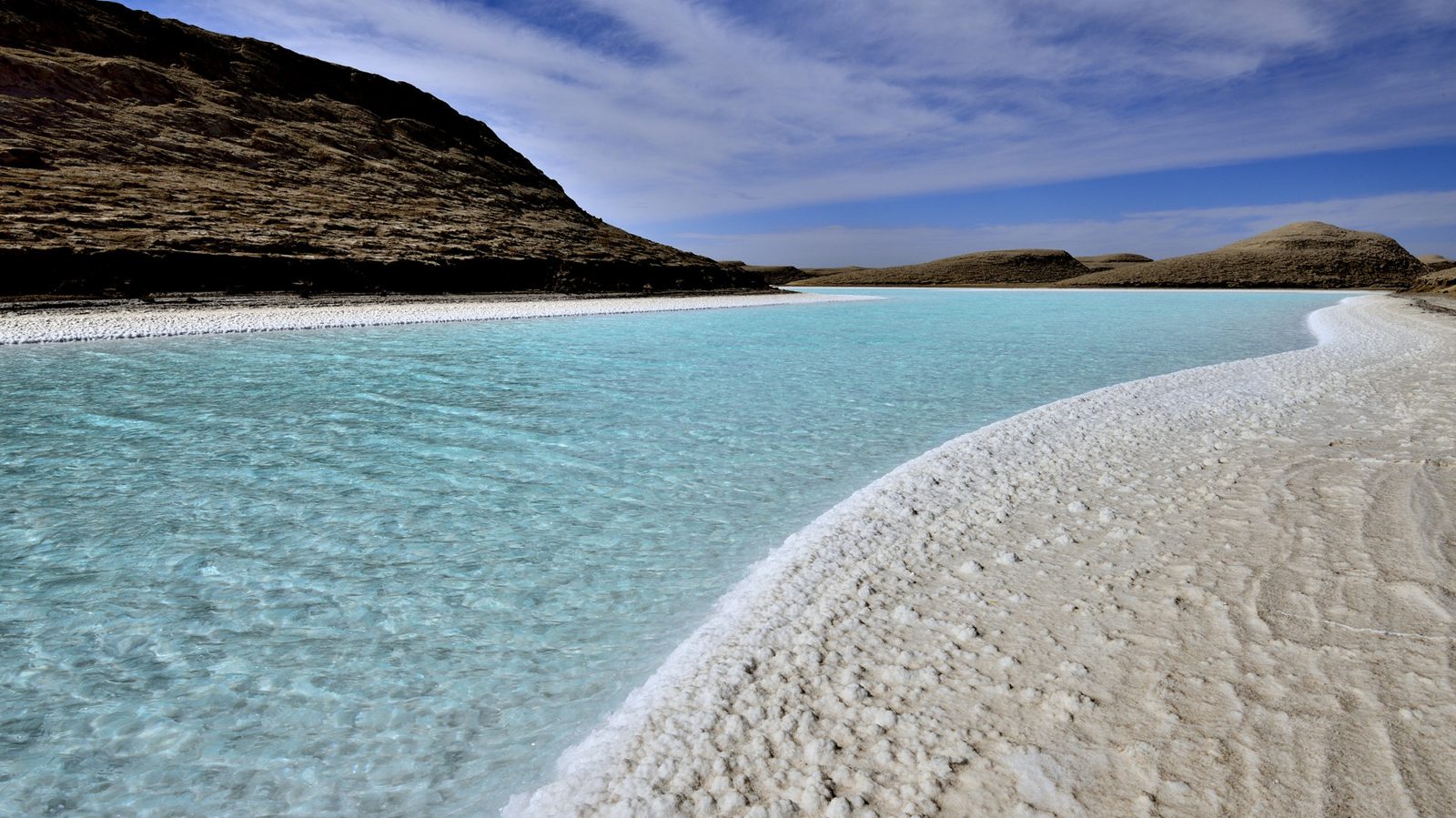
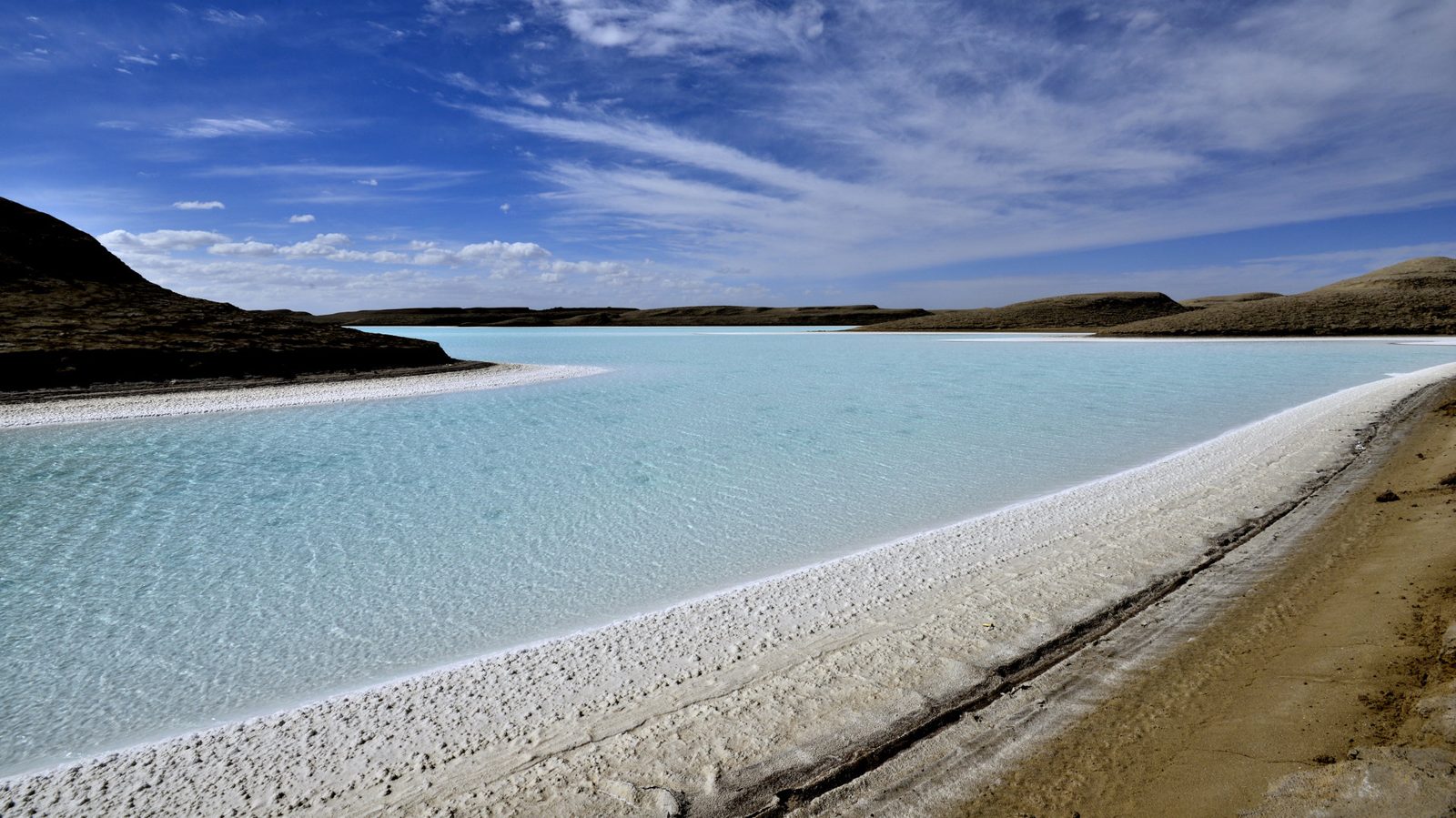
Old potash evaporation ponds that have filled with brine of different mineral content, giving pools of green, blue and turquoise separated by salt ridges. It is an industrial leftover rather than a natural lake, and it is free to walk.
Telescope domes going up on Saishiteng ridge above the abandoned oil town of Lenghu. Public access to the summit is limited, but the sky from anywhere near it is exceptional, and the town below is a study in what an oil boom leaves behind.
A cluster of Tubo-period tombs on hillsides near Dulan, excavated across decades and yielding silk, gold and horse gear. The site is fenced; the finds are in Xining and in the local museum, which is where to actually see them.
On the Map
Approximate locations of the attractions above, across Haixi.
Eat
Goji grown on saline soil at over 2,700 metres, which produces a larger and sweeter berry than the lowland crop. The basin is now one of the main producing areas in China and the drying racks line the roads in August.
Small sweet tubers from the grassland, steamed with rice and butter or stirred into yogurt. They are dug in autumn and dried, and they are one of the few sweet things the plateau produces itself.
A small hard pear that is stewed with rock sugar until it goes dark and soft rather than eaten raw, served hot in winter. It keeps through the cold months in an unheated room, which is the reason it exists.
Set yogurt in a ceramic pot with a layer of sugar caramelised on the surface, thick enough that the pot can be turned over. It is sold everywhere in the province and it is better here than in the cities east.
Do
The gate opens early and the opening hour is the sole realistic window for a still surface in season. Out of season the lake is quiet all day but often frozen or dry. Wind flattens the reflection by mid-morning.
The road runs across the crust for tens of kilometres with white in every direction. Stop where it is safe and walk a few metres onto it; the surface is hard and crystalline. There is no shade, water or phone signal out there.
Boats run when the water level allows, and check before driving out: it is several hours from anywhere. Late afternoon puts the light along the ridges. The road in crosses genuinely empty desert.
Visitors do not need access to the observatory. On a clear night anywhere near Lenghu the sky is as dark as it gets in the northern hemisphere. Bring a warm layer, give the eyes twenty minutes, and do not use a phone screen.
When
Thawing, quiet and cheap, with the lakes often still partly iced. Good for the yardang and the basin, less so for reflections.
Warmest and the goji harvest, and the season Chaka is at capacity. Book ahead and go early. The basin is hot in the day and cold at night.
Clear, dry and emptying out, with the ideal light on the salt and the darkest skies of the year. The ideal window overall.
Very cold and windy, with lakes frozen and some roads closed by snow. The night sky is at its peak and almost nobody is out in it.
Explore More
Haixi is in Qinghai, in Northwest China.
Related
Share the travel dates and interests, and PreeChina's local team will design a route that fits.
Plan My Trip to HaixiSee Private Tour Prices